A gemologist checks your diamond before you pay
Most online jewelers connect you with a sales rep. Rare Carat staffs graduate gemologists who will look at the specific stone you are considering and tell you plainly whether it is worth buying — including when the answer is no. The consultation is free, there is no commission attached to it, and you can use it even if you end up buying elsewhere.
Wholesale-style pricing, backed by a price match
Rare Carat aggregates inventory from vetted suppliers instead of stocking diamonds in showrooms, so the same certified stone frequently lists for less than at a traditional retailer. If you find an identical diamond cheaper somewhere else before you order, the Diamond Price Match Guarantee lets you ask them to meet it.
A low-risk way to buy online
Free insured shipping, 30 days to return with a prepaid label, one free ring resizing, and a lifetime manufacturer’s defect warranty. For a purchase you cannot hold in your hand first, that combination is what makes online buying reasonable.
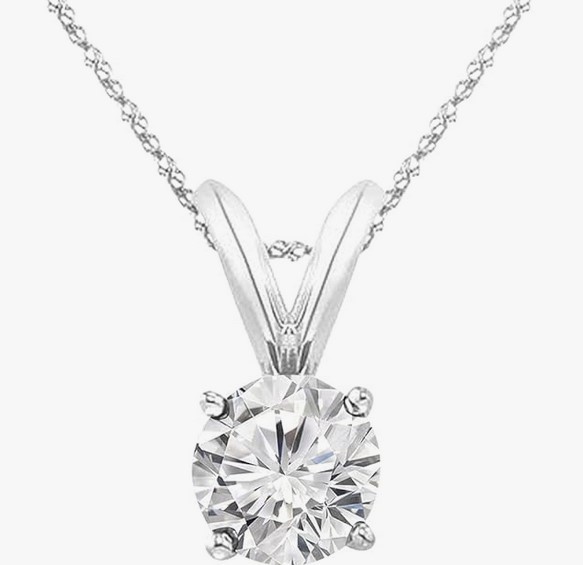
0.5-10 Carat Lab Grown Diamond Solitaire Pendant Necklace, Round Cut Solitaire, 4-Prong Setting, Jewelry for Women (E-F, VS)
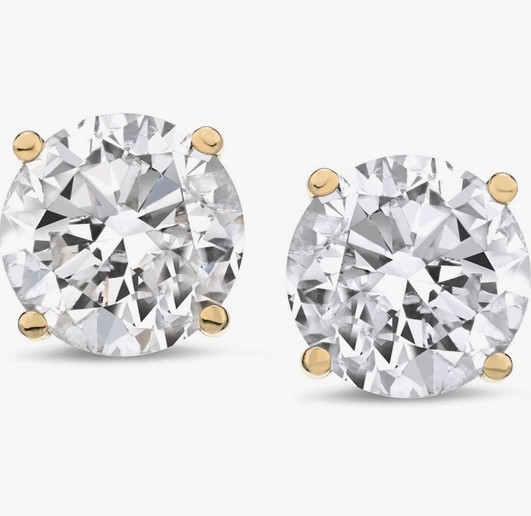
1 to 6 Carat LAB GROWN Solitaire Diamond Stud Earrings Round Cut 4 Prong Screw Back (F-G Color, VS1-VS2 Eye Clean Clarity)
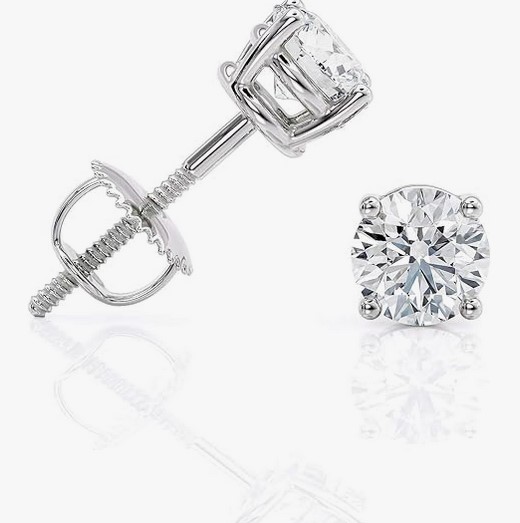
1 to 10 Carat D-E Color and VS1-VS2 Clarity Lab Grown Diamond Stud Earrings for Women I 14k White Gold Earrings for Her I Secure Screw Back
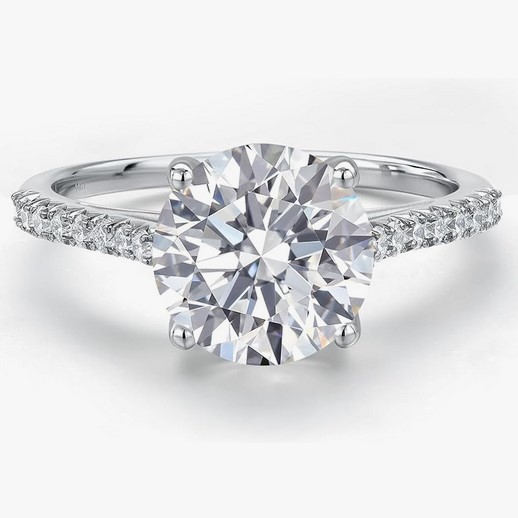
1-3 Ct 14K White Gold IGI Certified Lab Grown Diamond Engagement Ring | E-F Color | VS1-VS2 Clarity | Wedding Anniversary Promise Gold Ring For Women
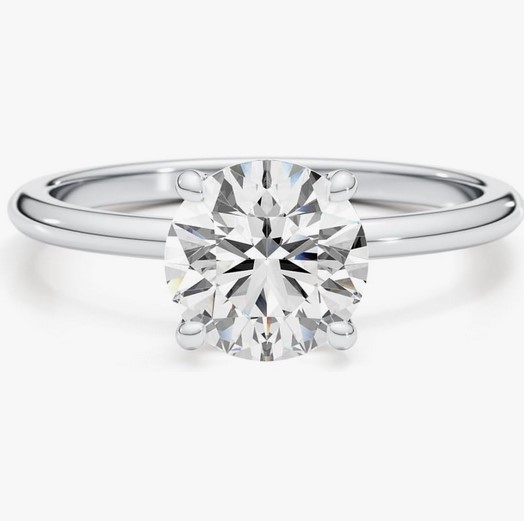
14k White Gold Engagement Ring/Wedding Ring With 0.20 to 3.00 Carats Lab Grown Diamond (E Color, VS1 Clarity) Rings For Women, IGI Certified,
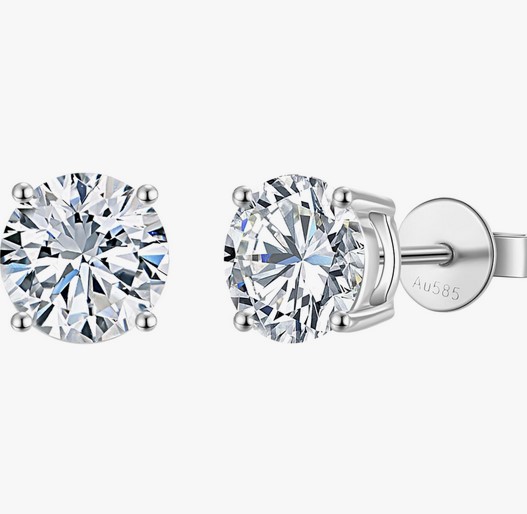
14K White Gold Lab Grown Diamond Stud Earrings, 0.5-2.00 Ct Round IGI Certified, E-F Color VS1-VS2 Clarity, Push Back Setting
What Is Rare Carat?
Rare Carat is a US online diamond retailer built around a search-and-compare engine. You filter more than a million natural and lab-grown diamonds by shape, carat, colour, clarity, cut and certification, view each stone in 360° video, and see how its asking price stacks up against comparable stones on the market.
The company started life as a pure comparison tool — a place to research a diamond before buying it somewhere else. That changed when Rare Carat became the merchant of record. Today you buy from Rare Carat rather than from an outside seller: the company takes payment, verifies the stone in-house, coordinates setting and fulfilment, and owns returns, warranty, resizing and support. The suppliers behind the inventory stay in the background, and you never deal with them directly.
The business is run from New York, was founded by Ajay Anand, and holds Better Business Bureau accreditation. Finished jewellery is handcrafted in New York and New Jersey workshops and inspected under magnification before it ships.
Is Rare Carat Legit? What You Can Verify Yourself
This is by far the most searched question about the brand, and it deserves a real answer rather than reassurance. Rare Carat is a legitimate, established retailer — but “legit” is something you can check independently rather than take on faith. Four things are worth verifying before any online diamond purchase, here or anywhere else:
The grading report. Every diamond listed carries a report from an independent laboratory — GIA for natural stones and IGI or GIA for lab-grown. The report number is on the listing. Type it into the laboratory’s own certificate-check page and confirm that the specifications match what the listing claims. If a stone has no report, or the number will not verify, that is your answer.
The laser inscription. Lab-grown diamonds sold through Rare Carat are inscribed on the girdle with the report number and a “lab grown” or “LG” marking. A jeweller with a loupe can confirm the stone in your ring is the stone on the certificate.
Who takes your money. Because Rare Carat is the merchant of record, your contract is with Rare Carat, not with an anonymous wholesaler. That matters enormously if something goes wrong — there is one company responsible for the refund, not a chain of parties pointing at each other.
Independent review histories. Rare Carat is one of the more heavily reviewed jewellers online, with long-running profiles on Trustpilot, Google and the BBB. Rather than trusting any single summary — including this one — read the recent one- and two-star reviews specifically. That is where you learn what actually goes wrong, and how the company responds.
Are the diamonds real? Yes. Natural stones are genuine mined diamonds; lab-grown stones are genuine diamonds too, chemically and optically identical to mined ones, and are always disclosed as lab-grown rather than passed off as natural. Rare Carat also sells moissanite, which is a different stone entirely and is labelled as such.
Why Rare Carat Is Often Cheaper
“Why is Rare Carat so cheap” is a suspicious-sounding question with a boring answer: structure.
A traditional jeweller buys diamonds, holds them as inventory, pays for showroom space and sales staff, and prices the stone to cover all of it. Rare Carat does not hold most of its diamond inventory. Suppliers compete for each order, the diamond is secured only after you buy, and the company carries none of the showroom overhead. Comparison shopping is also built into the interface, which puts constant downward pressure on listings — a supplier who prices a stone above the market can see it sit unsold next to identical alternatives.
Two practical consequences follow. First, the price advantage is largest on loose certified diamonds, where the comparison is apples to apples, and smaller on finished jewellery and settings, where design and craftsmanship vary. Second, low price alone tells you nothing about quality: two stones with identical grades on paper can look noticeably different in person, which is exactly what the free gemologist review exists to catch.
What You Can Buy
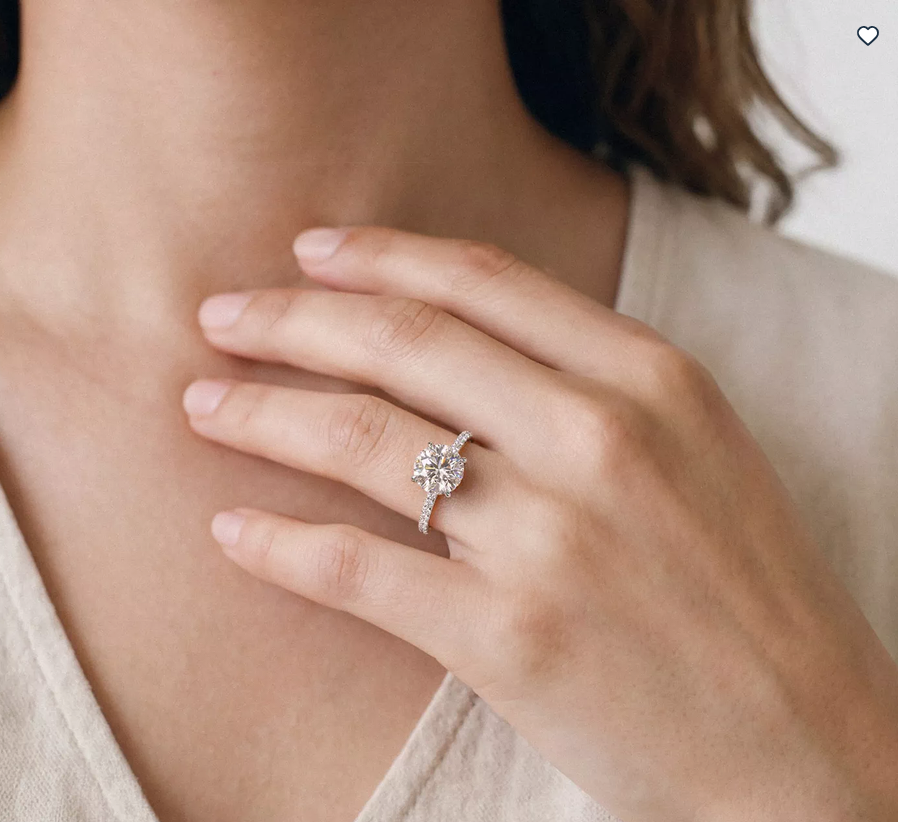
Engagement rings. The core of the business. You can choose a loose diamond and a setting separately, or start from a complete ring. Solitaire, halo, hidden halo, three-stone, pavé and bezel settings are all available across round, oval, cushion, emerald, princess, radiant, pear, marquise, asscher and heart shapes.
Wedding bands, including men’s. Plain metal bands, diamond-set bands and eternity bands. One important caveat: eternity bands generally cannot be resized after the initial return window, because diamonds run the full circumference. Get the size right the first time on those.
Fine jewellery. Diamond stud earrings, pendants, tennis bracelets and eternity rings. Studs and pendants are the categories most often used in gift-with-purchase promotions.
Loose diamonds. You can buy an unset certified stone — useful if you have an heirloom setting or a local jeweller you want to work with.
Natural, lab-grown and moissanite. All three sit side by side in the search. Lab-grown stones typically cost a fraction of a natural diamond of the same specifications, which is why so many buyers use them to move up in carat weight or clarity for the same budget.
Rare Carat Ideal. A proprietary cut designation applied to stones whose proportions exceed the laboratory’s own top cut grade. It is a filter, not a certification — the grading report still says “Excellent”. Treat it as a useful shortlist tool rather than an independent grade.
The Policies That Actually Matter
Returns. Purchases can be returned within 30 days of shipment, with a free insured return label sent by email. Two details catch people out: the label must be scanned by the carrier before the 30th day ends, not merely dropped in the post, and items must come back unworn, in original condition, with any diamond certificates that were included. Custom and specially sourced pieces are typically excluded — confirm before ordering anything bespoke.
Resizing. One free ring resizing is included, currently within the first year after shipment. Eternity bands are excluded once the return window closes. Note that resizing takes time — plan around it rather than assuming a ring will be adjusted before a specific date.
Warranty. A lifetime manufacturer’s defect warranty covers faults in materials and craftsmanship. It does not cover normal wear: worn or bent prongs, a stone lost to an impact, metal discoloured by chemicals or chlorine, or loss and theft. Repair work done by an outside jeweller voids it. An optional care plan extends coverage to routine maintenance and wear-related repair, and jewellery insurance is offered separately for loss and theft — which the warranty will never cover.
Shipping. Free, fully insured, via FedEx or UPS, in a plain unbranded box, with an adult signature required. Delivery timelines vary a great deal because most orders involve sourcing the diamond, then setting it. Each listing shows an estimated ship date, and that estimate — not a generic average — is the number to plan around. Rare Carat ships across all 50 states and to Canada, where customs and duties apply and delivery takes longer.
Upgrade programme. Diamonds bought under the upgrade programme can be exchanged toward a larger stone later, but cannot be returned for a cash refund. Read the terms before opting in.
How the Price Match Works
The Diamond Price Match Guarantee is genuinely useful, but it is narrow by design. The essentials:
- Ask before you buy. Price match requests are handled pre-purchase only.
- It must be the same diamond, not a similar one. Cut, colour, clarity, carat, fluorescence and — critically — the same grading report number.
- The competitor’s price must be public. Prices behind a login, a membership, a special discount or a personal quote do not qualify.
- You supply the evidence. A copy of the grading report from the competing retailer, a working link to the offer, and proof the stone is currently in stock.
- Excluded: pawn shops, auctions, second-hand sellers, non-USD prices, pricing errors, and specially sourced stones.
- One per customer, one per diamond, and an approved match is typically held for a short window, so be ready to order.
It cannot be stacked with other promotions, so run the numbers both ways — an active sitewide discount sometimes beats a matched price.
Financing and Payment
How to pay. Major credit cards, PayPal, and bank wire. Wire transfer usually earns a small discount because it avoids card processing fees — worth asking about on a large order. If you are paying by card above roughly $15,000, call your bank in advance; large jewellery charges are a classic false-positive for fraud systems. Payment can also be split across more than one method by asking the orders team for a custom invoice.
Instalments. Rare Carat offers monthly payment plans through third-party financing partners, including buy-now-pay-later plans spread over up to 36 months and a lease-to-own option that does not require a credit check. Approval, rates and terms are set by the provider, not by Rare Carat, and pre-qualification typically uses a soft credit check that does not affect your score. Promotional 0% APR offers appear regularly but are conditional on approval and on the provider’s terms — read what is on the screen at checkout rather than relying on any article, including this one.
About the Rare Carat credit card. Rare Carat previously offered a store credit card issued by TD Bank. That card has been discontinued and can no longer be used for new purchases. Existing cardholders still manage balances, statements and payments through TD’s servicing portal, and financing on new orders now runs through Rare Carat’s checkout partners instead. If you land on an old “Rare Carat financing login” page, this is why.
Discounts, Promo Codes and Sales
Rare Carat runs frequent seasonal promotions — the major US holiday weekends, Black Friday and the spring engagement season are the reliable ones — usually as a percentage off jewellery or a gift-with-purchase such as free studs or a free pendant. A few working rules:
- Only one promotional code applies per order, so codes generally do not stack.
- Gift-with-purchase offers can sometimes run alongside another promotion; percentage discounts usually cannot.
- Discounts and price matching cannot be combined.
- Loose diamond pricing moves less than jewellery pricing during sales, because the margin structure is different.
- Joining the email list before you shop is the simplest way to catch a code, and the chat gemologists will tell you whether a better offer is imminent if you ask.
Be sceptical of third-party coupon sites listing dozens of exclusive codes. The offers on the retailer’s own promotions page are the ones that reliably work.
Rare Carat Compared With the Alternatives
Versus Blue Nile. Blue Nile is a large, long-established online retailer with its own inventory and a network of physical showrooms. If seeing a ring in person before committing matters to you, that is a real advantage Rare Carat cannot match. Rare Carat tends to compete on price and on the free unbiased gemologist review.
Versus Brilliant Earth. Brilliant Earth is built around traceable and ethically sourced stones and a strong design house aesthetic, with showrooms of its own. Buyers who care most about provenance and signature settings often prefer it; buyers optimising for price per carat on a certified stone usually do not.
Versus James Allen. James Allen pioneered high-magnification 360° imaging and holds its own inventory, which makes for a consistent browsing experience. Rare Carat’s search spans a wider supplier pool, so the raw selection at any given specification is typically larger.
The honest summary: Rare Carat’s edge is price transparency and free expert input. Its competitors’ edge is usually physical presence, in-house inventory control, or design identity. There is no universally correct answer — there is only which of those you personally need.
Who Should Buy Here, and Who Should Not
A good fit if you are comfortable buying online, you want the most stone for your budget, you value a certified report over a brand name, and you would like an expert opinion before spending several thousand dollars.
Look elsewhere if you need to try rings on in a showroom before deciding, you need a guaranteed delivery date within a very short window, you want a fully bespoke design from scratch, or you want a warranty that covers everyday wear and tear as standard rather than through a paid add-on.
How to Buy Well: A Practical Sequence
- Set the setting budget first. Decide what you will spend on the mounting, then spend the rest on the stone. It is far easier than working backwards.
- Filter for eye-clean, not flawless. In most shapes, a well-chosen SI1 or VS2 looks identical to a flawless stone at arm’s length and costs dramatically less. Clarity grade is the single most overpaid characteristic in diamond buying.
- Do not compromise on cut. Cut drives sparkle more than any other factor. Save on colour and clarity; hold the line on cut.
- Shortlist three or four stones, then ask a gemologist. This is the step most buyers skip and the one with the highest return. Send the links and ask which one they would actually buy — and why they would reject the others.
- Check the report number on the grading laboratory’s own site before ordering.
- Read the estimated ship date on the listing, then add buffer for resizing if the proposal has a fixed date.
- Ask about the price match before checkout, not after, and compare it against any live promotion.
- Arrange insurance separately. The warranty covers defects; only insurance covers loss, theft and accidental damage.
For shoppers researching fine jewelry and diamonds, choosing the right stone starts with understanding quality, cut, and value. A trusted resource can make it easier to compare options and learn what to look for when selecting a diamond. Explore this guide to carat diamond information and discover useful insights for making a more informed jewelry purchase.
Is Rare Carat legit?
Yes. Rare Carat is an established US retailer based in New York, accredited by the Better Business Bureau, and the merchant of record on every order — meaning your purchase contract is with Rare Carat itself. Every diamond comes with an independent grading report whose number you can verify directly on the laboratory’s own website before you order.
Are Rare Carat diamonds real?
Yes. Natural stones are genuine mined diamonds with GIA reports. Lab-grown stones are also genuine diamonds — identical in chemistry, structure and appearance to mined ones — and are always disclosed as lab-grown, with a laser inscription on the girdle stating so. Moissanite is sold as a separate, clearly labelled category.
Why is Rare Carat cheaper than other jewellers?
Rare Carat does not hold most of its diamond inventory or run showrooms, and suppliers compete for each order. That removes several layers of cost. The saving is largest on loose certified diamonds and smaller on finished jewellery.
What is Rare Carat’s return policy?
Items can be returned within 30 days of shipment with a free insured return label. The label must be scanned by the carrier before the 30th day ends, and items must be unworn and returned with any original certificates. Custom pieces are generally excluded.
Does Rare Carat offer financing?
Yes — monthly instalment plans through third-party partners, including buy-now-pay-later terms of up to 36 months and a lease-to-own option with no credit check. Approval and rates are set by the provider. Pre-qualification generally uses a soft credit check.
What happened to the Rare Carat credit card?
The Rare Carat store credit card issued by TD Bank has been discontinued and can no longer be used for new purchases. Existing accounts are still serviced through TD’s online portal for statements and payments, while financing on new orders now runs through the checkout partners.
Does Rare Carat price match?
Yes, before purchase. The competing diamond must be identical — same specifications and the same grading report number — publicly priced in USD, and in stock. You provide the report copy, a link and proof of availability. Price matching cannot be combined with other discounts.
Does Rare Carat have a warranty?
A lifetime manufacturer’s defect warranty is included, covering faults in materials and craftsmanship. It excludes normal wear, bent or worn prongs, stones lost to impact, discolouration from chemicals, and loss or theft. Outside repair work voids it. An optional care plan extends coverage to wear-related maintenance.
Does Rare Carat resize rings for free?
One free resizing is included, currently within the first year after shipment. Eternity bands are excluded once the return window has passed, because the diamonds run the full circumference of the band.
How long does Rare Carat take to ship?
It varies by order, since most diamonds are sourced and then set after purchase. Each listing shows an estimated ship date — use that figure rather than a general average. Shipping itself is free, insured, and requires an adult signature. Orders to Canada, Alaska and Hawaii take longer.
Does Rare Carat have physical stores or showrooms?
No. Rare Carat sells exclusively through its own website — it is not sold through department stores or other retailers, and there are no showrooms to visit. The substitute for trying a ring on is the free gemologist consultation plus the 30-day return window.
Where is Rare Carat located?
The company is based in New York City, and its jewellery is handcrafted in New York and New Jersey workshops before shipping.
What is Rare Carat Ideal cut?
It is Rare Carat’s own designation for stones whose proportions are tighter than the laboratory’s top cut grade requires. It is a filtering shortcut, not an independent certification — the grading report itself will still read “Excellent”.
Does Rare Carat have sales and discount codes?
Regularly, particularly around major holiday weekends and Black Friday, usually as a percentage off jewellery or a gift with purchase. Only one promotional code applies per order, and discounts cannot be combined with a price match.
Is Rare Carat good for lab-grown diamonds?
Yes — lab-grown stones sit alongside natural ones in the same search with the same filters and IGI or GIA reports, which makes direct comparison straightforward. Because lab-grown diamonds cost far less at equivalent specifications, many buyers use them to move up in size or clarity within the same budget.
Does Rare Carat ship internationally?
Shipping covers all 50 US states and Canada. Canadian orders are subject to customs, duties and taxes, and take additional time in transit.