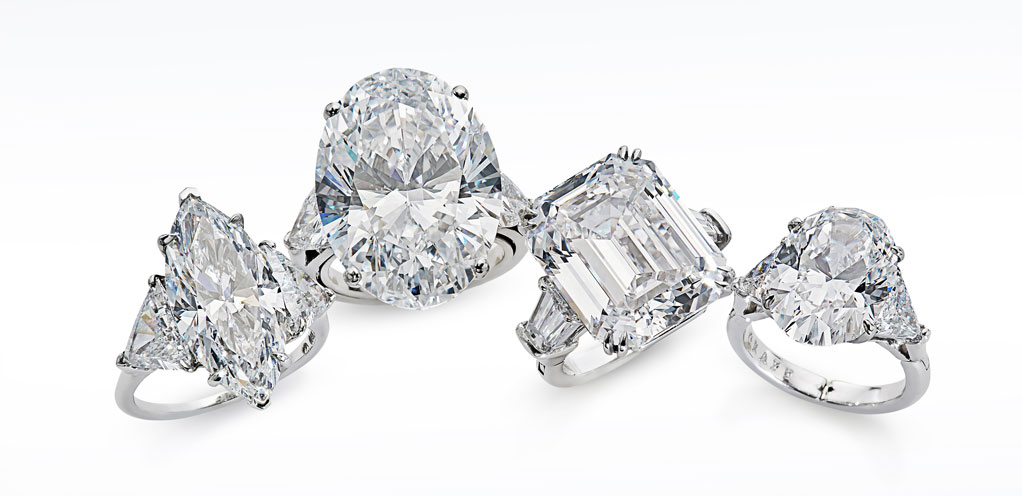
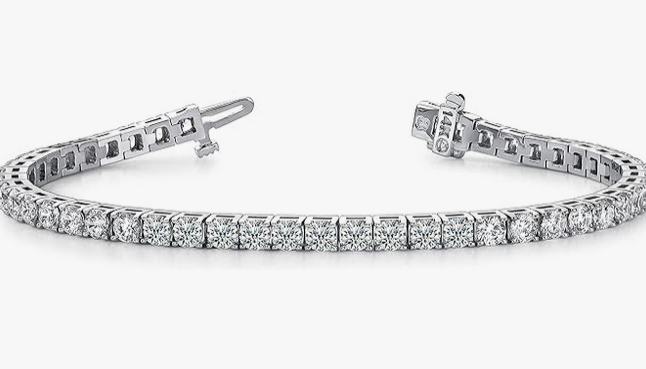
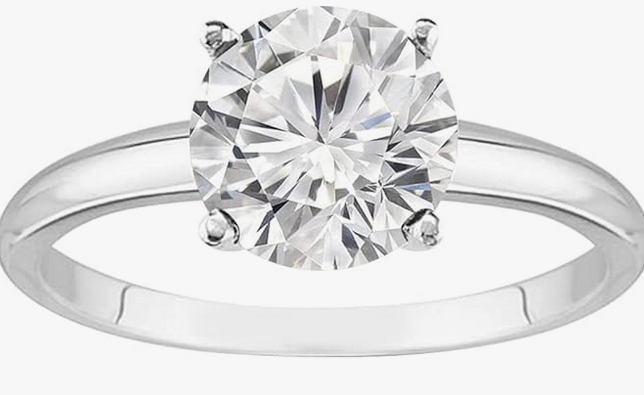
Houston Diamond District 1 to 10 Carat 14K White Gold IGI Certified Lab Grown Diamond Engagement Ring, Round Cut Solitaire, 4-Prong Setting (E–F Color VS2–SI1 Clarity)
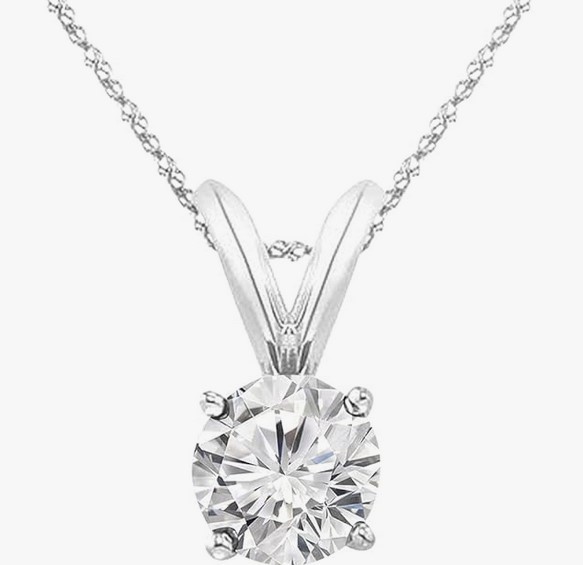
0.5-10 Carat Lab Grown Diamond Solitaire Pendant Necklace, Round Cut Solitaire, 4-Prong Setting, Jewelry for Women (E-F, VS)
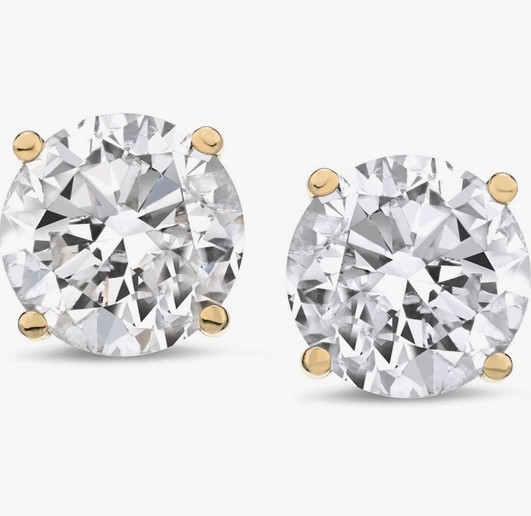
1 to 6 Carat LAB GROWN Solitaire Diamond Stud Earrings Round Cut 4 Prong Screw Back (F-G Color, VS1-VS2 Eye Clean Clarity)
One Carat Diamond Ring: The Complete Buyer’s Guide
A one carat diamond ring is the timeless classic of fine jewelry — elegant, balanced, and universally loved. As the most popular size for engagement rings, a one carat diamond ring strikes the perfect harmony between meaningful presence and effortless everyday wear. It’s substantial enough to sparkle beautifully, yet graceful and comfortable on any hand. Whether it’s a first diamond, a classic proposal, or a refined gift, a one carat diamond ring is a choice that never goes out of style. This guide explains everything that shapes the look, quality, and value of a one carat diamond ring, so you can choose with total confidence.
At Mycaratdiamond, every one carat diamond ring is crafted from a real, certified lab grown diamond set in enduring precious metal — the combination that delivers extraordinary brilliance at a genuinely accessible price.
Why a One Carat Diamond Ring Is the Timeless Classic
One carat has long been the benchmark for diamond jewelry, and for good reason. A one carat diamond ring offers a beautifully recognizable size — instantly elegant, never overwhelming. Here’s why a one carat diamond ring remains the enduring favorite:
- Timeless appeal: a one carat diamond ring is the classic choice that suits every style and era.
- Perfect everyday size: substantial sparkle that’s still comfortable for daily wear.
- Beautifully versatile: a one carat diamond ring flatters every hand and pairs with any wedding band.
- Exceptional value: especially with lab grown, a one carat diamond ring is wonderfully accessible.
How Big Is a One Carat Diamond Ring?
A round one carat diamond measures roughly 6.4 to 6.5 millimeters across — a classic, elegant footprint that’s clearly visible and beautifully proportioned on the finger. Elongated shapes like oval, pear, and marquise can appear a touch larger because their length spreads across more of the hand. On slender fingers, a one carat diamond ring looks especially generous, while on any hand it offers that perfectly balanced, recognizable one-carat look that has made it a classic.
What Determines the Price of a One Carat Diamond Ring?
No two rings are identical, so the price of a one carat diamond ring is never a single fixed number. Several measurable factors work together to set the final figure:
- Origin (natural vs. lab grown) — the single biggest driver of a one carat diamond ring‘s price.
- The 4Cs — Carat weight, Color, Clarity, and Cut.
- Diamond shape — round brilliants typically cost more per carat than fancy shapes.
- Metal and setting — 14K gold, 18K gold, or platinum, plus the band style and any accent stones.
- Certification and craftsmanship — independent grading and the finish quality of the piece.
Once you understand how each factor moves the needle, spotting real value in a one carat diamond ring becomes simple.
Natural vs. Lab Grown One Carat Diamond Ring
The biggest difference in price comes down to origin. A natural one carat diamond carries a meaningful premium, while a lab grown one carat diamond ring offers the same sparkle, the same durability, and the same certified quality for a fraction of the cost — often a small percentage of the natural equivalent.
Lab grown diamonds are chemically, physically, and optically identical to mined diamonds. They earn a perfect 10 on the Mohs hardness scale and display the same fire and brilliance. The only difference is origin: lab grown stones are created in a controlled environment rather than deep underground. That efficiency is precisely why a lab grown one carat diamond ring is so wonderfully attainable — letting you choose a higher color, clarity, or cut grade for the same budget, or simply enjoy beautiful savings on a classic size.
The 4Cs and Your One Carat Diamond Ring
The 4Cs are the universal language of diamond value, and each one shapes how a one carat diamond ring looks and what it costs.
Carat weight is the headline. At one carat, the diamond has classic, recognizable presence — the size that has defined fine jewelry for generations.
Color runs from colorless (D) downward. A near-colorless E-F grade keeps the diamond bright and white while avoiding the steep premium of a flawless D, making it a smart sweet spot for a one carat diamond ring.
Clarity measures internal characteristics. A VS-SI range delivers eye-clean diamonds — no inclusions visible to the naked eye — which protects brilliance while keeping your one carat diamond ring priced efficiently.
Cut is the most important C for sparkle. Precise faceting maximizes light return, so a well-cut one carat diamond ring looks brighter, larger, and livelier. Never compromise on cut — it’s what makes the diamond come alive.
Best Diamond Shapes for a One Carat Diamond Ring
Shape is one of the most personal choices, and it dramatically affects the character of a one carat diamond ring:
- Round brilliant: the most popular shape, prized for maximum sparkle and timeless appeal.
- Oval: elongates the finger and looks slightly larger than its weight suggests.
- Cushion: soft, rounded corners with romantic, vintage fire.
- Princess: sharp, modern square geometry with brilliant shine.
- Pear and emerald: distinctive shapes that give a one carat diamond ring a unique signature look.
Fancy shapes often cost less per carat than round brilliants, so they can stretch your budget while adding personality to your one carat diamond ring.
Choosing the Setting and Metal
The setting frames your center stone and defines the overall style. Popular choices for a one carat diamond ring include the clean, classic solitaire; the sparkling halo, which frames the center stone with smaller diamonds and makes a one carat diamond ring look even larger; the shimmering pavé band; and the meaningful three-stone design symbolizing past, present, and future.
Metal choice matters too. 14K and 18K gold offer warm, classic luxury in white, yellow, or rose, while platinum delivers a premium, naturally white finish. A secure prong setting protects the diamond and keeps your one carat diamond ring safe through years of everyday wear.
Why Lab Grown Makes the One Carat Diamond Ring Even More Attainable
Lab grown diamonds are produced using two advanced methods — HPHT (High Pressure High Temperature) and CVD (Chemical Vapor Deposition). Both recreate the natural diamond-forming process, but far more efficiently. That efficiency is why a lab grown one carat diamond ring offers such remarkable value.
Crucially, this lower price involves no compromise on quality. You are not buying a simulant or imitation — you are buying a real, certified diamond graded by the same 4Cs and indistinguishable from a mined stone without specialized equipment. For most buyers, a lab grown one carat diamond ring is the clear value winner: the same classic beauty and meaning, with more quality and savings for your budget.
How to Choose the Perfect One Carat Diamond Ring
To secure the best value without sacrificing beauty, keep these tips in mind when choosing a one carat diamond ring:
- Prioritize cut quality. At one carat, cut is what makes the diamond truly sparkle, so it’s the spec never to compromise on.
- Favor E-F color and eye-clean VS-SI clarity. This combination looks stunning and keeps your one carat diamond ring priced efficiently.
- Pick a shape you love. The shape defines the entire character of your one carat diamond ring.
- Choose a secure setting. A quality prong or halo setting keeps your diamond safe and brilliantly lit.
- Choose lab grown. It’s the most direct way to make a one carat diamond ring even more affordable while keeping a genuine diamond.
- Insist on certification. Independent grading confirms you’re paying a fair price for real quality.
Bottom line: a one carat diamond ring brings together timeless elegance, brilliant sparkle, and the perfect everyday size in one classic, beloved design. With a premium lab grown diamond in a near-colorless, eye-clean grade, set in beautifully crafted gold or platinum, you can own a true one carat classic at a price that finally makes sense. Explore our collection above to find the perfect one carat diamond ring for you.
A one carat diamond ring represents the perfect balance between impressive visual presence and attainable luxury, measuring approximately 6.5mm in diameter when cut in the popular round brilliant shape. This classic carat weight delivers substantial sparkle and size on the finger while remaining within reach for many couples, with prices typically ranging from $3,000 to $15,000 depending on the diamond’s quality characteristics. A one carat diamond ring has long been considered the gold standard for engagement rings, offering enough size to showcase the diamond’s natural beauty while maintaining elegant proportions that complement most hand sizes and personal styles.
What Is a one carat diamond ring?
Understanding the fundamentals of diamond weight measurement helps clarify what defines a one carat stone. One carat equals exactly 200 milligrams or 0.2 grams, making it a precise unit of measurement that has been standardized worldwide by gemological institutions. This weight measurement applies to the diamond alone, not including the metal setting or any additional accent stones that may accompany the central gem.
The visual impact of a one carat diamond ring extends beyond its technical weight specifications to encompass the stone’s overall presence and brilliance. When properly cut, this size diamond captures and reflects light with remarkable intensity, creating the fire and scintillation that makes diamonds so captivating. The diameter varies by shape, with round diamonds measuring approximately 6.5mm, princess cuts around 5.5mm, and oval stones reaching 7.9mm in length.
Historically, one carat has represented a significant milestone in diamond jewelry, often serving as the benchmark for serious romantic commitment. This tradition stems from both the stone’s impressive visual impact and its position as a substantial investment that demonstrates thoughtful consideration and financial commitment. The weight falls into what gemologists consider the “sweet spot” for engagement rings, providing maximum visual impact while remaining practical for daily wear.
Market dynamics have established the one carat threshold as a key pricing tier, where diamonds experience a notable jump in per-carat value compared to smaller stones. This phenomenon, known as the “magic number effect,” means that a 0.95-carat diamond costs significantly less per carat than a full one-carat stone, even though the visual difference is virtually imperceptible to the naked eye.
one carat diamond ring Price Guide
Diamond-only pricing varies dramatically based on the four quality characteristics, with the following ranges representing current market values for certified stones:
- A one carat diamond ring with D-F color, VVS1-VVS2 clarity, Excellent cut: $8,000-$15,000
- G-H color, VS1-VS2 clarity, Very Good to Excellent cut: $5,000-$8,000
- A one carat diamond ring in I-J color, SI1-SI2 clarity, Good to Very Good cut: $3,500-$5,500
- K-L color, SI2-I1 clarity, Good cut: $2,500-$4,000
- A one carat diamond ring with lower grades, M+ color, I2+ clarity: $1,500-$3,000
Complete ring pricing includes the setting cost, which typically adds $500-$5,000 depending on the metal choice and design complexity:
- Simple solitaire in 14K gold: $4,000-$20,000 total
- Halo setting in 18K white gold: $5,500-$22,000 total
- Three-stone setting in platinum: $6,000-$25,000 total
- Vintage-inspired setting with accent diamonds: $6,500-$27,000 total
- Custom design in premium metals: $8,000-$35,000 total
These price ranges reflect natural diamond values, with lab-grown alternatives typically costing 30-50% less while maintaining identical physical and optical properties. Geographic location, retailer markup, and market conditions can influence final pricing, making it essential to compare multiple sources before making a purchase decision. Certification from reputable laboratories like GIA or AGS adds credibility but may increase costs by $100-$300 per stone.
Seasonal fluctuations affect pricing, with peak demand periods around Valentine’s Day, Christmas, and summer wedding season typically driving prices higher. Savvy buyers often find better values during off-peak months like January, March, and September when retailer inventory needs clearing and promotional pricing becomes more common.
The Four Cs for a one carat diamond ring
Cut quality represents the most crucial factor affecting a diamond’s beauty and light performance, directly influencing how brilliantly the stone sparkles. For one carat stones, an Excellent or Very Good cut grade ensures maximum light return and visual appeal, while Good cuts may appear noticeably less brilliant despite identical carat weight. The cut grade encompasses proportions, symmetry, and polish, with precise measurements determining how effectively light enters and exits the diamond.
Color grading follows an alphabetical scale from D (completely colorless) to Z (light yellow or brown), with most buyers selecting grades between D and J for optimal value. A one carat diamond ring in the G-H color range offers an excellent balance of near-colorless appearance and reasonable pricing, while D-F grades command premium prices for absolute colorlessness. I-J color grades remain popular choices that appear colorless when viewed face-up in typical lighting conditions.
Clarity assessment focuses on internal inclusions and external blemishes visible under 10x magnification, ranging from Flawless (FL) to Included (I3). For practical purposes, VS1-VS2 clarity grades provide eye-clean appearance at reasonable prices, while VVS grades offer premium clarity for those prioritizing perfection. A one carat diamond ring with SI1-SI2 clarity can offer excellent value when inclusions remain invisible to the naked eye.
Carat weight verification requires precise measurement to ensure the stone meets the full one-carat threshold, as even small variations affect pricing significantly. Reputable sellers provide exact weights to three decimal places, such as 1.023 carats or 0.998 carats, allowing buyers to understand exactly what they’re purchasing. Some buyers intentionally choose stones just under one carat, such as 0.90-0.95 carats, to achieve similar visual impact at reduced cost.
Shape Options and Trade-Offs
Round brilliant diamonds remain the most popular choice, representing approximately 75% of all engagement ring purchases due to their superior light performance and timeless appeal. This classic shape maximizes brilliance through its 57-facet design, making it the benchmark against which all other shapes are compared. Round one carat diamonds command premium pricing but offer the most universal appeal and highest resale value.
Princess cut diamonds provide a modern square alternative that showcases contemporary style while maintaining excellent sparkle characteristics. These stones typically measure 5.5mm x 5.5mm at one carat weight, offering a different aesthetic appeal than round stones while generally costing 10-15% less than comparable round diamonds. A one carat diamond ring in princess cut delivers bold geometric lines that appeal to fashion-forward buyers.
Oval diamonds create an elongated silhouette that can make fingers appear longer and slimmer while providing excellent surface area for their carat weight. At one carat, oval stones typically measure 7.9mm x 5.9mm, offering more visual presence than round diamonds of equal weight. The shape has gained tremendous popularity in recent years, though buyers should watch for bow-tie effects that can diminish brilliance in poorly cut stones.
Emerald cut diamonds emphasize clarity and color over brilliance, featuring rectangular shapes with step-cut faceting that creates elegant flashes of light rather than intense sparkle. These sophisticated stones measure approximately 7.0mm x 5.2mm at one carat weight and require higher clarity grades since inclusions are more visible in the step-cut facet pattern. A one carat diamond ring in emerald cut appeals to buyers seeking understated elegance and vintage-inspired styling.
Wearing a one carat diamond ring: Size and Presence
Visual impact varies significantly based on finger size, with the same one carat stone appearing larger on smaller hands and more proportionate on larger fingers. Ring size 6-7 fingers typically showcase one carat diamonds beautifully, while size 4-5 fingers may find the stone appears quite substantial. The stone’s presence also depends on the wearer’s lifestyle, personal style preferences, and comfort with attention-drawing jewelry.
Daily wearability considerations include the stone’s height above the finger, which affects comfort during activities like typing, exercising, or sleeping. A one carat diamond ring in a low-profile setting maintains comfort while maximizing wearability, whereas high-set stones may catch on clothing or feel cumbersome during daily activities. Most wearers adapt quickly to the presence of a substantial diamond, finding it becomes a natural extension of their hand.
Professional environments may influence how prominently a one carat stone should be displayed, with some careers favoring understated elegance over dramatic sparkle. The setting choice significantly affects the ring’s overall presence, with simple solitaires allowing the diamond to speak for itself while halo settings amplify the visual impact. Consider workplace culture and personal comfort levels when selecting both the diamond and its mounting.
Maintenance requirements increase with larger stones, as one carat diamonds accumulate dirt, soap residue, and oils that can diminish their sparkle. Regular cleaning becomes essential to maintain the stone’s brilliance, with professional cleanings recommended every six months and at-home cleaning performed weekly. A one carat diamond ring represents a significant investment that deserves proper care to preserve its beauty and value over time.
Setting Recommendations
Solitaire settings remain the most popular choice for showcasing a one carat diamond’s natural beauty without distraction from additional elements. These classic mountings typically feature four or six prongs holding the stone securely while allowing maximum light entry from all angles. The simplicity of solitaire designs ensures the diamond remains the focal point while providing versatility that complements any personal style or fashion choice.
Halo settings surround the center stone with smaller accent diamonds, creating the visual impression of a larger central diamond while adding extra sparkle and presence. For one carat centers, halos typically increase the apparent size to approximately 1.5-1.75 carats equivalent while adding $800-$2,500 to the total cost depending on the quality and quantity of accent stones. A one carat diamond ring with halo setting appeals to buyers seeking maximum visual impact within their budget.
Three-stone settings symbolically represent the past, present, and future of a relationship while providing substantial presence through multiple diamonds. The center one carat stone typically pairs with smaller side stones ranging from 0.25-0.50 carats each, creating a balanced composition that enhances the overall design. These settings require careful proportion planning to ensure the center stone remains prominent while the side stones provide complementary support.
Vintage-inspired settings incorporate milgrain detailing, filigree work, and period-appropriate design elements that enhance the romantic appeal of one carat diamonds. These elaborate mountings often feature accent diamonds, colored gemstone details, and intricate metalwork that creates heirloom-quality pieces. A one carat diamond ring in vintage styling appeals to buyers seeking unique character and old-world craftsmanship that stands apart from contemporary designs.
Certification: What a one carat diamond ring Certificate Should Show
Gemological Institute of America (GIA) certificates represent the gold standard for diamond grading, providing comprehensive analysis of all quality characteristics through rigorous laboratory examination. GIA reports include precise measurements, cut grade analysis, clarity plotting, color determination, and fluorescence assessment that enables informed purchasing decisions. The institute’s reputation for consistency and accuracy makes GIA certification particularly valuable for significant purchases like one carat diamonds.
American Gem Society (AGS) certificates offer an alternative grading system using numerical scales rather than alphabetical grades, with particular expertise in cut quality assessment. AGS reports provide detailed light performance analysis that helps buyers understand how brilliantly their diamond will sparkle in various lighting conditions. A one carat diamond ring with AGS certification often appeals to buyers prioritizing superior cut quality and light return optimization.
Essential certificate information includes the exact carat weight measured to three decimal places, precise color and clarity grades, cut quality assessment, and detailed measurements of length, width, and depth. Fluorescence notation indicates whether the diamond exhibits any reaction under ultraviolet light, while clarity plotting diagrams show the exact location and nature of any inclusions or blemishes. These details enable buyers to verify they receive exactly what they purchased.
Laser inscription services available through major laboratories etch the certificate number directly onto the diamond’s girdle, providing permanent identification that links the stone to its documentation. This microscopic inscription, typically invisible without magnification, offers security against diamond switching and enables easy verification of authenticity. A one carat diamond ring with laser inscription provides additional peace of mind for buyers investing in premium stones, ensuring their diamond’s identity remains permanently verifiable throughout ownership.
Comparing Nearby Carat Weights
The 0.90-0.95 carat range offers exceptional value for budget-conscious buyers, providing nearly identical visual presence to full one-carat stones while commanding significantly lower per-carat pricing. These “shy carat” diamonds can save buyers 15-25% compared to crossing the one-carat threshold, with the size difference virtually imperceptible when mounted in most ring settings. Smart shoppers often find superior quality grades available in this weight range due to the reduced demand pressure.
Conversely, 1.10-1.20 carat diamonds provide noticeably more presence than one-carat stones while remaining within reasonable budget ranges for many buyers. The price premium for these slightly larger stones typically runs 10-20% higher than comparable one-carat diamonds, making them attractive upgrades for buyers with flexible budgets. A one carat diamond ring serves as an excellent baseline for comparison when evaluating whether the additional cost justifies the modest size increase.
Half-carat diamonds, while significantly less expensive, appear noticeably smaller and may disappoint buyers who have their hearts set on substantial presence. These stones measure approximately 5.2mm in round cuts, creating a meaningful visual difference compared to the 6.5mm diameter of one-carat rounds. The decision between half-carat and full-carat often comes down to budget constraints versus desired visual impact, with many buyers ultimately stretching their budgets to achieve the one-carat milestone.
Two-carat diamonds represent a significant step up in both size and pricing, typically costing 3-4 times more than comparable one-carat stones due to rarity and the exponential pricing structure of larger diamonds. These substantial stones measure approximately 8.2mm in diameter when round cut, creating dramatic presence that may overwhelm smaller fingers or conservative personal styles. A one carat diamond ring often emerges as the optimal choice for buyers seeking substantial size without venturing into the ultra-luxury category that two-carat stones represent.
Where to Buy
Online retailers have revolutionized diamond shopping by offering extensive inventory, competitive pricing, and detailed imaging technology that allows remote evaluation of individual stones. Reputable online vendors provide high-resolution photography, video footage, and detailed specifications that enable informed decision-making from home. These platforms typically offer lower overhead costs than traditional retail stores, passing savings directly to consumers while maintaining full certification and return policies.
Traditional jewelry stores provide the advantage of physical examination, allowing buyers to see, touch, and compare diamonds side-by-side under various lighting conditions. Experienced sales staff can provide education and guidance throughout the selection process, while immediate availability means buyers can complete their purchase and take possession the same day. A one carat diamond ring purchase from established local jewelers often includes ongoing services like cleaning, maintenance, and sizing adjustments as part of the customer relationship.
Wholesale diamond districts in major cities like New York, Los Angeles, and Chicago offer access to extensive inventory at competitive pricing, though buyers need sufficient knowledge to navigate these professional marketplaces effectively. These venues typically require cash transactions and may have limited return policies, making them more suitable for experienced buyers or those working with trusted industry contacts. The wholesale approach can provide significant savings but requires more buyer responsibility for quality assessment and verification.
Custom jewelry designers and independent craftspeople offer unique opportunities to create bespoke settings and personalized designs that showcase one carat diamonds in distinctive ways. These artisans often source diamonds directly from wholesalers, passing competitive pricing to clients while creating one-of-a-kind pieces that reflect individual style preferences. A one carat diamond ring from custom designers provides the ultimate personalization opportunity, though longer lead times and higher minimum investments may be required for truly custom work.
Frequently Asked Questions
How big does a one carat diamond ring look on the finger?
A one carat diamond ring creates substantial presence on most finger sizes, with round cuts measuring approximately 6.5mm in diameter when viewed from above. The visual impact varies based on finger size, with smaller hands making the diamond appear more prominent while larger fingers provide more proportionate scaling. Most wearers find this size strikes an ideal balance between impressive presence and comfortable daily wear, creating noticeable sparkle without appearing overwhelming or ostentatious in most settings.
What’s the average price range for quality stones?
Quality one carat diamonds typically range from $4,000 to $12,000 depending on color, clarity, and cut grades, with the most popular combinations falling in the $5,500 to $8,500 range. Stones in the G-H color and VS1-VS2 clarity grades with Excellent cuts represent the sweet spot for balancing quality and value. Premium characteristics like D-F color or VVS clarity command higher prices, while strategic compromises in less visible areas can provide significant savings without sacrificing beauty.
How does a one carat diamond ring compare to other popular sizes?
A one carat diamond ring provides significantly more presence than half-carat stones while remaining more accessible than two-carat diamonds in terms of pricing and practicality. The jump from 0.50 to 1.00 carats creates a noticeable visual difference, with the diameter increasing from approximately 5.2mm to 6.5mm in round cuts. Compared to 1.50-carat stones, the size difference is less dramatic but the pricing gap can be substantial, making one carat an optimal choice for maximum impact within reasonable budgets.
What cut grade should I choose for the best sparkle?
Excellent cut grades deliver maximum light performance and sparkle in one carat diamonds, though Very Good cuts can provide nearly identical visual results at lower prices. The cut quality affects brilliance more than any other factor, making it worth prioritizing over minor color or clarity upgrades. GIA Excellent or AGS Ideal cuts ensure optimal proportions, symmetry, and polish that maximize the diamond’s natural light-returning capabilities, creating the intense sparkle that makes diamonds so captivating.
Is certification really necessary for expensive purchases?
Certification from reputable laboratories like GIA or AGS is essential for one carat diamond purchases, providing independent verification of quality characteristics and protecting against misrepresentation. These certificates serve as permanent records of the diamond’s properties, supporting insurance claims, resale value, and buyer confidence. The relatively small cost of certification, typically $100-$300, provides tremendous value protection for investments of several thousand dollars, making it an indispensable component of any significant diamond purchase.
Should I consider lab-grown alternatives for better value?
Lab-grown diamonds offer identical physical, chemical, and optical properties to natural stones while typically costing 30-50% less, making them attractive alternatives for budget-conscious buyers. These stones provide the same beauty, durability, and sparkle as mined diamonds while offering larger sizes or higher grades within the same budget. However, natural diamonds maintain stronger resale value and traditional romantic appeal, making the choice largely dependent on personal priorities regarding origin, investment potential, and symbolic meaning.
Conclusion
A one carat diamond ring represents a significant milestone in both romantic commitment and jewelry investment, offering substantial presence and timeless appeal that satisfies most buyers’ desires for impressive size and brilliant sparkle. The combination of established market value, practical wearability, and striking visual impact makes this carat weight an enduring favorite that balances aspiration with accessibility. Understanding the factors that influence quality, pricing, and appearance enables confident decision-making that results in a purchase that brings joy for decades to come.
Whether selecting a classic round brilliant in a simple solitaire setting or exploring fancy shapes in elaborate vintage mountings, a one carat diamond ring provides the foundation for creating meaningful jewelry that reflects personal style and celebrates important relationships. The investment in proper certification, quality characteristics, and reputable sourcing ensures that this significant purchase delivers lasting beauty, value retention, and emotional satisfaction. For comprehensive guidance and extensive inventory of certified diamonds, visit the Carat Diamond homepage to begin your journey toward finding the perfect stone.