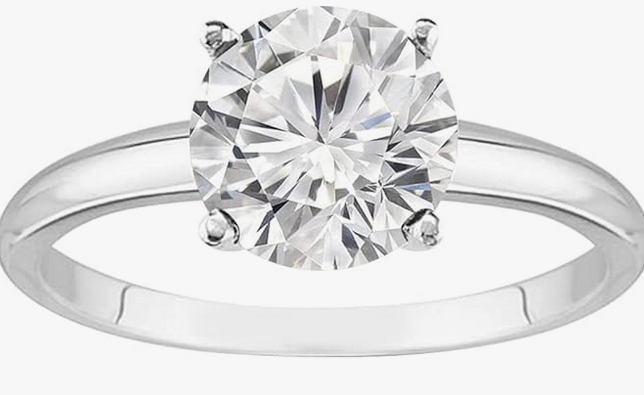
Houston Diamond District 1 to 10 Carat 14K White Gold IGI Certified Lab Grown Diamond Engagement Ring, Round Cut Solitaire, 4-Prong Setting (E–F Color VS2–SI1 Clarity)
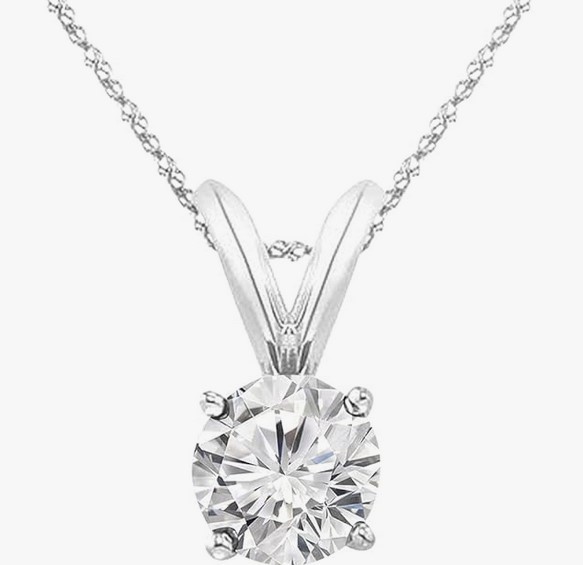
0.5-10 Carat Lab Grown Diamond Solitaire Pendant Necklace, Round Cut Solitaire, 4-Prong Setting, Jewelry for Women (E-F, VS)
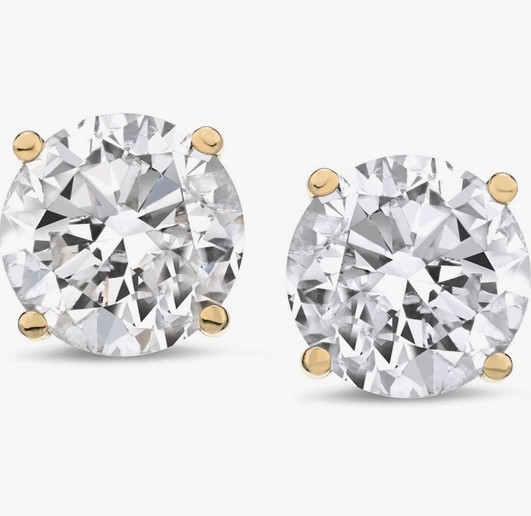
1 to 6 Carat LAB GROWN Solitaire Diamond Stud Earrings Round Cut 4 Prong Screw Back (F-G Color, VS1-VS2 Eye Clean Clarity)
A 1/2 carat diamond ring represents one of the most popular choices for engagement rings, offering a compelling balance between size, brilliance, and value. Measuring approximately 5.2mm in diameter for round cuts, this stone provides substantial visual impact while remaining accessible to a wide range of budgets, typically ranging from $1,200 to $8,000 depending on quality factors. A 1/2 carat diamond ring delivers enough presence to make a statement on the finger while offering flexibility in setting styles and metal choices that can enhance its overall appearance and accommodate various lifestyle preferences.
What Is a 1/2 carat diamond ring?
A 1/2 carat diamond ring features a center stone weighing exactly 0.50 carats, equivalent to 100 milligrams or one-fifth of a gram. This weight represents the actual mass of the diamond crystal, measured precisely using specialized gemological scales. The term “carat” derives from the carob seed, which ancient traders used as a standard weight measure due to its consistent mass. In the modern diamond industry, one carat equals exactly 200 milligrams, making the half-carat a significant milestone that many couples consider the minimum size for an engagement ring.
The physical dimensions of this stone vary depending on the cut chosen, but a round brilliant 1/2 carat diamond ring typically measures 5.2mm in diameter and 3.1mm in depth. Princess cut stones of the same weight measure approximately 4.7mm square, while oval cuts extend to roughly 6.5mm by 4.5mm. These measurements matter significantly because they determine how large the diamond appears when viewed from above, which directly impacts the visual presence on the wearer’s hand. Cut quality also affects these dimensions, as deeper stones appear smaller from the top view.
Understanding carat weight helps buyers make informed decisions about their investment. Unlike smaller diamonds that might appear insignificant, a 1/2 carat diamond ring provides enough surface area to showcase fire and brilliance effectively. This size allows light to enter and reflect through the stone’s facets in ways that create the scintillation and sparkle that diamonds are renowned for. The substantial weight also means the stone will have enough presence to complement various hand sizes and finger shapes appropriately.
Market research consistently shows that half-carat stones occupy a sweet spot in consumer preferences, offering the perfect compromise between impact and affordability. This weight category has become increasingly popular among millennials and Gen Z buyers who prioritize value and practicality. The size provides enough significance for special occasions while remaining comfortable for daily wear, making it an ideal choice for engagement rings that will be worn continuously for decades.
1/2 carat diamond ring Price Guide
Understanding the pricing structure for these stones requires examining how the Four Cs impact value within this specific weight category. A 1/2 carat diamond ring price varies dramatically based on color, clarity, cut quality, and certification source. The following ranges reflect current market conditions for loose stones from reputable dealers, with prices fluctuating based on market demand and supply conditions. These figures represent the stone only, before setting costs are added.
- A 1/2 carat diamond ring in D-F color, VVS1-VVS2, Excellent cut: $2,800-$5,200
- G-H color, VS1-VS2, Very Good to Excellent cut: $1,800-$3,400
- A 1/2 carat diamond ring with I-J color, SI1-SI2, Good to Very Good cut: $1,200-$2,200
- K-L color, SI2-I1, Good cut: $800-$1,500
- A 1/2 carat diamond ring in fancy shapes (princess, oval, cushion): $1,000-$4,000
Complete ring pricing includes the setting, which typically adds $300 to $3,000 depending on metal choice and design complexity. Simple solitaire settings in 14K white gold start around $300, while elaborate halo designs in platinum can exceed $2,000. The total investment for a finished ring therefore ranges significantly based on both stone and setting selections. Labor-grown diamonds in this size category typically cost 30-50% less than natural stones with identical specifications.
- Complete solitaire ring, G color, VS2, Excellent cut: $2,400-$3,200
- Halo setting ring, H color, SI1, Very Good cut: $2,800-$4,500
- Three-stone setting, F color, VVS2, Excellent cut: $4,200-$6,800
- Vintage-style setting, I color, SI2, Good cut: $2,100-$3,400
Regional pricing variations also affect these ranges, with major metropolitan areas typically commanding premium prices. Online retailers often offer competitive pricing due to lower overhead costs, but buyers should factor in potential return shipping and insurance costs. Seasonal demand patterns influence pricing, with engagement ring purchases typically peaking during November through February, potentially driving prices higher during these months.
The Four Cs for a 1/2 carat diamond ring
Cut quality represents the most critical factor affecting a 1/2 carat diamond ring’s beauty and value. Excellent and Ideal cut grades maximize light return, creating superior brilliance and fire that make the stone appear larger and more impressive. Poor cut quality can make even high-color, high-clarity diamonds appear dull and lifeless. For round brilliant cuts, look for table percentages between 54-57% and depth percentages between 59-62.3% for optimal performance. Crown and pavilion angles must work in harmony to direct light effectively through the stone.
Color grading becomes increasingly important as carat weight increases, and a 1/2 carat diamond ring will show color more readily than smaller stones. The GIA color scale ranges from D (colorless) to Z (light yellow), with most buyers focusing on the D-J range for this size category. G and H grades offer excellent value, appearing colorless when set in white gold or platinum while costing significantly less than D-F stones. I and J grades can work well in yellow gold settings where the metal’s warmth complements any subtle yellow tinting.
Clarity considerations for stones in this weight range require careful evaluation of inclusion size, location, and type. A 1/2 carat diamond ring with VS1-VS2 clarity provides peace of mind with no visible inclusions to the naked eye, while SI1-SI2 grades can offer excellent value if inclusions are well-positioned. Eye-clean SI2 stones represent significant savings opportunities for budget-conscious buyers. Avoid I1 clarity grades in this size range, as inclusions become readily apparent and may affect structural integrity.
Carat weight precision matters significantly in the market, with exact half-carat stones commanding premium pricing compared to stones weighing 0.48-0.49 carats. However, these slightly smaller alternatives can provide substantial savings while appearing virtually identical in size. A 1/2 carat diamond ring certified at exactly 0.50 carats will have stronger resale value, but the size difference between 0.49 and 0.50 carats is imperceptible to most observers. Consider this trade-off when budget constraints are important factors in the decision-making process.
Shape Options and Trade-Offs
Round brilliant cuts dominate the market for diamonds in this weight category, representing approximately 60% of all sales. This shape maximizes brilliance and fire through its 57-58 facet pattern, which has been mathematically optimized for light performance. Round stones also offer the advantage of appearing larger than other shapes of identical weight, making them ideal for buyers who prioritize visual impact. The cutting process for round stones wastes more rough diamond material, making them typically 10-20% more expensive than fancy shapes.
Princess cut stones offer a contemporary alternative with sharp, clean lines that appeal to modern tastes. These square-shaped diamonds can appear larger than round stones of the same weight due to their broader face-up appearance. However, princess cuts require protective settings due to their pointed corners, which are vulnerable to chipping. The shape works particularly well in solitaire and halo settings where the square outline creates striking geometric contrast against curved metal elements.
Oval, cushion, and emerald cuts provide distinctive alternatives that can appear larger than round stones while often costing less per carat. Oval cuts offer an elongated silhouette that can make fingers appear longer and more slender. Cushion cuts combine vintage charm with modern brilliance, while emerald cuts showcase clarity through their step-cut faceting pattern. Each shape has specific considerations: ovals may display bow-tie effects, cushions can vary significantly in length-to-width ratios, and emerald cuts require higher clarity grades due to their transparent faceting.
Pear, marquise, and heart shapes represent more unique options that can maximize apparent size through their elongated or distinctive profiles. These shapes require careful evaluation of symmetry and proportions to achieve optimal beauty. Pear and marquise cuts can create stunning east-west settings for contemporary looks, while heart shapes offer romantic symbolism that appeals to some buyers. However, these shapes have smaller markets for resale and require more specific setting styles to protect their points and achieve balanced appearance on the hand.
Wearing a 1/2 carat diamond ring: Size and Presence
The visual impact of a 1/2 carat diamond ring varies significantly based on the wearer’s hand size and finger length. On smaller hands with ring sizes 4-6, this stone size provides substantial presence without appearing overwhelming or disproportionate. The 5.2mm diameter of a round stone covers enough finger surface area to create impressive sparkle while maintaining elegance and refinement. Women with petite hands often find this size perfect for daily wear, as it makes a clear statement without interfering with regular activities or appearing ostentatious in professional settings.
For medium to larger hands with ring sizes 7-9, a 1/2 carat diamond ring still provides beautiful presence but may appear more proportionate rather than dramatic. The stone size complements broader fingers well and offers enough surface area to catch and reflect light effectively throughout the day. Many wearers in this category appreciate how the size balances significance with practicality, providing enough sparkle to satisfy their desires for a meaningful engagement ring while remaining comfortable during extended wear periods.
Finger shape considerations also influence how this size appears and feels during wear. On longer, more slender fingers, a 1/2 carat diamond ring can appear particularly elegant, with the stone’s proportions complementing the finger’s natural lines. Shorter fingers may benefit from elongated shapes like oval or marquise cuts that help create the illusion of length while maintaining the desired carat weight. The stone’s depth also matters for comfort, as properly proportioned cuts sit closer to the finger and feel more secure during wear.
Lifestyle factors play crucial roles in determining whether this size suits individual needs and preferences. Active individuals who work with their hands appreciate how a 1/2 carat diamond ring provides beauty without excessive height or bulk that could catch on clothing or equipment. The size offers enough durability to withstand daily activities while providing sufficient presence for special occasions and formal events. Many couples choose this size specifically because it transitions seamlessly between casual and formal settings without requiring removal or special care.
Setting Recommendations
Solitaire settings remain the most popular choice for showcasing stones in this weight category, allowing the diamond to take center stage without competition from additional elements. A well-designed solitaire elevates the stone slightly above the band, maximizing light entry while maintaining security through properly sized prongs. Six-prong settings offer superior security for round stones, while four-prong alternatives provide a more modern appearance with slightly more diamond visibility. The prong metal choice affects overall appearance, with white metals maintaining the stone’s colorless appearance and yellow gold adding warmth.
Halo settings can dramatically enhance the apparent size and brilliance of stones in this weight range by surrounding the center diamond with smaller accent stones. A well-executed halo can make the center stone appear up to 50% larger while adding substantial sparkle and fire to the overall design. However, buyers should ensure the halo complements rather than overwhelms the center stone, maintaining proper proportion between elements. Hidden halos underneath the center stone provide subtle enhancement without changing the ring’s profile significantly.
Three-stone settings offer symbolic meaning while providing additional sparkle through side stones that typically weigh 0.15-0.25 carats each. This design works particularly well for stones in the half-carat range, as the center diamond maintains clear dominance while the side stones add complementary brilliance. The setting style requires careful attention to stone matching for color and clarity to achieve harmonious appearance. Graduated sizes create pleasing visual flow, while uniform sizes offer more contemporary symmetry.
Vintage and antique-inspired settings provide character and uniqueness while accommodating modern cutting standards and security features. Art Deco designs with geometric patterns complement the clean lines of well-cut modern diamonds, while Victorian-inspired settings with intricate metalwork create romantic, feminine appearances. These settings often incorporate milgrain details, filigree work, or colored gemstone accents that enhance the overall design complexity. Buyers should ensure vintage-style settings include modern security features like properly sized prongs and reinforced shanks for daily wear durability.
Certification: What a 1/2 carat diamond ring Certificate Should Show
Gemological Institute of America (GIA) certification represents the gold standard for diamond grading, providing unbiased, consistent evaluation of the Four Cs along with detailed plotting of any inclusions or blemishes. A 1/2 carat diamond ring should include a GIA certificate that specifies exact carat weight, color grade, clarity grade, cut grade (for round stones), and detailed measurements including diameter, depth percentage, and table percentage. The certificate also includes fluorescence notation, which can affect appearance under UV light, and polish and symmetry grades that impact overall beauty.
American Gem Society (AGS) certification offers an alternative grading system that uses numerical scales rather than letter grades, with 0 representing the highest quality in each category. AGS certificates for stones in this size range provide detailed cut analysis including light performance data that can help buyers understand how well their diamond will sparkle. The AGS cut grading system covers all shapes, not just round brilliants, making it valuable for fancy shape evaluations. Both GIA and AGS maintain strict grading standards that ensure consistency and reliability.
Understanding how to read and interpret certification details helps buyers make informed decisions about their investment. The certificate plotting diagram shows inclusion locations and types, allowing evaluation of how these characteristics might affect appearance and durability. A 1/2 carat diamond ring certificate should clearly indicate whether any clarity characteristics are visible to the naked eye, helping buyers understand the practical implications of their clarity choice. Laser inscription numbers link the physical stone to its certificate, providing security against substitution.
Certification authenticity verification represents a crucial step in the buying process, as fraudulent certificates occasionally appear in the marketplace. Both GIA and AGS maintain online databases where buyers can verify certificate authenticity using the report number. The certificate should include security features like watermarks, special paper, or unique formatting that make counterfeiting difficult. A 1/2 carat diamond ring purchased without proper certification from a recognized laboratory should be approached with extreme caution, as the investment amount justifies the additional security that proper documentation provides.
Comparing Nearby Carat Weights
The relationship between a 1/2 carat diamond ring and stones weighing 0.40-0.49 carats reveals interesting value opportunities for savvy buyers. A 0.48-carat stone appears virtually identical to a 0.50-carat diamond but typically costs 8-15% less due to psychological pricing thresholds in the market. The size difference measures less than 0.1mm in diameter, making it imperceptible to casual observation while providing meaningful savings that can be applied toward higher cut quality or better setting options.
Moving up to 0.60-0.70 carat weights creates noticeable size increases but requires substantially higher investment levels. A 0.60-carat stone measures approximately 5.4mm in diameter compared to 5.2mm for the half-carat option, providing 15-20% more surface area for only slightly higher cost. However, a 1/2 carat diamond ring often represents better value when budget constraints require compromises in other areas, as the size provides adequate presence while allowing investment in superior cut quality or setting enhancements that maximize beauty.
Quarter-carat alternatives, weighing 0.25 carats, measure approximately 4.1mm in diameter and cost significantly less but may appear too small for many engagement ring purposes. The visual impact difference between 0.25 and 0.50 carats is substantial, with the larger stone providing roughly twice the surface area and dramatically superior light performance due to increased facet size. Buyers considering this comparison should examine both sizes in person to understand the practical implications of the size difference on their specific preferences and hand characteristics.
Three-quarter carat stones, at 0.75 carats, measure approximately 5.8mm in diameter and provide noticeably more presence than half-carat alternatives. However, the price jump often exceeds the visual improvement, making the half-carat option more attractive from a value perspective. A 1/2 carat diamond ring allows couples to achieve their primary goal of a meaningful engagement ring while maintaining budget flexibility for wedding expenses or other priorities. The size difference becomes less significant when proper setting choices enhance the stone’s apparent size and overall impact.
Where to Buy
Online retailers have revolutionized the diamond buying process, offering extensive selection, competitive pricing, and detailed imagery that helps buyers evaluate stones remotely. Reputable online dealers provide high-resolution photographs, 360-degree videos, and detailed specifications that allow thorough evaluation before purchase. A 1/2 carat diamond ring purchased online typically costs 20-40% less than equivalent stones from traditional brick-and-mortar retailers due to lower overhead expenses and competitive market dynamics. However, buyers should verify return policies, insurance coverage, and customer service availability before making significant purchases.
Traditional jewelry stores offer the advantage of in-person evaluation and immediate gratification, along with established relationships for ongoing service needs like sizing, cleaning, and maintenance. Local jewelers often provide personalized service and custom setting options that may not be available through online channels. The ability to see and compare multiple stones side-by-side helps buyers understand quality differences and make informed decisions about their investment. However, selection may be limited, and pricing often reflects higher operational costs associated with physical retail locations.
Wholesale districts in major cities like New York, Los Angeles, and Chicago provide access to trade-level pricing but require more expertise to navigate effectively. These markets offer extensive selection and competitive pricing for buyers willing to invest time in education and comparison shopping. A 1/2 carat diamond ring purchased wholesale can provide significant savings, but buyers must understand grading standards and market values to avoid overpaying for inferior quality. Professional guidance becomes valuable when navigating these complex market environments without established retail protections.
Estate and antique dealers occasionally offer unique opportunities to acquire vintage pieces with historical significance and distinctive character. These sources may provide access to older cutting styles or unusual settings that create truly unique engagement rings. However, buyers should carefully evaluate condition, certification status, and any necessary restoration work that might be required. A 1/2 carat diamond ring from estate sources requires expert evaluation to ensure the stone meets modern quality standards and the setting provides adequate security for daily wear. Professional appraisal becomes essential for insurance and valuation purposes when purchasing through these specialized channels.
Frequently Asked Questions
How big does a 1/2 carat diamond ring look on your finger?
A 1/2 carat diamond ring typically measures 5.2mm in diameter for round cuts, providing substantial presence without appearing overwhelming on most hand sizes. The stone covers enough finger surface area to create impressive sparkle while maintaining elegance for daily wear. On smaller hands with ring sizes 4-6, it provides significant visual impact, while on larger hands it appears proportionate and refined. The actual appearance depends on finger length, width, and the specific setting style chosen to showcase the diamond.
What’s a reasonable budget for this size engagement ring?
Complete ring budgets typically range from $1,500 to $8,000 depending on quality specifications and setting complexity. Mid-range options with G-H color, VS1-VS2 clarity, and excellent cut quality in simple solitaire settings cost approximately $2,400-$3,800. Higher-end specifications with D-F color and VVS clarity can exceed $6,000, while budget-conscious buyers can find attractive options with I-J color and SI1-SI2 clarity starting around $1,800. Setting costs add $300-$2,000 depending on metal choice and design complexity.
How does a 1/2 carat diamond ring compare to other popular sizes?
1/2 carat diamond ring stones provide significantly more presence than quarter-carat alternatives while costing considerably less than three-quarter or one-carat options. The size offers approximately twice the surface area of 0.25-carat stones with dramatically superior light performance and visual impact. Compared to one-carat stones, it provides 70% of the diameter at roughly 40-50% of the cost, making it an attractive value proposition. The size represents a sweet spot between visual significance and budget accessibility for many couples.
Should I choose natural or lab-grown for this carat weight?
Both natural and lab-grown options offer identical physical, chemical, and optical properties, with the choice depending on personal preferences and budget considerations. Lab-grown stones typically cost 30-50% less than natural alternatives with identical specifications, allowing either significant savings or investment in higher quality grades. Natural stones maintain traditional value and rarity appeal while offering stronger resale value over time. The size category works well for both options, as the visual impact remains impressive regardless of origin.
What clarity grade should I choose?
VS1-VS2 clarity grades offer optimal balance between beauty and value, providing eye-clean appearance with no visible inclusions during normal viewing. SI1 clarity can provide excellent value if inclusions are well-positioned and not visible to the naked eye, requiring careful individual stone evaluation. SI2 grades require expert selection to ensure eye-clean appearance, while VVS grades offer peace of mind at premium pricing. Avoid I1 clarity in this size range, as inclusions become readily apparent and may affect structural integrity over time.
Which setting style works best for a 1/2 carat diamond ring?
A 1/2 carat diamond ring works beautifully in various setting styles, with solitaires offering timeless elegance that showcases the stone’s natural beauty without competition. Halo settings can enhance apparent size by up to 50% while adding extra sparkle through surrounding accent stones. Three-stone designs provide symbolic meaning and additional brilliance through complementary side stones. The size accommodates both simple and elaborate settings effectively, with the choice depending on personal style preferences, lifestyle requirements, and budget considerations for the complete ring design.
A 1/2 carat diamond ring represents an ideal balance of size, beauty, and value that continues to satisfy couples seeking meaningful engagement rings without excessive investment. The combination of substantial visual presence, reasonable pricing, and versatile setting options makes this size category consistently popular across diverse demographics and style preferences. Whether chosen for its practical advantages or symbolic significance, the half-carat stone provides enough sparkle and elegance to create lasting satisfaction while accommodating various budget requirements and lifestyle needs.
Making an informed decision about your diamond purchase requires careful consideration of all factors discussed, from the Four Cs and certification requirements to setting styles and purchasing channels. A 1/2 carat diamond ring offers the flexibility to prioritize the characteristics most important to you while maintaining confidence in your investment’s beauty and value. For additional guidance and access to carefully curated diamond selections, visit the Carat Diamond homepage to explore comprehensive resources and expert assistance in finding your perfect ring.