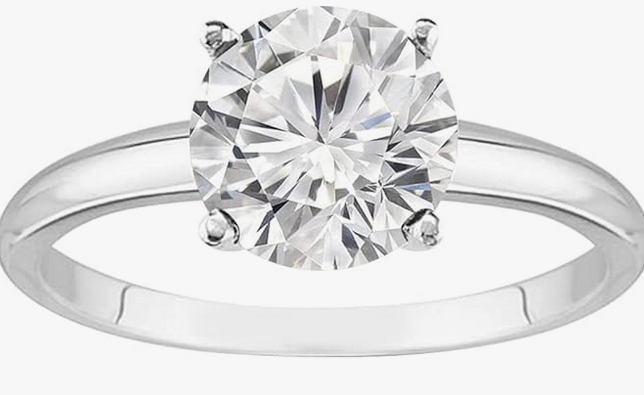
Houston Diamond District 1 to 10 Carat 14K White Gold IGI Certified Lab Grown Diamond Engagement Ring, Round Cut Solitaire, 4-Prong Setting (E–F Color VS2–SI1 Clarity)
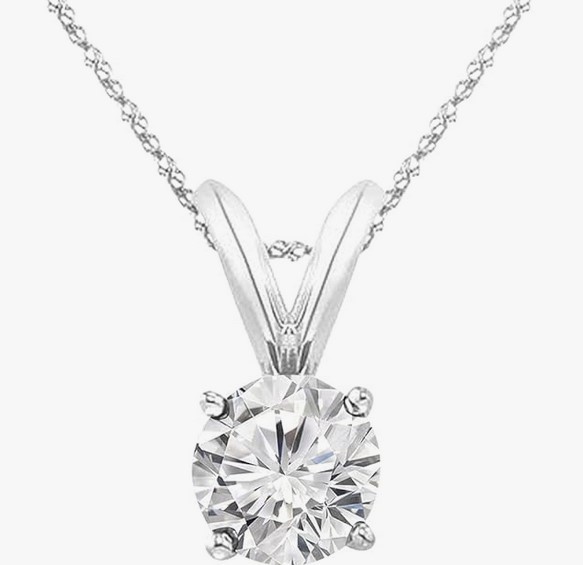
0.5-10 Carat Lab Grown Diamond Solitaire Pendant Necklace, Round Cut Solitaire, 4-Prong Setting, Jewelry for Women (E-F, VS)
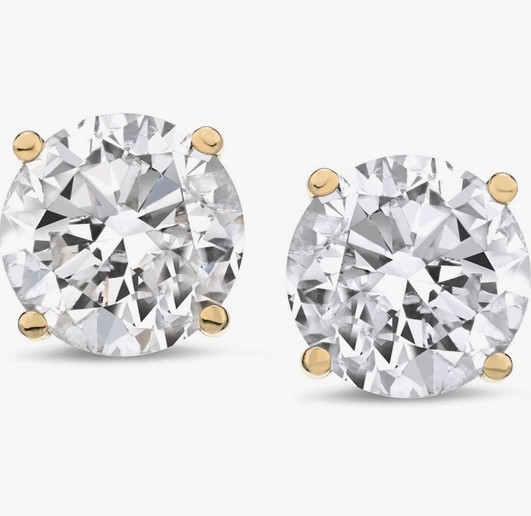
1 to 6 Carat LAB GROWN Solitaire Diamond Stud Earrings Round Cut 4 Prong Screw Back (F-G Color, VS1-VS2 Eye Clean Clarity)
1 Carat Diamond Price: The Complete Guide
Understanding the 1 carat diamond price is the key to shopping smart for the world’s most popular diamond size. The honest answer is that the cost of a one carat diamond varies widely — but it’s more affordable than most people expect, especially with lab grown options. The biggest factor is whether the stone is natural or lab grown, followed by its color, clarity, cut, and shape. This guide breaks down exactly what shapes the cost, so you can recognize real value with total confidence.
At Mycaratdiamond, every one carat diamond is real, certified, and crafted for maximum brilliance, so what you pay always reflects genuine quality and value.
How Much Does a 1 Carat Diamond Cost on Average?
Because quality varies, there’s no single figure — but here are realistic, general ranges. A quality lab grown one carat diamond is remarkably affordable, typically landing in the low four figures. A comparable natural one carat diamond usually costs several times more, depending on its grades. Finished rings cost more once the setting and metal are added. The key takeaway is that lab grown technology has made this classic size more accessible than ever.
What Determines the Cost of a 1 Carat Diamond?
Several measurable factors work together to set the cost of a one carat diamond:
- Origin (natural vs. lab grown) — the biggest single influence on cost.
- The 4Cs — Carat weight, Color, Clarity, and Cut.
- Shape — round brilliants cost more per carat than fancy shapes like oval or emerald.
- Certification — independently graded stones support a fair, transparent price.
- Setting and metal — for a finished ring, 14K gold, 18K gold, or platinum add to the total.
Once you understand how each factor moves the needle, the cost becomes much easier to judge.
Natural vs. Lab Grown Cost
This is where the difference is most dramatic. A natural one carat diamond carries a meaningful premium, while a lab grown stone of the same size and quality costs only a fraction as much. That single choice has the biggest impact on what you’ll pay.
Lab grown diamonds are chemically, physically, and optically identical to mined diamonds. They earn a perfect 10 on the Mohs hardness scale and display the same fire and brilliance. The only difference is origin. It’s worth noting that natural diamonds tend to hold more resale value, so if long-term resale is your priority, that’s a factor to weigh — but for size and sparkle per dollar, lab grown wins by a wide margin.
How the 4Cs Affect the Cost
The 4Cs are the universal language of diamond value, and each one shifts what you pay.
Carat weight is fixed at one carat here, but pricing isn’t linear — a one carat stone costs more per carat than a smaller one because larger diamonds are rarer.
Color runs from colorless (D) downward. A near-colorless E-F grade keeps the diamond bright and white while avoiding the steep premium of a flawless D — a smart way to lower the cost without sacrificing beauty.
Clarity measures internal characteristics. An eye-clean VS-SI range shows no inclusions visible to the naked eye, protecting brilliance while keeping the cost efficient.
Cut is the most important C for sparkle. Premium cut grades cost a little more but make the diamond look brighter and larger — well worth it.
How Shape Affects the Cost
Shape has a real impact on what a one carat diamond costs. Round brilliants are the most expensive per carat because cutting them wastes more rough. Fancy shapes — oval, cushion, emerald, pear, and marquise — typically cost less for the same carat weight, and many face up larger on the finger. Choosing a fancy shape is one of the simplest ways to reduce the cost while still enjoying a beautiful, classic look.
Certification and Value
Always choose a certified diamond. An independent grading report confirms the stone’s carat weight, color, clarity, and cut, so you know exactly what you’re paying for. Certification protects you, verifies authenticity, and ensures a fair, transparent price. A reputable seller will provide grading documentation for every stone.
How to Get the Best Value
To get the most beauty for your budget, keep these tips in mind:
- Choose lab grown. It’s the most direct way to lower the cost while keeping a genuine, certified diamond.
- Favor E-F color and eye-clean VS-SI clarity. This combination looks stunning and keeps the cost efficient.
- Prioritize cut quality. Excellent faceting maximizes sparkle and makes every carat work harder.
- Consider a fancy shape. Oval, cushion, or emerald cuts can reduce the cost and often look larger.
- Insist on certification. Independent grading confirms you’re paying a fair price.
Bottom line: the 1 carat diamond price is more affordable than ever — especially with lab grown. With a real, certified diamond in a near-colorless, eye-clean grade and an excellent cut, you can own a beautiful one carat stone at a price that finally makes sense. Explore our collection above to find the perfect one for you.
A 1 carat diamond price represents one of the most sought-after milestones in diamond purchasing, combining impressive size with timeless elegance. The 1 carat diamond price varies significantly based on the four Cs—cut, color, clarity, and carat weight—making it essential to understand these factors before investing. A 1 carat diamond measures approximately 6.5mm in diameter for round brilliant cuts, providing substantial visual presence on the finger while maintaining classic proportions. Understanding the 1 carat diamond price range helps buyers make informed decisions when selecting their perfect diamond, whether for engagement rings, anniversary gifts, or special occasions.
What Is a 1 Carat Diamond Price?
A 1 carat diamond price reflects the value of a diamond weighing exactly 200 milligrams or 0.2 grams, representing a significant milestone in diamond size and investment. The 1 carat diamond price encompasses not just the weight but also the quality factors that determine a diamond’s overall beauty and brilliance. A 1 carat diamond typically measures 6.5mm in diameter for round shapes, though fancy shapes like oval or emerald cuts may appear larger due to their elongated proportions. The face-up area of a 1 carat diamond covers approximately 33 square millimeters, providing impressive finger coverage that’s both noticeable and elegant.
The 1 carat diamond price range spans from several thousand dollars to over twenty thousand dollars, depending on the specific quality characteristics. A 1 carat diamond price is influenced by rarity, with higher grades commanding premium prices due to their exceptional beauty and scarcity. The visual impact of a 1 carat diamond makes it an ideal choice for engagement rings, as it provides substantial presence without being overwhelming on most finger sizes. Understanding what constitutes a 1 carat diamond price helps buyers appreciate why this particular weight class remains the most popular choice for significant jewelry purchases.
The 1 carat diamond price also reflects the psychological significance of reaching this full carat milestone, which many consider the gold standard for engagement rings. A 1 carat diamond price represents excellent value when compared to smaller weights, as the size increase from 0.90 to 1.00 carats provides dramatically more visual impact. The precision required to cut a 1 carat diamond to ideal proportions contributes to the 1 carat diamond price, as master craftsmen must maximize both beauty and carat weight retention. Market demand consistently drives the 1 carat diamond price higher than proportional increases might suggest, making this weight class a solid investment choice.
1 Carat Diamond Price Guide
A comprehensive 1 carat diamond price guide reveals significant variations based on quality grades and diamond origin, with natural diamonds commanding higher prices than lab-grown alternatives. The 1 carat diamond price for natural stones ranges from $4,000 to $25,000, while lab-grown options typically cost 60-80% less than their natural counterparts. A 1 carat diamond price in the premium category features D-F color grades, FL-VVS2 clarity, and Excellent cut quality, representing the pinnacle of diamond perfection. Understanding these 1 carat diamond price tiers helps buyers identify the best value proposition for their specific budget and preferences.
The following breakdown illustrates typical 1 carat diamond price ranges for natural diamonds:
- A 1 carat diamond price in D-F color, FL-VVS2 clarity, Excellent cut: $15,000-$25,000
- A 1 carat diamond price in G-H color, VVS1-VS1 clarity, Excellent cut: $8,000-$15,000
- A 1 carat diamond price in I-J color, VS2-SI1 clarity, Very Good-Excellent cut: $5,000-$8,000
- A 1 carat diamond price in K-M color, SI2-I1 clarity, Good-Very Good cut: $4,000-$6,000
Lab-grown diamonds offer substantial savings on the 1 carat diamond price while maintaining identical physical and optical properties to natural stones. A 1 carat diamond price for lab-grown stones typically ranges from $1,200 to $6,000, depending on quality grades and cutting precision. The 1 carat diamond price difference between natural and lab-grown options allows buyers to either save significantly or upgrade to higher quality grades within the same budget. Market trends show the 1 carat diamond price gap between natural and lab-grown diamonds continues to widen as lab technology improves and production scales increase.
Seasonal fluctuations can affect the 1 carat diamond price, with peak engagement seasons typically seeing 10-15% higher prices due to increased demand. A 1 carat diamond price may also vary based on specific shape preferences, with round brilliants commanding premium prices compared to fancy shapes. The 1 carat diamond price structure rewards buyers who prioritize cut quality, as excellent cutting maximizes light performance and visual appeal regardless of other quality factors. Smart shoppers research current 1 carat diamond price trends and work with reputable dealers to ensure they receive fair market value for their investment.
The Four Cs for a 1 Carat Diamond Price
Understanding how the four Cs impact the 1 carat diamond price enables buyers to make educated decisions about which quality factors matter most for their specific needs and preferences. The 1 carat diamond price varies dramatically based on cut quality, which directly affects light performance and overall brilliance—making cut the most important factor for visual appeal. A 1 carat diamond price reflects color grades from D (colorless) to Z (light yellow), with each grade representing noticeable price jumps as you move toward colorless ranges. Clarity’s impact on the 1 carat diamond price depends on inclusion visibility, with eye-clean SI1-SI2 grades offering excellent value compared to flawless stones.
Cut quality exerts the strongest influence on both beauty and the 1 carat diamond price, as superior cutting transforms rough diamonds into brilliant gemstones that maximize light return. A 1 carat diamond price for Excellent cut stones commands 15-30% premiums over Good cut diamonds, but the visual difference justifies this investment for most buyers. The 1 carat diamond price structure rewards precise cutting angles and proportions that create optimal light performance, fire, and scintillation. Professional gemologists consistently recommend prioritizing cut quality when evaluating the 1 carat diamond price, as poor cutting cannot be corrected after purchase.
Color significantly affects the 1 carat diamond price, with D-F colorless grades commanding substantial premiums over near-colorless G-J ranges. A 1 carat diamond price in G-H color provides excellent value, as these grades appear colorless when mounted in white gold or platinum settings. The 1 carat diamond price difference between consecutive color grades typically ranges from 10-20%, with larger jumps occurring between major categories. Smart buyers often find the sweet spot for 1 carat diamond price value in G-H color grades, which offer beautiful appearance without premium colorless pricing.
Clarity’s relationship to the 1 carat diamond price follows predictable patterns, with flawless stones commanding extreme premiums despite minimal visual differences from lower grades. A 1 carat diamond price in VS1-VS2 clarity provides excellent value, as inclusions remain invisible to the naked eye while avoiding premium pricing. The 1 carat diamond price for SI1-SI2 grades can offer exceptional value when inclusions don’t affect durability or beauty, allowing budget allocation toward cut and color. Experienced diamond professionals help buyers identify eye-clean diamonds at various clarity levels, optimizing the 1 carat diamond price value proposition.
1 Carat Diamond Price Shape Comparison
Diamond shape significantly influences the 1 carat diamond price, with round brilliant cuts typically commanding 15-25% premiums over fancy shapes due to higher rough diamond waste during cutting. A 1 carat diamond price comparison reveals that oval, cushion, and pear shapes offer excellent value alternatives to round diamonds while providing unique aesthetic appeal. The 1 carat diamond price for princess cuts falls between round and other fancy shapes, as their square outline maximizes rough diamond utilization while maintaining high brilliance. Understanding how shape affects the 1 carat diamond price helps buyers explore options that maximize size appearance within their budget constraints.
Round brilliant diamonds represent the most expensive option when comparing 1 carat diamond price across shapes, but they also provide maximum light return and universal appeal. A 1 carat diamond price for round stones reflects the premium consumers pay for this classic choice, which maintains strong resale value and timeless elegance. The 1 carat diamond price premium for rounds is justified by their superior light performance, achieved through decades of mathematical optimization and cutting research. Buyers seeking traditional beauty and maximum brilliance often consider the round 1 carat diamond price premium worthwhile for their engagement ring investment.
Fancy shapes offer compelling alternatives to round diamonds, with varying impacts on the 1 carat diamond price depending on popularity and cutting efficiency. A 1 carat diamond price for oval shapes provides excellent value, as their elongated silhouette creates the illusion of larger size while costing less than rounds. The 1 carat diamond price for cushion cuts appeals to buyers seeking vintage charm and romantic appeal at prices typically 20-30% below comparable rounds. Emerald cut diamonds offer a sophisticated 1 carat diamond price point, though their step-cut faceting requires higher clarity grades to maintain beauty.
Shape preferences increasingly influence the 1 carat diamond price landscape as younger buyers embrace unique alternatives to traditional rounds. A 1 carat diamond price for marquise and pear shapes provides maximum finger coverage due to their elongated proportions, making them appear larger than their actual weight. The 1 carat diamond price for asscher cuts appeals to those seeking Art Deco elegance, though their smaller face-up appearance requires acceptance of less visual impact. Market trends show the 1 carat diamond price differential between shapes continues evolving as consumer preferences shift toward more diverse and personalized choices.
Best Settings for a 1 Carat Diamond Price
Selecting the optimal setting enhances both the beauty and protection of your investment when considering the total 1 carat diamond price package. A 1 carat diamond price justifies premium setting choices that complement the stone’s size and brilliance while providing adequate security for daily wear. The 1 carat diamond price investment deserves a setting crafted from durable metals like platinum or 18k gold, which maintain their beauty and structural integrity over decades of wear. Professional jewelers recommend that setting costs represent 15-25% of the total 1 carat diamond price to ensure proper proportions and quality construction.
Prong settings remain the most popular choice for showcasing a 1 carat diamond price investment, as they maximize light exposure while providing secure stone mounting. A 1 carat diamond price warrants six-prong settings for round stones and four-prong configurations for fancy shapes, ensuring adequate security without overwhelming the diamond’s beauty. The 1 carat diamond price justifies platinum prongs, which offer superior durability and won’t discolor white diamonds over time like white gold alternatives might. Proper prong gauge for a 1 carat diamond price investment should balance security with aesthetics, typically measuring 1.5-2.0mm in width.
Halo settings can enhance the apparent size of a 1 carat diamond price investment while adding additional sparkle and vintage charm to the overall design. A 1 carat diamond price combined with a well-designed halo creates impressive finger coverage that rivals larger center stones at fraction of the cost. The 1 carat diamond price advantage in halo settings lies in achieving maximum visual impact while maintaining budget control through strategic design choices. However, buyers should ensure the 1 carat diamond price investment remains the focal point, with halo diamonds sized appropriately to complement rather than compete.
Three-stone settings provide elegant showcases for a 1 carat diamond price investment while incorporating additional diamonds that enhance overall brilliance and significance. A 1 carat diamond price in three-stone designs typically features side stones ranging from 0.25-0.50 carats each, creating balanced proportions and symbolic meaning. The 1 carat diamond price investment benefits from three-stone settings that use graduated sizing, ensuring the center stone maintains visual dominance. Custom setting options allow buyers to optimize their 1 carat diamond price investment through personalized design elements that reflect individual style preferences and lifestyle requirements.
1 Carat Diamond Price vs Other Carat Weights
Comparing the 1 carat diamond price against other popular weights reveals significant value considerations that influence smart purchasing decisions. A 1 carat diamond price typically represents a substantial jump from 0.90-carat alternatives, often costing 15-20% more despite only 11% additional weight due to psychological milestone pricing. The 1 carat diamond price advantage over smaller weights becomes apparent in visual impact, as the difference between 0.75 and 1.00 carats creates noticeably more finger presence and light performance. Understanding these 1 carat diamond price relationships helps buyers determine whether reaching the full carat milestone aligns with their priorities and budget.
The following comparison illustrates how 1 carat diamond price relates to other popular weights:
- A 1 carat diamond price compared to 0.90 carat: approximately 15-20% higher cost for 11% more weight
- A 1 carat diamond price compared to 0.75 carat: roughly 40-50% higher cost for 33% more weight
- A 1 carat diamond price compared to 1.25 carat: about 35-45% lower cost with 20% less weight
- A 1 carat diamond price compared to 1.50 carat: approximately 60-70% lower cost with 33% less weight
Size appearance differences justify the 1 carat diamond price premium for many buyers, as the visual jump from smaller weights creates substantially more impressive finger coverage. A 1 carat diamond price investment provides the satisfaction of reaching a significant milestone while maintaining reasonable proportions for most hand sizes. The 1 carat diamond price represents optimal balance between impressive size and budget consciousness, avoiding the exponential price increases associated with larger weights. Market research consistently shows the 1 carat diamond price point attracts the highest consumer interest due to this ideal size-to-cost ratio.
Buyers considering alternatives to the 1 carat diamond price should understand that slightly smaller stones can offer significant savings while appearing nearly identical when mounted. A 1 carat diamond price comparison with 0.95-carat stones reveals potential savings of 10-15% with virtually imperceptible size differences. However, the 1 carat diamond price milestone provides psychological satisfaction and resale value advantages that many buyers consider worthwhile. The 1 carat diamond price also establishes a clear benchmark for comparison shopping, as this weight represents one of the most liquid and easily valued categories in the diamond market.
Wearing a 1 Carat Diamond Price: What to Expect
Daily wear experience with a 1 carat diamond price investment combines impressive visual presence with practical considerations that affect long-term satisfaction. A 1 carat diamond price provides substantial finger coverage measuring approximately 6.5mm in diameter for round cuts, creating noticeable sparkle and elegance without appearing ostentatious. The 1 carat diamond price investment translates to comfortable wearing weight of roughly 0.2 grams for the diamond itself, plus setting weight that typically ranges from 2-4 grams depending on metal choice and design complexity. Understanding these practical aspects helps buyers appreciate what their 1 carat diamond price investment delivers in terms of daily wearing experience.
Finger coverage from a 1 carat diamond price investment suits most hand sizes beautifully, providing substantial presence without overwhelming smaller fingers or appearing inadequate on larger hands. A 1 carat diamond price delivers optimal proportions for ring sizes 4-8, which encompass the majority of adult women’s finger measurements. The 1 carat diamond price investment creates impressive light performance that generates noticeable sparkle in both natural and artificial lighting conditions. Professional jewelers confirm that the 1 carat diamond price point represents the sweet spot where diamonds begin exhibiting truly impressive fire and scintillation that commands attention.
Lifestyle compatibility with a 1 carat diamond price investment requires consideration of daily activities and potential exposure to damage or loss risks. A 1 carat diamond price justifies insurance coverage, with annual premiums typically costing 1-2% of the stone’s appraised value to protect against theft, loss, or damage. The 1 carat diamond price investment may require periodic professional cleaning and maintenance to preserve optimal light performance and setting security. Active individuals should discuss protective setting options that maximize their 1 carat diamond price investment’s durability while maintaining beauty for decades of wear.
Professional occasions and social settings provide ideal opportunities to showcase a 1 carat diamond price investment, as this size commands appropriate attention without appearing excessive. A 1 carat diamond price delivers confidence-inspiring presence that enhances both casual and formal attire while maintaining sophisticated elegance. The 1 carat diamond price investment provides versatility for various social situations, from business meetings to evening events where impressive jewelry enhances personal style. Long-term owners consistently report high satisfaction with their 1 carat diamond price investment, citing the perfect balance of size, beauty, and practical wearability.
Certification for a 1 Carat Diamond Price
Professional certification plays a crucial role in validating and protecting a 1 carat diamond price investment, providing independent verification of quality characteristics that determine value. A 1 carat diamond price should always include certification from reputable gemological laboratories like GIA, AGS, or GCAL to ensure accurate grading and market confidence. The 1 carat diamond price premium for GIA-certified stones reflects the laboratory’s reputation for consistent, conservative grading that maintains long-term value and resale potential. Understanding certification’s impact on the 1 carat diamond price helps buyers make informed decisions about laboratory choice and grading reliability.
GIA certification represents the gold standard for validating a 1 carat diamond price investment, as their grading consistency and international recognition provide maximum market acceptance. A 1 carat diamond price with GIA certification typically commands 5-10% premiums over lesser-known laboratory alternatives, but this investment pays dividends in resale value and buyer confidence. The 1 carat diamond price verification through GIA includes detailed analysis of cut quality, color grade, clarity characteristics, and fluorescence levels that affect beauty and value. Professional jewelers unanimously recommend GIA certification for significant 1 carat diamond price investments due to their unparalleled reputation and stringent grading standards.
Alternative certification options can impact the 1 carat diamond price through varying grading standards and market acceptance levels among different laboratories. A 1 carat diamond price with IGI certification may appear lower than GIA equivalents, but buyers should understand that grading differences rather than actual quality variations often explain these discrepancies. The 1 carat diamond price comparison between laboratory certifications requires careful evaluation of actual stone characteristics rather than relying solely on paper grades. Experienced diamond professionals help buyers understand how certification choices affect both immediate 1 carat diamond price and long-term value retention.
Certificate details beyond basic grading significantly influence the 1 carat diamond price through inclusion plots, proportion measurements, and fluorescence assessments. A 1 carat diamond price investment deserves thorough certificate review to identify potential issues like strong fluorescence or problematic inclusions that might affect beauty or durability. The 1 carat diamond price validation process should include certificate verification with the issuing laboratory to prevent fraud and ensure authenticity. Smart buyers use certification information to negotiate fair 1 carat diamond price terms while avoiding stones with characteristics that might compromise long-term satisfaction or resale value.
Where to Buy a 1 Carat Diamond Price
Selecting the right vendor significantly impacts both the 1 carat diamond price paid and the overall purchasing experience, making dealer research essential for smart buying decisions. A 1 carat diamond price comparison across different retail channels reveals substantial variations, with online vendors typically offering 20-40% savings over traditional brick-and-mortar stores. The 1 carat diamond price advantage of reputable online dealers stems from lower overhead costs and increased inventory turnover that enables competitive pricing strategies. However, buyers must balance 1 carat diamond price savings against the value of in-person examination and local service relationships when choosing vendors.
Online diamond retailers provide extensive 1 carat diamond price comparisons and detailed imagery that facilitate informed purchasing decisions from the comfort of home. A 1 carat diamond price search through established online platforms like Blue Nile, James Allen, or Brilliant Earth offers thousands of options with comprehensive filtering and comparison tools. The 1 carat diamond price transparency available online enables buyers to research market values and identify exceptional deals before making commitments. Reputable online vendors support their 1 carat diamond price offerings with generous return policies, professional certifications, and detailed photography that builds confidence in remote purchasing.
Local jewelry stores provide valuable services that may justify higher 1 carat diamond price points through personalized consultation, immediate possession, and ongoing relationship benefits. A 1 carat diamond price from established local dealers often includes additional services like sizing, cleaning, and maintenance that add long-term value beyond the initial purchase. The 1 carat diamond price premium for local purchases may be offset by the ability to examine stones personally and receive immediate expert guidance during selection. Building relationships with local jewelers can provide advantages for future 1 carat diamond price negotiations and access to exclusive inventory or custom services.
Auction houses and estate sales occasionally offer unique opportunities to acquire exceptional 1 carat diamond price values, though these venues require significant expertise to navigate successfully. A 1 carat diamond price at auction may represent substantial savings on exceptional stones, but buyers must understand grading, condition assessment, and bidding strategies. The 1 carat diamond price advantage in estate purchases often comes from motivated sellers and unique vintage stones, but professional evaluation becomes crucial for protecting investments. Experienced collectors sometimes find remarkable 1 carat diamond price opportunities through these alternative channels, though novice buyers should proceed cautiously without professional guidance.
Understanding One Carat Diamond Value Beyond the Sticker Number
Once you know the basic ranges, the next step is understanding why two one carat diamonds can differ so much in cost — and how to make that work in your favor. The number on the tag is only the starting point. What really matters is how the diamond’s quality, shape, and origin combine to create value. This section goes deeper, so you can shop like an expert and spend every dollar wisely.
Price Per Carat vs. Total Price
Diamonds are often quoted as a “price per carat,” but what you actually pay is the total price. For a one carat stone these happen to be the same figure, yet the per-carat idea still matters, because that per-carat rate rises with quality. A flawless, colorless, perfectly cut stone carries a far higher per-carat rate than an eye-clean, near-colorless one — even at the identical weight. Knowing this helps you see exactly where your money goes, and where you can trade a barely visible quality difference for meaningful savings.
The One-Carat Threshold: Why 0.90 vs 1.00 Matters
One of the biggest hidden factors in what you pay is the “magic number” effect. Diamonds priced at exactly 1.00 carat command a premium simply for hitting that round, desirable weight. A stone of 0.90 to 0.99 carats looks virtually identical on the finger — the diameter difference is a fraction of a millimeter — but can cost noticeably less. If maximizing value is your goal, a stone just shy of the full carat mark is one of the smartest moves you can make, delivering the same look for less.
How Quality Combinations Change What You Pay
The real art of buying is balancing the 4Cs so the diamond looks stunning while the cost stays sensible. A few proven strategies:
- Choose eye-clean, not flawless. An SI or VS stone with no inclusions visible to the naked eye looks the same as a flawless one in everyday wear, for far less.
- Pick near-colorless over colorless. An E, F, or G diamond faces up bright and white, avoiding the steep jump to a D grade.
- Never skimp on cut. Cut drives sparkle, so this is the one C where paying up always pays off.
- Let the setting help. Yellow or rose gold pairs beautifully with slightly warmer color grades, letting you save on color without any visible trade-off.
Combine these thoughtfully and you can dramatically lower the cost of a one carat diamond while keeping it gorgeous.
Why Natural and Lab Grown Diamonds Are Priced So Differently
The gap between natural and lab grown comes down to supply. Natural one carat diamonds are finite and rare, formed over billions of years and mined from the earth, so their price reflects that scarcity. Lab grown diamonds are created efficiently in a controlled environment, so supply is steady and the cost is far lower — even though the two are chemically and optically identical. This is why choosing lab grown is the single most powerful way to stretch your budget. Natural stones, on the other hand, tend to retain more resale value, which some buyers weigh when deciding.
Budgeting Smartly for a One Carat Diamond
Set your priorities before you shop. Decide first whether size, quality, or origin matters most to you, then allocate accordingly. If a classic look for the lowest cost is the goal, a lab grown, eye-clean, near-colorless, well-cut stone in a fancy shape or just under a full carat is unbeatable value. If heritage and resale matter more, a natural stone is worth the premium. Either way, knowing your must-haves keeps you from overpaying for grades you’ll never notice.
Common Mistakes That Cost You Money
- Overpaying for flawless clarity. Once a stone is eye-clean, higher grades add cost but no visible beauty.
- Chasing a D color unnecessarily. Near-colorless grades look just as white in most settings.
- Ignoring cut to boost another C. A poorly cut diamond looks dull no matter how high its other grades.
- Fixating on exactly 1.00 carat. A stone a hair under the mark saves money with no visible loss.
- Skipping certification. Without an independent report, you can’t verify what you’re paying for.
Insurance, Appraisal, and Protecting Your Purchase
Once you’ve bought a beautiful one carat diamond, protect it. Keep your grading report in a safe place, and consider an appraisal for insurance purposes, especially for a natural stone. Jewelry insurance — either a rider on your home policy or a standalone plan — covers loss, theft, and damage, giving you peace of mind. Regular professional cleaning and prong checks also keep the diamond secure and brilliant for a lifetime.
What Makes One Carat the Timeless Standard
Before diving deeper into value, it helps to understand why one carat holds such a special place. The one carat diamond has become the universal benchmark for engagement rings and fine jewelry — instantly recognizable, meaningfully sized, and endlessly wearable. It sits at the perfect intersection of presence and practicality, which is exactly why demand for this size is so consistent. That popularity is part of what shapes its value, and it’s why understanding how to buy one wisely matters so much.
How to Read a Diamond Grading Report
A grading report is your best tool for judging quality and value, so learning to read one pays off. Every reputable report lists the essentials:
- Carat weight: the precise weight, confirmed to the hundredth of a carat.
- Color grade: where the stone falls on the colorless-to-warm scale.
- Clarity grade: the type and visibility of any inclusions.
- Cut grade: how well the diamond returns light, from Excellent downward.
- Measurements and proportions: the exact dimensions and angles.
- Origin: whether the stone is natural or lab grown.
Comparing two stones side by side using their reports is the clearest way to see why one costs more than another — and to make sure you’re paying a fair price for the quality you’re getting.
Fluorescence: A Lesser-Known Price Factor
Fluorescence is the soft glow some diamonds emit under ultraviolet light, and it’s one of the most overlooked factors affecting cost. Many diamonds have none, while others range from faint to strong. In most cases, faint to medium fluorescence has no visible effect on how the diamond looks in daylight — yet it can lower the price. For a savvy buyer, a diamond with mild fluorescence can be a genuine value opportunity, offering the same beauty for less. As always, viewing the stone or trusting a detailed report helps you judge.
How Metal Choice Affects Appearance and Cost
The metal you choose does more than set the style — it influences both the total cost and how the diamond appears. Platinum is denser, more durable, and typically pricier, with a naturally white finish that keeps a diamond looking icy. White gold offers a similar look for less. Yellow and rose gold bring warmth and can actually flatter a slightly warmer color grade, letting you save on color without any visible trade-off. Matching your metal to your diamond’s color grade is a smart way to balance beauty and budget.
Round vs. Fancy Shapes at One Carat
At one carat, shape has a big effect on both look and cost. Round brilliants are the most popular and the most brilliant, but they carry the highest per-carat cost because cutting them wastes more rough. Fancy shapes — oval, cushion, emerald, pear, and marquise — generally cost less for the same weight, and several of them face up larger on the finger. An oval or marquise, for instance, can make a one carat diamond look bigger than a round of equal weight, giving you more visible size for your money.
Online vs. In-Store: Getting the Best Deal
Where you shop affects what you pay. Traditional stores offer the chance to see a diamond in person, but often carry higher overhead costs. Shopping online typically means a wider selection and better value, especially for certified stones you can evaluate through detailed reports and imagery. Whichever route you choose, the essentials stay the same: insist on independent certification, prioritize cut, and compare like-for-like grades so you know you’re getting a fair deal.
Caring for Your Diamond to Preserve Its Beauty
A diamond is forever, but keeping it brilliant takes a little care. Clean it regularly with warm water, mild soap, and a soft brush to remove the oils and residue that dull its sparkle. Have the setting and prongs checked periodically by a jeweler to make sure the stone stays secure. Store it separately from other jewelry to avoid scratches. These simple habits keep your diamond looking as dazzling as the day you brought it home — and protect its long-term value.
The Sustainability and Ethics Advantage of Lab Grown
Value isn’t only about cost. For many buyers, lab grown diamonds offer peace of mind beyond the savings. Because they’re created in a controlled environment, they sidestep the concerns some associate with mining, and they arrive with clear, traceable origins. You get a real, certified diamond that’s identical to a mined one in every physical way — beautiful, durable, and brilliant — with both a friendlier price and a modern, conscientious story behind it.
Bottom line: the more you understand about grading, fluorescence, metals, shapes, and care, the more confident you’ll feel about the 1 carat diamond price you pay. Knowledge is the ultimate value tool — and with it, you can own a stunning, classic one carat diamond that looks magnificent and makes perfect sense for your budget. Explore our collection above to find yours.
Is a One Carat Diamond a Good Investment?
It’s a common question, and the honest answer brings nuance. A diamond’s true worth is in the beauty and meaning it brings, not in speculation. That said, value retention does differ by origin: natural diamonds tend to hold more of their worth over time and maintain an established resale market, while lab grown diamonds are valued for delivering maximum size and sparkle for the lowest cost rather than for resale. The smartest approach is to buy the most beautiful stone you can enjoy for your budget — and to view any long-term value as a bonus, not the goal.
One Carat vs. Other Popular Sizes
Seeing one carat in context helps you decide what’s right for you:
- Half carat (0.5 ct): dainty and very affordable, roughly 5 mm across — lovely for delicate, minimalist styles.
- Three-quarter carat (0.75 ct): a near-one-carat look for less, around 5.8 mm.
- One carat (1.0 ct): the classic benchmark at about 6.4 mm — the perfect balance of presence and price.
- One and a half carat (1.5 ct): a noticeable step up in presence, around 7.4 mm.
- Two carat (2.0 ct): a bold statement at roughly 8 mm, with a significantly higher price.
Because cost rises faster than size, one carat remains the sweet spot where beauty and value meet — which is exactly why it’s so enduringly popular.
Total Carat Weight vs. Center Stone
Here’s a distinction that trips up many shoppers. A ring described as “one carat total weight” is not the same as a ring with a one carat center stone. Total carat weight (TCW) adds up every diamond in the piece — the center plus all the accent stones — so a one carat TCW halo ring might have a center stone of only half a carat surrounded by smaller diamonds. A single one carat center stone almost always costs more than one carat spread across many small stones. Always check whether a price refers to the center diamond alone or the total weight, so you know exactly what you’re paying for.
Lab Grown vs. Diamond Simulants: Know What You’re Paying For
It’s important not to confuse a lab grown diamond with a diamond simulant. A lab grown diamond is a real diamond — pure crystallized carbon, identical to a mined stone in every physical and optical way. Simulants like moissanite and cubic zirconia are entirely different materials that merely imitate a diamond’s look; they’re softer, sparkle differently, and cost far less. When you buy a certified lab grown diamond, you’re getting the genuine article at a lower price than natural — not an imitation. Knowing this distinction ensures you understand the real value behind the cost.
Settings That Make a One Carat Look Bigger
The right setting can make a one carat diamond appear noticeably larger without spending more on the stone itself:
- Halo: a ring of small diamonds around the center can make a one carat look a half carat larger or more.
- Slim band: a thinner band makes the center stone appear bigger by contrast.
- Thin prongs and a raised setting: lifting the diamond and minimizing metal lets more of it show.
- Elongated shapes: ovals and pears cover more of the finger for extra visual size.
These tricks let you maximize presence while keeping the diamond — and the cost — right where you want it.
Matching Your Diamond to Your Lifestyle
Practical considerations matter too. If you work with your hands or wear your ring every day, a durable shape with protected edges — like a round or a bezel-set stone — stands up well to daily life. A lower-profile setting resists snagging, while a secure prong or bezel keeps the diamond safe. Thinking about how you’ll actually wear your one carat diamond helps you choose a design that stays beautiful and secure for years, protecting both its look and its value.
Understanding Retail Markups and How to Shop Value
Two diamonds of identical quality can carry very different prices depending on where they’re sold. Traditional retailers often build in higher markups to cover overhead, while direct and online sellers typically offer better value on comparable, certified stones. The way to shop smart is simple: compare like-for-like grades using independent reports, prioritize cut, and don’t pay for a name or a storefront when the diamond itself is what matters. This is how informed buyers consistently get more diamond for their money.
Bottom line: from investment realities to settings, simulants, and smart shopping, understanding these details puts you in complete control of the 1 carat diamond price you pay. Armed with the full picture, you can choose a gorgeous, genuine one carat diamond that fits your life and your budget perfectly. Explore our collection above to find yours.
A Closer Look at Cut: The Most Important C
If there’s one quality that decides how breathtaking a one carat diamond looks, it’s the cut. Cut isn’t the shape — it’s how precisely the diamond’s facets are angled to handle light, and it drives three things: brilliance (the white light that returns to your eye), fire (the flashes of rainbow color), and scintillation (the sparkle you see as the stone moves). Cut is graded from Excellent down to Poor. For a one carat diamond, prioritizing an Excellent or Very Good cut is the single best way to guarantee dazzling sparkle — and it can even make the stone look larger, since a well-cut diamond returns light across its whole face.
Understanding the Color Scale in Detail
Diamond color is graded on a scale from D to Z, where D is completely colorless and the warmth gradually increases toward Z. Here’s how the ranges break down:
- D–F (colorless): the rarest and priciest, with no detectable color.
- G–J (near-colorless): excellent value — these face up white, especially once set.
- K and beyond: a warmer tint that some love in yellow or rose gold settings.
For most buyers, the smartest value on a one carat diamond lives in the near-colorless range, where the stone looks bright and white without the premium of a flawless D grade.
Clarity Grades Explained
Clarity describes the tiny natural characteristics, called inclusions, inside a diamond. The scale runs from Flawless (FL) through Internally Flawless (IF), Very Very Slightly Included (VVS), Very Slightly Included (VS), Slightly Included (SI), and Included (I). The key concept is “eye-clean” — a diamond with no inclusions visible to the naked eye. Many VS and SI stones are perfectly eye-clean, delivering the same beautiful appearance as far pricier flawless grades. For a one carat diamond, targeting an eye-clean stone is the smart way to enjoy flawless-looking beauty without overpaying.
How Diamond Measurements Affect Apparent Size
Two one carat diamonds can look different in size, and it comes down to proportions. A diamond’s millimeter diameter, table percentage, and depth percentage all influence how large it appears face-up. A stone cut to ideal proportions shows its full weight beautifully, while one cut too deep hides weight in its base and can look smaller. This is why measurements matter alongside carat weight — and why a well-proportioned, well-cut diamond gives you the most visible size for your money. Checking the millimeter dimensions on a grading report is a great way to compare apparent size.
A Step-by-Step Roadmap to Buying Your One Carat Diamond
A clear plan makes buying easy and stress-free:
- Set your budget. Decide what you’re comfortable spending before you shop.
- Choose a shape. Round for maximum sparkle, or a fancy shape for value and individuality.
- Prioritize cut. Lock in an Excellent or Very Good cut first — it matters most.
- Balance color and clarity. Aim for near-colorless and eye-clean to maximize value.
- Pick your setting and metal. Match the mounting and metal to your style and the diamond’s grade.
- Verify certification. Confirm an independent grading report before you buy.
Follow these steps and you’ll land on a beautiful one carat diamond that fits both your taste and your budget.
Smart Questions to Ask Before You Buy
A few simple questions protect you and reveal true value: Is the diamond independently certified, and by which laboratory? Is it natural or lab grown? What is the cut grade? Is the stone eye-clean? Does it have any fluorescence, and does that affect the look? And what are the return, warranty, and upgrade policies? Clear answers to these questions are the mark of a trustworthy seller — and they ensure you understand exactly what you’re paying for.
Pairing Your One Carat Ring with a Wedding Band
Many buyers forget to think about the wedding band, but the pairing matters. For a classic solitaire, a simple matching band sits flush and timeless. If your engagement ring has a low setting, a straight band pairs neatly; for higher settings or unusual shapes, a curved or contoured band nestles perfectly against the center stone. Matching the metal keeps the look cohesive. Planning the pairing in advance ensures your one carat diamond ring and wedding band come together as a beautiful, seamless set.
Bottom line: the deeper your understanding of cut, color, clarity, proportions, and the buying process, the more confident you’ll be about the 1 carat diamond price you pay — and the more beautiful the diamond you’ll bring home. Explore our collection above to find the perfect one carat diamond for you.
Frequently Asked Questions
How much should I expect to pay for a 1 carat diamond price?
A 1 carat diamond price typically ranges from $4,000 to $25,000 for natural stones, depending on cut, color, clarity, and certification quality. The 1 carat diamond price varies significantly based on these quality factors, with excellent cut, colorless, and flawless combinations commanding premium prices. Most buyers find excellent value in the $8,000-$15,000 1 carat diamond price range, which provides beautiful stones with G-H color, VS1-SI1 clarity, and excellent cut quality. A 1 carat diamond price for lab-grown alternatives ranges from $1,200-$6,000, offering substantial savings while maintaining identical physical properties.
What factors most influence a 1 carat diamond price?
A 1 carat diamond price is most significantly influenced by cut quality, which determines light performance and overall beauty regardless of other characteristics. Color grade creates the second-largest impact on 1 carat diamond price, with colorless D-F grades commanding substantial premiums over near-colorless G-J alternatives. The 1 carat diamond price also reflects clarity levels, though eye-clean SI1-SI2 stones often provide excellent value compared to higher clarity grades. Certification, fluorescence, and shape selection round out the primary factors affecting 1 carat diamond price in today’s market.
Is a 1 carat diamond price worth the investment?
A 1 carat diamond price represents excellent investment value for buyers seeking substantial size, impressive visual presence, and strong market liquidity. The 1 carat diamond price milestone provides psychological satisfaction and social recognition that smaller weights cannot match, making it ideal for engagement rings and significant gifts. Market research consistently shows 1 carat diamond price investments maintain strong resale values due to high demand and universal appeal. A 1 carat diamond price delivers optimal balance between impressive size and reasonable cost, avoiding the exponential price increases associated with larger weights.
How does shape affect a 1 carat diamond price?
A 1 carat diamond price varies significantly by shape, with round brilliants commanding 15-25% premiums over most fancy shapes due to higher cutting waste and maximum brilliance. The 1 carat diamond price for oval, cushion, and pear shapes offers excellent value alternatives while providing unique aesthetic appeal and size advantages. Princess cut diamonds fall between round and other fancy shapes in 1 carat diamond price comparisons, balancing brilliance with cutting efficiency. A 1 carat diamond price for emerald and asscher cuts may be lower due to step-cut faceting, though these shapes require higher clarity grades to maintain beauty.
Should I buy a 1 carat diamond price online or in-store?
A 1 carat diamond price comparison between online and in-store options reveals significant savings potential through reputable online dealers, often 20-40% below traditional retail prices. The 1 carat diamond price advantage online stems from lower overhead costs and increased competition, though buyers sacrifice in-person examination and immediate possession. Local stores may justify higher 1 carat diamond price points through personalized service, immediate availability, and ongoing relationship benefits like cleaning and maintenance. A 1 carat diamond price decision should balance cost savings against service preferences and comfort level with remote purchasing.
What certification should I require for a 1 carat diamond price?
A 1 carat diamond price investment should always include certification from reputable laboratories like GIA, AGS, or GCAL to ensure accurate grading and market confidence. The 1 carat diamond price premium for GIA certification typically ranges 5-10% above lesser-known alternatives, but this investment provides maximum resale value and buyer confidence. Professional jewelers unanimously recommend GIA or AGS certification for significant 1 carat diamond price purchases due to consistent, conservative grading standards. A 1 carat diamond price without proper certification creates risks for both immediate overpaying and long-term value preservation.
Understanding the 1 carat diamond price landscape empowers buyers to make informed decisions that balance quality, beauty, and budget considerations effectively. A 1 carat diamond price represents significant investment that deserves careful research, professional guidance, and thorough comparison shopping across reputable vendors. The 1 carat diamond price milestone provides lasting satisfaction through impressive size, brilliant light performance, and strong market value that enhances both personal enjoyment and financial security. Whether choosing natural or lab-grown options, buyers who understand 1 carat diamond price factors can confidently select stones that provide exceptional beauty and long-term value. For expert guidance and extensive inventory options, explore the comprehensive selection available at Carat Diamond homepage.