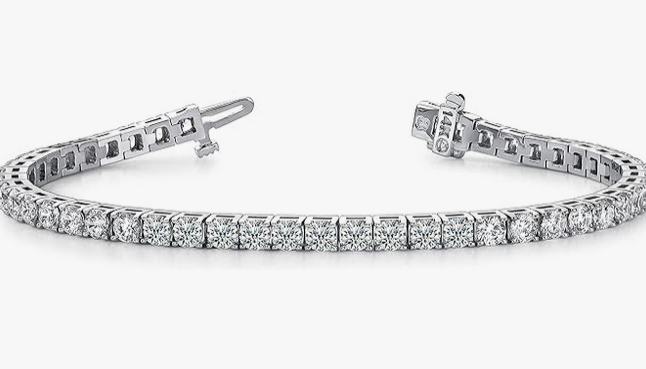
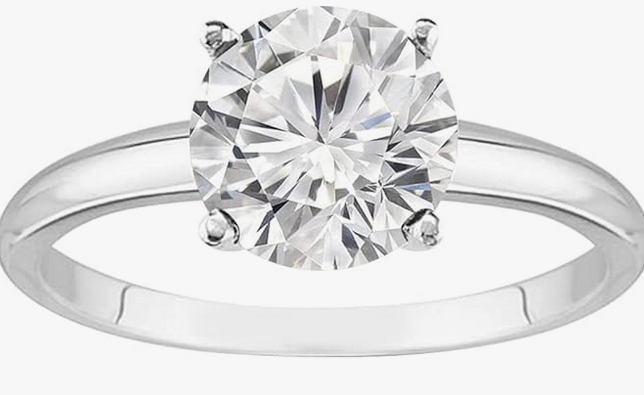
Houston Diamond District 1 to 10 Carat 14K White Gold IGI Certified Lab Grown Diamond Engagement Ring, Round Cut Solitaire, 4-Prong Setting (E–F Color VS2–SI1 Clarity)
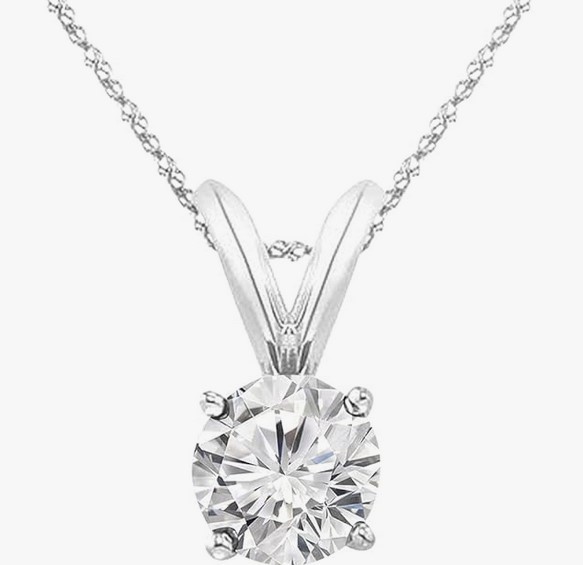
0.5-10 Carat Lab Grown Diamond Solitaire Pendant Necklace, Round Cut Solitaire, 4-Prong Setting, Jewelry for Women (E-F, VS)
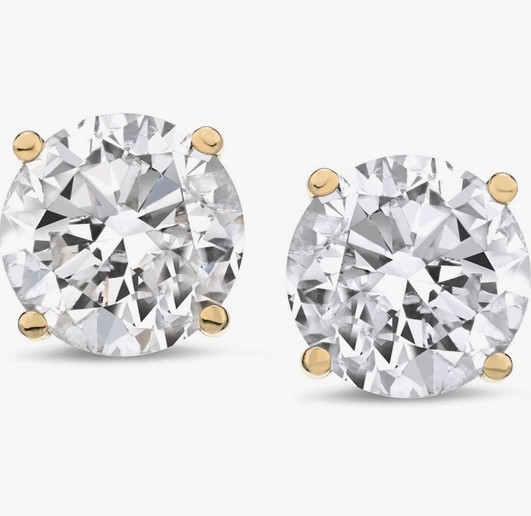
1 to 6 Carat LAB GROWN Solitaire Diamond Stud Earrings Round Cut 4 Prong Screw Back (F-G Color, VS1-VS2 Eye Clean Clarity)
2 Carat Lab Grown Diamond: The Complete Buyer’s Guide
A 2 carat lab grown diamond offers the size, brilliance, and prestige of a fine diamond at a fraction of the traditional cost. With real fire, exceptional hardness, and a bold presence on the hand, it has quickly become one of the smartest choices in fine jewelry. Whether you’re shopping for an engagement ring, a special gift, or a loose stone for a custom design, this guide explains exactly what makes a 2 carat stone so appealing — and how to recognize real quality and value when you see it.
At Mycaratdiamond, every diamond is real, certified, and crafted to bring out maximum sparkle, so you can shop with complete confidence.
What Is a Lab Grown Diamond?
A lab grown diamond is a genuine diamond created in a controlled laboratory environment rather than mined from the earth. It has the same chemical composition, the same crystal structure, and the same physical and optical properties as a mined diamond. The only difference is origin. Because these stones are grown rather than dug from the ground, a 2 carat lab grown diamond can deliver the look and quality of a much more expensive mined stone while remaining genuinely accessible.
Is a 2 Carat Lab Grown Diamond a Real Diamond?
Yes — without question. A lab grown diamond is pure crystallized carbon, just like a natural one, and it earns a perfect 10 on the Mohs scale of hardness. It sparkles with the same brilliance and fire, and a trained gemologist cannot tell the two apart without specialized equipment. In short, a 2 carat lab grown diamond is not a simulant, an imitation, or “fake.” It is a real diamond in every meaningful sense, simply made through advanced technology instead of geological chance.
How Big Is a 2 Carat Lab Grown Diamond?
Carat is a measure of weight, not size, but the two are closely related. A round 2 carat diamond measures roughly 8 millimeters across, giving it a bold, confident footprint on the finger. Elongated shapes — like oval, pear, and marquise — appear even larger because their length spreads across more of the hand. Because diamonds are three-dimensional, doubling the carat weight from one to two carats increases the visible diameter by around 25%, not 100%. Even so, a 2 carat stone has clearly more presence than a 1 carat, which is a big part of its appeal.
2 Carat Lab Grown Diamond vs. Natural: Price and Value
The biggest advantage is value. A natural 2 carat diamond is geologically rare and commands a steep premium. A lab grown stone of the same size and quality typically costs only a fraction of that — letting you choose a larger, higher-grade diamond for the same budget, or save significantly on the size you want.
As a general guide, a quality 2 carat lab grown diamond usually lands in the low-to-mid four figures, while a comparable natural stone can cost several times more. That difference is why so many buyers choose lab grown: identical beauty, identical durability, dramatically lower cost. It’s worth noting that natural diamonds tend to hold more resale value, so if long-term resale or geological rarity is your top priority, a mined stone may suit you better. For nearly everyone else, the value of lab grown is hard to beat.
The 4Cs of a 2 Carat Lab Grown Diamond
The 4Cs — Carat, Color, Clarity, and Cut — are the universal language of diamond quality, and they apply to lab grown diamonds in exactly the same way they apply to mined ones.
Carat is the weight. At two carats, the stone has real, eye-catching presence without feeling oversized.
Color runs from colorless (D) downward. A near-colorless E-F grade keeps the diamond bright and white while avoiding the steep premium of a flawless D — a smart sweet spot. Because color is easier to notice in larger stones, a clean near-colorless grade helps a 2 carat diamond look crisp and icy.
Clarity measures internal characteristics. A VS-SI range delivers eye-clean stones — no inclusions visible to the naked eye — which protects brilliance while keeping the price efficient.
Cut is the most important factor for sparkle. Precise faceting maximizes light return, so a well-cut 2 carat lab grown diamond looks brighter, larger, and livelier. Always prioritize cut quality above the other Cs.
Choosing the Right Shape
Shape is a deeply personal choice and dramatically affects a diamond’s character:
- Round brilliant: the most popular shape, prized for maximum sparkle and timeless appeal.
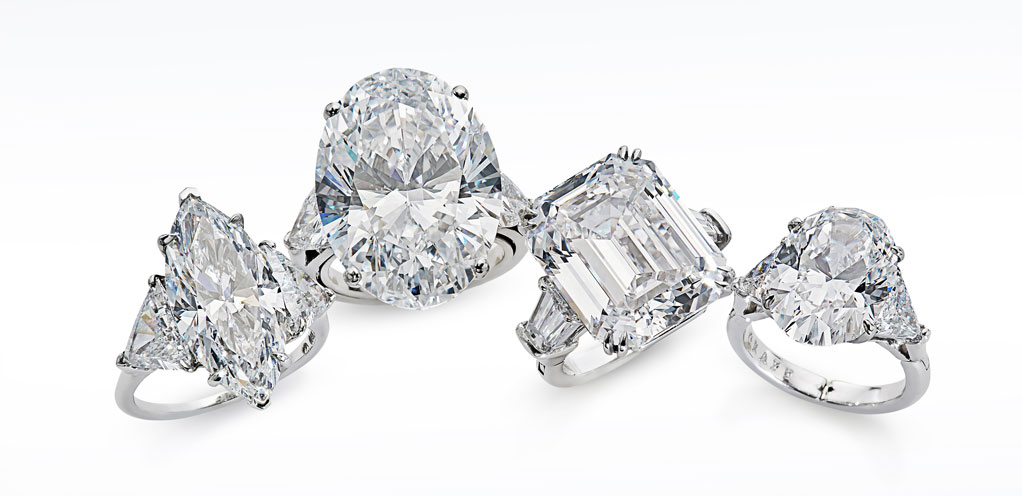
- Oval: elongates the finger and looks larger than its weight suggests.
- Cushion: soft, rounded corners with romantic, vintage fire.
- Emerald: an elegant step-cut with a sophisticated, hall-of-mirrors look.
- Pear and marquise: distinctive shapes that maximize finger coverage.
Fancy shapes often cost less per carat than round brilliants, so they can stretch your budget while giving a 2 carat stone a unique signature look.
How Lab Grown Diamonds Are Made
There are two main methods for creating diamonds in a lab, and both recreate the natural diamond-forming process more efficiently than nature ever could.
HPHT (High Pressure High Temperature) recreates the intense pressure and heat found deep within the earth, encouraging carbon to crystallize into a diamond. CVD (Chemical Vapor Deposition) grows a diamond layer by layer from a carbon-rich gas inside a specialized chamber. Both processes yield genuine diamonds, and the efficiency of these methods is exactly why a 2 carat lab grown diamond can offer such remarkable value without compromising on quality.
Certification: Buy with Confidence
Always choose a certified diamond. An independent grading report from a respected laboratory confirms the stone’s carat weight, color, clarity, and cut, so you know precisely what you’re buying. Certification protects you, verifies authenticity, and ensures you’re paying a fair price for genuine quality. A reputable seller will provide grading documentation for every 2 carat lab grown diamond.
How to Choose the Perfect 2 Carat Lab Grown Diamond
To get the best combination of beauty and value, keep these tips in mind:
- Favor E-F color and eye-clean VS-SI clarity. This combination looks stunning while keeping the price efficient.
- Prioritize cut quality. Excellent faceting is what makes a diamond truly sparkle.
- Pick a shape that fits your style. Each shape brings a different personality.
- Insist on certification. Independent grading confirms real quality and a fair price.
- Consider the setting. A secure setting in 14K gold, 18K gold, or platinum protects your stone and elevates its everyday wearability.
Bottom line: a 2 carat lab grown diamond brings together bold size, brilliant sparkle, and outstanding value in one genuine, certified stone. Whether you’re building an engagement ring or designing a custom piece, it lets you own a true two-carat look at a price that finally makes sense. Explore our collection above to find the perfect diamond for you.
A 2 carat lab grown diamond is one of the most compelling purchases in contemporary fine jewelry — a genuinely impressive two-carat stone available at a price that would have been unimaginable a decade ago. At two carats, a lab grown diamond measures approximately 8.1–8.2mm in diameter for a round brilliant, creating a visual presence clearly and substantially larger than the average engagement ring. A natural 2 carat diamond of excellent quality typically costs $10,000–$25,000. A 2 carat lab grown diamond of identical certified quality typically costs $1,000–$3,500. This 80–90% price difference — for a stone that is chemically identical, physically identical, and certified by the same laboratories — is the defining fact of the contemporary lab grown diamond market at this carat weight.
This comprehensive guide covers everything you need to know about a 2 carat lab grown diamond — what it is and how it is made, how the Four Cs apply at this weight, price expectations across quality tiers, certification standards, the best jewelry applications, how lab grown diamonds compare to natural diamonds across every relevant dimension, and how to purchase with full confidence.
What Is a 2 Carat Lab Grown Diamond?
A 2 carat lab grown diamond is a real diamond. It is not a simulant, not a substitute, and not a lesser version of a natural diamond. It is a carbon crystal with the same chemical composition — pure crystallized carbon — the same physical structure — cubic crystal lattice — the same optical properties — refractive index of 2.417 — and the same hardness — 10 on the Mohs scale — as a natural mined diamond of identical weight. The only difference is where it was formed: underground over billions of years, or in a laboratory over a matter of weeks.
The Federal Trade Commission has ruled that the term “diamond” applies without qualification to both natural and laboratory-grown diamonds. GIA and IGI certify lab grown diamonds using identical grading criteria to natural stones and issue full four-Cs grading reports. A 2 carat lab grown diamond purchased with a GIA or IGI grading report is a 2 carat diamond — certified to the same standard and carrying the same gemological attributes as a natural 2 carat diamond of equivalent certified grades.
How a 2 Carat Lab Grown Diamond Is Made
High Pressure High Temperature (HPHT)
HPHT replicates the natural diamond formation process in a controlled laboratory environment. A small diamond seed crystal is placed in a growth chamber with carbon source material and a metallic catalyst, then subjected to extreme pressure — approximately 1.5 million pounds per square inch — and extreme temperature — approximately 1,300–1,600°C. Carbon deposits onto the seed crystal layer by layer into a larger diamond. HPHT diamonds can sometimes contain trace metallic inclusions from the catalyst material, which are noted on the grading report.
Chemical Vapor Deposition (CVD)
CVD grows diamonds from carbon-rich gas. A diamond seed is placed in a vacuum chamber filled with methane or other hydrocarbon gases energized by microwave or radio frequency waves. The energy causes carbon atoms to separate from the gas and deposit onto the seed crystal in thin, flat layers — repeated over several weeks until the diamond has grown to the desired weight. CVD has become the dominant production method for gem-quality lab grown diamonds because it produces stones with excellent optical characteristics and consistent quality. At two carats, growing a lab grown diamond via either process typically requires two to four weeks.
The Four Cs for a 2 Carat Lab Grown Diamond
The Four Cs apply to a 2 carat lab grown diamond in exactly the same way they apply to natural diamonds. GIA and IGI use identical grading criteria for both categories.
Cut Quality: Always Prioritize Excellence
For any 2 carat lab grown diamond, cut quality is the most important factor determining beauty. A superbly cut stone will produce extraordinary brilliance regardless of its laboratory origin. For a round brilliant, Excellent cut from GIA or Triple Excellent from IGI is the standard without exception. The price difference between Excellent and Very Good cut in a 2 carat lab grown diamond is typically just $200–$600 — minimal relative to total cost, transformative in visual performance. For fancy shapes, evaluate proportions directly and request high-resolution video. For emerald cuts, require VS1 or better clarity.
Color: Premium Grades at Accessible Prices
One of the most compelling advantages of a 2 carat lab grown diamond is the accessibility of premium color grades. For platinum or white gold settings, G through H color grades represent the practical sweet spot. D through F colorless grades are entirely accessible at lab grown price points: the price difference between D and G color in a 2 carat lab grown diamond is typically just $400–$1,500, versus $5,000–$12,000 for the same differential in a natural two-carat stone. For yellow gold or rose gold settings, I and J color grades are entirely appropriate.
One color characteristic specific to CVD-grown diamonds: they sometimes develop a slight brownish or grayish undertone during growth, addressed through post-growth treatment in most commercially available stones. Ensure the grading report notes no unusual color modifiers. For fluorescence, None or Faint grades provide the most consistent appearance across all lighting conditions.
Clarity: High Grades Are Accessible
For a 2 carat lab grown diamond, VS1 or VS2 clarity ensures a reliably eye-clean stone. One of the most appealing aspects of lab grown clarity pricing: the price difference between VVS2 and VS1 is typically just $200–$600, versus $2,000–$5,000 for the same differential in a natural stone — making VVS clarity entirely practical for maximum peace of mind at minimal additional cost. SI1 can work with careful per-stone evaluation; SI2 and below should be avoided.
Lab Grown Diamond Inclusions
Lab grown diamonds have distinctive inclusion types noted on grading reports. CVD-grown diamonds may show pinpoint clouds, graining, or growth striations. HPHT-grown diamonds may show metallic flux inclusions — small reflective particles from the catalyst, inert and fully benign but distinctive under magnification. Neither type affects the beauty or durability of the stone.
Certification for a 2 Carat Lab Grown Diamond
GIA and IGI certification is non-negotiable for any 2 carat lab grown diamond purchase. GIA began grading lab grown diamonds in 2019 and issues full grading reports with the “Lab-Grown Diamond” designation and girdle inscription. IGI has graded lab grown diamonds since 2005 and is the leading certification body in the lab grown diamond market. Both include a unique laser-inscribed certificate number on the girdle permanently linking the stone to its report. Always verify the certificate number on the GIA or IGI website before completing any purchase.
Why a 2 Carat Lab Grown Diamond Costs So Much Less
Natural diamonds are rare geological phenomena requiring specific conditions to form over billions of years and significant mining infrastructure to bring to market. Lab grown diamonds are manufactured products produced from widely available carbon source materials in a controlled industrial environment. As production technology has improved over the past decade, production costs have fallen substantially — a 2 carat lab grown diamond that might have cost $6,000 in 2020 might cost $1,500–$3,000 today at equivalent certified quality. Both natural and lab grown two-carat diamonds are real diamonds — the price difference reflects geological origin and supply dynamics, not any difference in the physical or chemical nature of the stones.
Lab Grown Diamond Resale Value
Lab grown diamonds currently have limited secondary market value relative to their purchase price, because continuous production and ongoing price declines mean a stone purchased today faces increasing competition from newly produced stones at lower prices in the future. The purchase economics of a 2 carat lab grown diamond are best evaluated as a consumer purchase — the value received is the visual experience, physical beauty, and personal significance of wearing a real certified diamond, not a financial asset. Natural two-carat diamonds have historically maintained 50–70% of retail purchase price in secondary markets. For buyers for whom resale value matters, natural diamonds remain the appropriate choice.
Best Applications for a 2 Carat Lab Grown Diamond
Engagement Rings
A 2 carat lab grown diamond as an engagement ring center stone creates a genuinely impressive ring at price points previously reserved for much smaller natural stones. A budget of $3,000–$6,000 can fund a complete ring in excellent quality — a combination that would cost $12,000–$28,000 in natural diamond form. The lower stone cost also allows more budget for the setting design, enabling more elaborate designs than buyers would have considered at natural diamond prices.
Stud Earrings
A pair of stud earrings with two 2 carat lab grown diamonds — one per ear, four carats combined — delivers extraordinary fine jewelry impact. At natural diamond prices, four carats of high-quality stud earrings would cost $40,000–$80,000+. With lab grown stones of equivalent certified quality, the same configuration typically costs $5,000–$15,000.
Pendants
A 2 carat lab grown diamond solitaire pendant creates a beautiful and substantial focal point at the neckline. Lab grown pricing makes a genuine two-carat pendant necklace a realistic purchase rather than an exceptional one, expanding the audience for this classic fine jewelry form.
Anniversary Upgrades
A 2 carat lab grown diamond is one of the most popular choices for anniversary ring upgrades — replacing a smaller original engagement ring stone on a milestone occasion. The dramatic visual difference between a one-carat original and a two-carat upgrade is clearly visible and deeply meaningful, at a price accessible to a far wider audience than natural diamond equivalents.
How a 2 Carat Lab Grown Diamond Compares to Simulants
A 2 carat lab grown diamond is entirely different from diamond simulants such as cubic zirconia or moissanite. Cubic zirconia is zirconium oxide — a different chemical compound entirely. Moissanite is silicon carbide — another completely different material. Both look superficially diamond-like but have different optical properties, different hardness, and different long-term durability. A 2 carat lab grown diamond is a real diamond that will scratch glass, register as diamond on any standard tester, and maintain its beauty indefinitely — it is the same material as a natural diamond, grown by a different process. Simulants are fundamentally different materials.
Price Guide
Round brilliant 2 carat lab grown diamond (stone only):
- D–F color, VVS1–VVS2, Excellent cut, GIA or IGI: $2,500–$5,000
- G–H color, VS1–VS2, Excellent cut, GIA or IGI: $1,000–$3,500 — optimal quality tier
- I–J color, SI1, Excellent or Very Good cut: $500–$1,200 with careful per-stone selection
Fancy shapes (oval, cushion, pear, radiant) typically price 10–20% below equivalent round brilliants. Emerald cut requires VS1+ clarity.
Complete 2 carat lab grown diamond rings (stone plus setting):
- D–F color, VVS1–VVS2, Excellent cut: $3,500–$7,000 total
- G–H color, VS1–VS2, Excellent cut: $1,800–$5,000 total
- I–J color, SI1: $900–$2,500 total with careful selection
Care and Insurance
A 2 carat lab grown diamond requires exactly the same care as a natural diamond. Clean weekly using warm water, mild dish soap, and a soft-bristled toothbrush. Remove before swimming, exercising, applying cosmetics, and before manual activities. Store separately in a soft-lined case. Have settings professionally inspected annually.
For any 2 carat lab grown diamond with a purchase value above $2,000, jewelry insurance should be arranged from the day of purchase. Standard homeowners policies typically cover jewelry only to $1,000–$2,000. Specialized jewelry insurance from providers such as Jewelers Mutual or Berkley One covers the full appraised replacement value at annual premiums of typically 1–2% of the insured value. Most providers require the GIA or IGI grading certificate or a formal appraisal to establish coverage.
Frequently Asked Questions
Is a 2 carat lab grown diamond a real diamond?
Yes — unambiguously and completely. A 2 carat lab grown diamond is chemically and physically identical to a mined natural diamond. The FTC has ruled that “diamond” applies to both. GIA and IGI certify both using identical grading standards. The only difference is geological origin.
How much does a 2 carat lab grown diamond cost?
A 2 carat lab grown diamond in excellent quality (G–H color, VS1–VS2 clarity, Excellent cut, IGI certified) typically costs $1,000–$3,500 for the stone alone. D–F color, VVS1–VVS2 grades typically cost $2,500–$5,000. Complete rings including settings typically cost $1,800–$7,000 depending on quality tier and setting design.
What is the difference between HPHT and CVD lab grown diamonds?
HPHT uses extreme pressure and temperature to grow diamonds from a seed crystal; CVD uses carbon-rich gas deposited layer by layer. CVD is now the dominant method for gem-quality production. Both produce real diamonds graded identically by GIA and IGI. Both can produce outstanding 2 carat lab grown diamonds.
Will a 2 carat lab grown diamond pass a diamond tester?
Yes. Standard diamond testers measure thermal conductivity, which is identical in natural and lab grown diamonds. A 2 carat lab grown diamond passes all standard diamond tests. Only specialized laboratory equipment designed specifically for origin testing can distinguish lab grown from natural diamonds.
Does a 2 carat lab grown diamond look different from a natural diamond?
No — there is no visible difference. Natural and lab grown diamonds are visually indistinguishable. Even trained gemologists cannot tell them apart by eye. A 2 carat lab grown diamond of excellent quality produces the same brilliance, fire, and scintillation as an equivalent natural diamond.
Final Thoughts
A 2 carat lab grown diamond is one of the most extraordinary value propositions in contemporary fine jewelry — a real, certified diamond available at 80–90% of the cost of an equivalent natural stone. The decision to purchase a 2 carat lab grown diamond is not a compromise. It is an informed choice to prioritize the visual experience, the personal significance, and the physical permanence of a real certified diamond over the geological origin story of a natural stone.
Insist on GIA or IGI certification, target Excellent cut without exception, choose G–H color or better for white metal settings, and confirm VS2 or VS1 clarity with eye-clean verification. The result will be a stone of extraordinary beauty that can be worn, admired, and treasured throughout a lifetime.
For more expert guidance on lab grown diamonds, diamond carat weights, and the full spectrum of fine diamond jewelry, visit the Carat Diamond homepage.