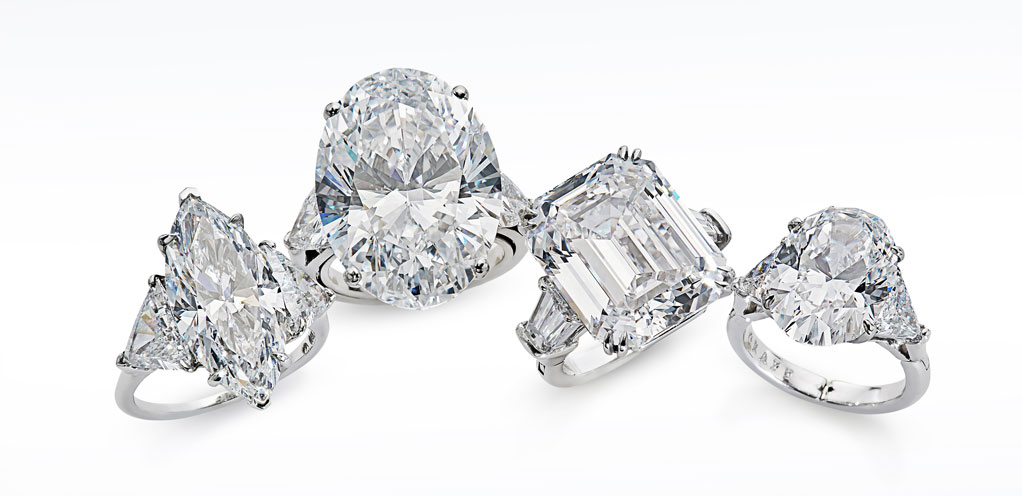
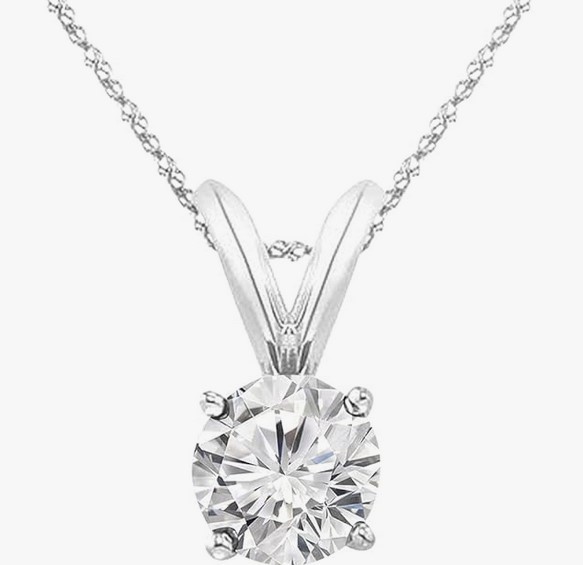
0.5-10 Carat Lab Grown Diamond Solitaire Pendant Necklace, Round Cut Solitaire, 4-Prong Setting, Jewelry for Women (E-F, VS)
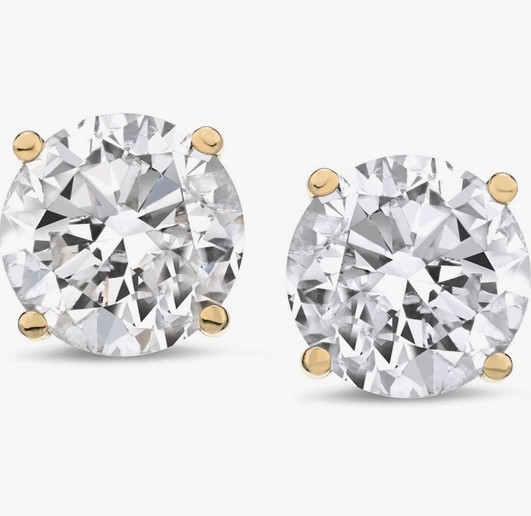
1 to 6 Carat LAB GROWN Solitaire Diamond Stud Earrings Round Cut 4 Prong Screw Back (F-G Color, VS1-VS2 Eye Clean Clarity)
If you are wondering how much is a 3 carat diamond, you are asking one of the most range-defining questions in all of fine jewelry. The answer spans an extraordinary spectrum: a 3 carat diamond can cost anywhere from under $2,000 for a lab-grown stone with modest quality grades to over $100,000 for a natural diamond of exceptional color, clarity, and cut. Understanding exactly where on that spectrum your purchase will land — and why — is the purpose of this complete price guide.
The short answer to how much is a 3 carat diamond: a natural stone in excellent quality (G–H color, VS1–VS2 clarity, Excellent cut, GIA certified) typically costs between $20,000 and $45,000 for the stone alone. A lab-grown stone of identical certified quality typically costs between $2,000 and $6,000. The gap between these two figures — representing a saving of 85–90% for a physically and chemically identical stone — is the defining financial reality of the contemporary diamond market at this carat weight.
But price is never a single number. It is a function of five distinct variables: cut quality, color grade, clarity grade, shape, and whether the stone is natural or lab-grown. This guide breaks down each variable with specific price ranges so you can build a precise budget for the exact stone you want.
What Makes the Price Variable?
When people ask how much is a 3 carat diamond, the honest answer begins with understanding that “3 carat diamond” is not a single product. It is a weight category containing thousands of individual stones, each with different quality grades that translate directly into different prices. Two round brilliant three-carat diamonds sitting side by side can carry price tags differing by $40,000 or more — not because one is inferior, but because their quality grades differ in ways the market prices very differently.
- Cut quality — how efficiently the stone interacts with light. An Excellent cut commands a 15–25% premium over Very Good cut.
- Color grade — D (colorless) to Z (heavily tinted). At three carats, color is more visible than at smaller weights, and the premium for colorless over near-colorless grades is very substantial.
- Clarity grade — internal inclusions and surface blemishes. At three carats, the clarity grade required for an eye-clean stone is higher than at smaller weights. The price difference between VVS1 and VS2 can be $10,000–$20,000.
- Shape — round brilliants command the highest price per carat. Fancy shapes typically cost 10–30% less.
- Natural vs. lab-grown — the single biggest price variable: 85–90% price difference for physically identical stones.
How Much Is a 3 Carat Diamond: Natural Price Breakdown
How much is a 3 carat diamond when it comes from the Earth? Here is the complete breakdown by quality tier.
Finest tier — D color, IF/VVS1 clarity, Excellent cut, GIA certified: $60,000–$120,000+ for the stone alone. Among the rarest and most sought-after diamonds in the commercial market.
Premium tier — D–F color, VVS1–VVS2 clarity, Excellent cut, GIA certified: $40,000–$70,000. The upper tier accessible to serious buyers.
High quality — G–H color, VS1–VS2 clarity, Excellent cut, GIA certified: $20,000–$40,000. This is the recommended quality tier for most serious buyers — eye-clean, appearing white in virtually all conditions, with outstanding light performance. When buyers ask how much is a 3 carat diamond for everyday wear, this tier delivers the best balance of beauty and value.
Mid-tier — I–J color, SI1 clarity, Very Good cut: $10,000–$20,000 with careful per-stone selection. I–J color can show slight warmth at three carats.
Value tier — I–K color, SI2 clarity: $5,000–$10,000. Visible compromises in color and clarity are likely detectable and this tier is generally not recommended for daily wear.
How Much Is a 3 Carat Diamond: Lab-Grown Price Breakdown
How much is a 3 carat diamond when it is lab-grown? The price landscape is dramatically different — and the stones are chemically and physically identical to natural diamonds.
Finest tier — D–F color, VVS1–VVS2 clarity, Excellent cut, IGI or GIA certified: $4,000–$8,000. Visually and physically identical to natural stones costing $40,000–$70,000.
High quality — G–H color, VS1–VS2 clarity, Excellent cut, IGI certified: $2,000–$5,000. The recommended quality tier for most lab-grown buyers. When buyers ask how much is a 3 carat diamond for engagement, this tier delivers outstanding value for the visual result.
Mid-tier — I–J color, SI1 clarity: $900–$2,000 with careful per-stone selection.
Value tier — I–J color, SI2 clarity: $500–$1,000, with visible clarity compromises likely.
How Much Is a 3 Carat Diamond Ring Total?
How much is a 3 carat diamond ring when the setting is included? Setting costs must be added to the stone price.
- Simple platinum solitaire: adds $800–$2,000
- Elaborate custom halo or three-stone setting in platinum: adds $3,000–$8,000+
Natural ring total: $21,000–$50,000 at the high-quality mid-tier; $41,000–$80,000+ at the premium tier.
Lab-grown ring total: $3,000–$8,000 at the high-quality mid-tier; $5,500–$12,000 at the premium tier.
How Much Is a 3 Carat Diamond by Shape?
Shape is a particularly interesting price variable because choosing a fancy shape over a round brilliant can save 10–30% while often creating a stone that appears larger. How much is a 3 carat diamond in each shape?
- Round brilliant: The most expensive shape. Natural G/VS1/Excellent: $25,000–$35,000.
- Oval: 15–20% less than round. Natural G/VS1: $20,000–$30,000. Also appears larger than a round of equal weight.
- Cushion: 15–25% less. Natural G/VS1: $18,000–$28,000.
- Pear: 15–20% less. Natural G/VS1: $18,000–$30,000. Creates the visual appearance of an even larger stone.
- Emerald cut: 20–30% less. Natural G/VS1: $15,000–$25,000. Requires VS1+ clarity due to step-cut faceting.
- Marquise: 20–25% less. Largest apparent visual size of any shape at equal carat weight.
Why the Natural vs. Lab-Grown Price Difference Is So Large
When buyers research how much is a 3 carat diamond, the dramatic price gap between natural and lab-grown is always the most striking finding.
Natural three-carat diamonds are genuinely rare. The geological processes that produce them operate over billions of years, and only a tiny fraction of diamonds mined globally yield finished stones of three carats or more. This scarcity creates a global market of collectors, investors, and buyers that supports high prices. Natural stones of excellent quality have historically maintained 50–80% of retail price in secondary resale.
Lab-grown three-carat diamonds are produced in weeks using HPHT or CVD technology. As production efficiency has improved dramatically over the past decade, the cost of producing lab-grown diamonds has fallen substantially. A lab-grown stone that cost $10,000 in 2020 might cost $3,000–$4,000 today for equivalent certified quality.
Both natural and lab-grown three-carat diamonds are real diamonds — certified by GIA and IGI using identical grading standards, physically and chemically indistinguishable without specialized laboratory equipment. The price difference reflects geological origin and market dynamics, not any difference in what the stones actually are.
How Much Is a 3 Carat Diamond Compared to Other Weights?
Understanding how much is a 3 carat diamond becomes clearer when compared to adjacent weights.
A natural 1 carat diamond at G/VS1/Excellent typically costs $3,500–$8,000. A natural 3 carat diamond at the same quality grades typically costs $20,000–$40,000 — roughly 4–6 times more despite being only three times the carat weight. This non-linear price increase reflects the greater rarity of larger rough diamonds.
A natural 2 carat diamond at G/VS1/Excellent typically costs $10,000–$20,000. The price jump from two to three carats is significant: roughly 1.5–2.5 times more at equivalent quality, reflecting the substantial increase in rarity between two-carat and three-carat natural stones.
For lab-grown stones, pricing is more linear because production costs scale more evenly with size. A lab-grown 1 carat at G/VS1/Excellent costs $400–$1,200; a lab-grown 3 carat at the same grades costs $2,000–$5,000 — approximately 4–5 times more.
Understanding the Four Cs Price Impact at Three Carats
For buyers researching how much is a 3 carat diamond, understanding exactly how each of the Four Cs translates into price differences helps allocate budget most effectively.
Cut quality impact: Moving from Very Good to Excellent cut in a natural three-carat round brilliant typically adds $1,500–$4,000. For lab-grown stones, approximately $300–$800. Every serious buyer should prioritize Excellent cut — the visual improvement is transformative and the cost difference is modest relative to the total investment.
Color grade impact: The price difference between D color and G color in a natural three-carat diamond of otherwise identical grades can be $8,000–$15,000. Between G and H color, typically $2,000–$5,000. For lab-grown stones, these premiums are dramatically smaller — often just $500–$1,500 between D and G color — making it rational to target higher color grades when purchasing lab-grown.
Clarity grade impact: Between VVS1 and VS1 clarity in a natural three-carat diamond, typically $5,000–$12,000. Between VS1 and VS2, typically $2,000–$5,000. For lab-grown stones, the same clarity differential might represent just $500–$2,000 — making higher clarity grades significantly more accessible in lab-grown options. This is the primary reason lab-grown stones make such compelling sense for buyers who want both high clarity and reasonable price.
Shape discount: Choosing an oval, cushion, or pear shape over a round brilliant consistently saves 15–25% on the stone price. At natural prices for three carats, this shape discount can represent $4,000–$10,000 in savings — meaningful enough to upgrade color or clarity grade within the same total budget.
The Role of Certification in the Price
Any discussion of how much is a 3 carat diamond must include the cost of GIA or IGI certification. A GIA grading certificate adds approximately $100–$300; an IGI certificate adds approximately $80–$200. These costs are already included in the prices cited throughout this guide.
Beware of stones offered significantly below the ranges in this guide with certifications from lesser-known laboratories such as EGL. These laboratories have historically applied more lenient grading standards than GIA or IGI — a stone certified as G/VS1 by EGL might be graded H/VS2 or lower by GIA, a difference that justifies a significantly lower price and represents a real financial loss for buyers who overpay based on optimistic non-GIA grades.
Practical Buying Guide: Getting the Most Value
For buyers focused on how much is a 3 carat diamond relative to value received, these specific strategies consistently produce the best results.
Target G or H color rather than D–F if budget is constrained. The visual difference between G and D color in a three-carat stone is very difficult to detect without side-by-side comparison. The price difference in natural stones is $5,000–$15,000.
Target VS1 or VS2 clarity rather than VVS grades. The visual difference between VVS2 and VS1 is typically invisible without magnification, while the price premium for VVS over VS in a natural three-carat stone is $5,000–$12,000.
Consider the 2.90–2.99 carat range rather than exactly 3.00 carats. Diamonds at exactly 3.00 carats command a threshold premium over stones just below this weight. A 2.95 carat stone of identical certified quality will cost meaningfully less, with a completely imperceptible visual difference. This strategy can save $1,000–$5,000 for natural stones.
Combine shape and lab-grown for maximum value. A lab-grown oval 3 carat diamond in D/VS1/Excellent cut typically costs $1,500–$3,500 — delivering a stone that appears even larger than a round brilliant of equal weight, at a price representing 95%+ savings versus a comparable natural round brilliant.
Always verify the grading certificate on the GIA or IGI website before completing any purchase. This simple step — taking less than five minutes — confirms the certificate is genuine and that the specific stone has been individually graded by the laboratory.
How Much Is a 3 Carat Diamond Worth Over Time?
The price of a natural three-carat diamond has historically been relatively stable. Natural stones of excellent quality have generally maintained 50–80% of their retail purchase price in secondary market resale — better than most luxury goods but not truly investment-grade for most buyers.
Lab-grown diamond prices have declined substantially and continuously over the past five years. Buyers should not expect meaningful resale value from lab-grown stones, whose price reflects production cost rather than rarity. The purchase economics of a lab-grown stone are best evaluated as a consumer purchase rather than an investment.
Complete Budget Planning
Beyond the stone price, a complete budget for a three-carat diamond purchase should include: sales tax (6–10% in most US states), an independent appraisal for insurance purposes ($100–$300), jewelry insurance from the date of purchase (1–2% of insured value annually), ring sizing if needed ($50–$200), and setting costs ($800–$8,000+ depending on design and metal). Understanding the complete cost of ownership from the beginning prevents budget surprises.
Frequently Asked Questions
How much is a 3 carat diamond ring?
A natural ring in excellent quality (G–H color, VS1–VS2 clarity, Excellent cut, GIA certified) with a quality setting typically costs $21,000–$48,000 total. A lab-grown ring of identical quality with a quality setting typically costs $3,000–$7,000 total.
How much is a 3 carat lab-grown diamond?
A lab-grown stone in excellent quality (G–H color, VS1–VS2 clarity, Excellent cut, IGI certified) typically costs $2,000–$5,000 for the stone alone. D–F color, VVS1–VVS2 grades typically cost $4,000–$8,000.
Why is a three-carat diamond so much more expensive than a one-carat diamond?
Diamond pricing is non-linear. Natural three-carat stones are significantly rarer than one-carat stones, and this rarity creates a substantial per-carat premium. A natural three-carat diamond at equivalent quality grades typically costs 4–6 times more than a natural one-carat diamond, not 3 times more.
What is the cheapest a three-carat diamond can be?
A lab-grown stone with lower quality grades (I–J color, SI1 clarity) can be found for under $1,500. A natural stone with lower quality grades (J color, SI2 clarity) can be found for $5,000–$8,000. However, clarity and color compromises may be visible in daily wear at both price points.
Is a three-carat diamond worth the money?
For buyers who value geological rarity, investment potential, and cultural significance, the natural option is worth its premium. For buyers who prioritize visual beauty and value, a lab-grown stone delivers the same visual and physical experience at 85–90% lower cost. Neither is the objectively correct answer — both reflect legitimate different priorities.
Final Thoughts
How much is a 3 carat diamond? The honest answer is: anywhere from $1,500 for a lab-grown stone with modest grades to over $100,000 for a natural diamond of exceptional quality. The single biggest variable is the choice between natural and lab-grown. Within each category, cut, color, clarity, and shape further define the price within a significant range.
The most practically useful benchmark: a lab-grown stone in excellent quality costs $2,000–$5,000; a natural stone in excellent quality costs $20,000–$40,000. Both deliver a certified, real, and genuinely impressive diamond at three carats. The right choice depends entirely on your priorities — and now you have the complete information to make it with confidence.
For more expert guidance on diamond pricing, quality grades, and the full spectrum of fine diamond jewelry, visit the Carat Diamond homepage.