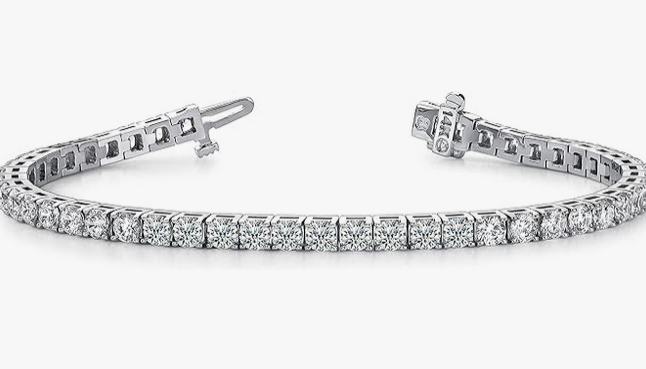
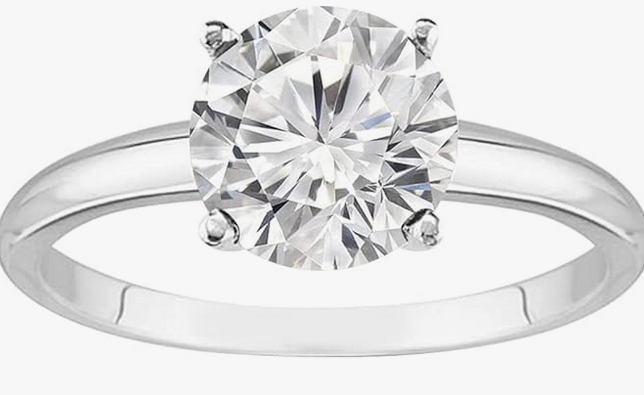
Houston Diamond District 1 to 10 Carat 14K White Gold IGI Certified Lab Grown Diamond Engagement Ring, Round Cut Solitaire, 4-Prong Setting (E–F Color VS2–SI1 Clarity)
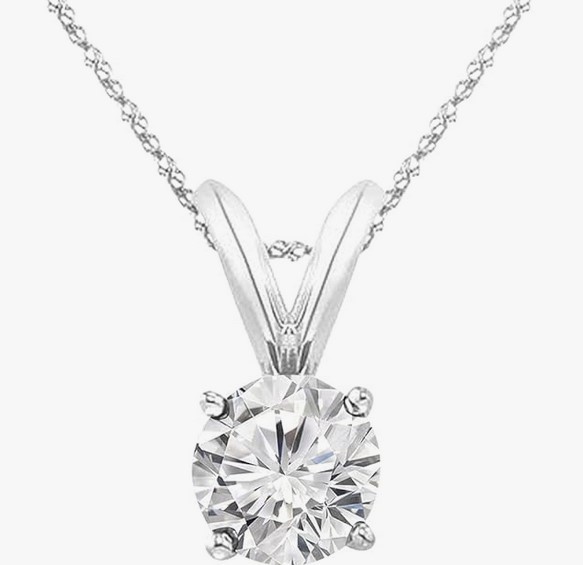
0.5-10 Carat Lab Grown Diamond Solitaire Pendant Necklace, Round Cut Solitaire, 4-Prong Setting, Jewelry for Women (E-F, VS)
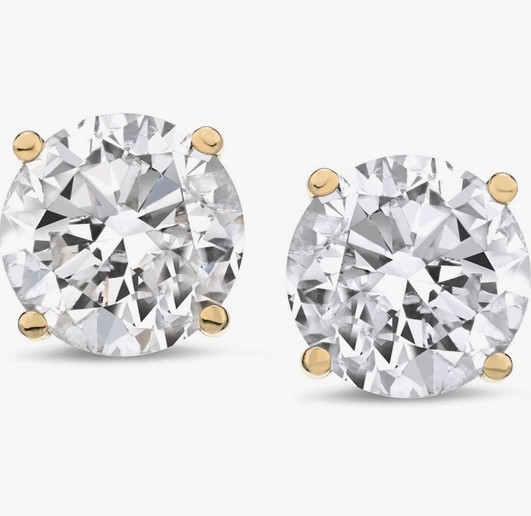
1 to 6 Carat LAB GROWN Solitaire Diamond Stud Earrings Round Cut 4 Prong Screw Back (F-G Color, VS1-VS2 Eye Clean Clarity)
A 3 carat lab grown diamond is one of the most compelling purchases in contemporary fine jewelry — combining the visual magnificence of a genuinely large diamond with the extraordinary value proposition that laboratory diamond production makes possible. At three carats, a lab grown diamond measures approximately 9.3–9.5mm in diameter for a round brilliant cut, creating a presence on any piece of jewelry that is immediately striking and unmistakably impressive. The same stone in a natural diamond would cost $20,000–$60,000 or more; a 3 carat lab grown diamond of equivalent certified quality typically costs $2,000–$7,000. This price difference — representing a saving of 85–90% — is the defining characteristic of the lab grown diamond market at this carat weight, and it is transforming who can access truly exceptional diamond jewelry.
This comprehensive guide covers everything you need to know about a 3 carat lab grown diamond — what it is and how it is made, how the Four Cs apply at this weight, how to evaluate quality and certification, price expectations across quality tiers, the best uses in rings, pendants, and earrings, and how lab grown diamonds compare to natural stones across every relevant dimension.
What Is a 3 Carat Lab Grown Diamond?
A 3 carat lab grown diamond is a real diamond — a carbon crystal with the same chemical composition (pure crystallized carbon), the same physical structure (cubic crystal lattice), the same optical properties (refractive index of 2.417), and the same hardness (10 on the Mohs scale) as a natural mined diamond. The only difference is origin: a natural diamond formed over billions of years in the Earth’s mantle, while a lab grown diamond is created in weeks or months in a controlled laboratory environment.
This distinction is not a marketing claim — it is a scientific fact confirmed by every major gemological laboratory in the world, including GIA and IGI. Both GIA and IGI grade lab grown diamonds using identical standards to natural stones, issuing grading reports covering cut, color, clarity, and carat weight. A 3 carat lab grown diamond with a GIA or IGI grading report is a 3 carat diamond — its laboratory origin does not change what it is chemically or physically.
How Are Lab Grown Diamonds Made?
Two primary production methods are used in the lab grown diamond industry. Understanding the difference helps buyers evaluate what they are purchasing.
High Pressure High Temperature (HPHT)
HPHT replicates the natural diamond formation process by placing a small diamond seed crystal in a chamber with carbon source material and a catalyst, then subjecting it to extreme pressure (approximately 1.5 million pounds per square inch) and temperature (approximately 1,300–1,600°C). Under these conditions, the carbon dissolves in the catalyst and precipitates onto the seed crystal, growing a larger diamond. HPHT has been used since the 1950s and produces diamonds with a characteristic crystal morphology that gemologists can identify with specialized equipment.
Chemical Vapor Deposition (CVD)
CVD uses a different approach: a diamond seed is placed in a chamber filled with carbon-rich gas (typically methane), which is energized with microwave or radio frequency energy, causing carbon atoms to separate from the gas and deposit onto the seed in thin layers. CVD diamonds typically grow as flat crystals that are then cut and polished. CVD has become the dominant production method for gem-quality lab grown diamonds because it produces stones with excellent color characteristics and fewer metallic inclusions than HPHT. At three carats, growing a lab grown diamond via either process requires several weeks.
The Four Cs for a 3 Carat Lab Grown Diamond
The Four Cs — cut, color, clarity, and carat — apply to a 3 carat lab grown diamond in exactly the same way they apply to natural diamonds. GIA and IGI use identical grading criteria for both categories.
Cut Quality: The Most Critical Decision
For a 3 carat lab grown diamond, cut quality is the single most important factor determining beauty. A superbly cut stone will produce breathtaking brilliance, fire, and scintillation regardless of its laboratory origin. A poorly cut 3 carat lab grown diamond will look flat and disappointing — a waste of the stone’s visual potential.
For a round brilliant, Excellent cut grade from GIA or Triple Excellent from IGI is the standard to target. The price difference between Excellent and Very Good cut for a lab grown stone at this weight is typically just $200–$600 — negligible relative to the total cost — while the visual improvement is dramatic. Never accept Good or Fair cut grades regardless of how attractive other parameters may appear.
For fancy shapes — oval, cushion, pear, radiant, emerald — evaluate proportions directly from the grading certificate: depth percentage, table percentage, and length-to-width ratio. For oval and pear shapes, assess for bowtie effect using high-resolution video. Request video of the specific stone before committing — this is standard practice at reputable lab grown diamond retailers.
Color: Excellent Options at Lower Cost
One of the most appealing aspects of a 3 carat lab grown diamond is the accessibility of higher color grades. At this weight, color is noticeably more visible than in smaller stones — the larger surface area makes warmth or tint more detectable. However, because lab grown diamonds cost a fraction of equivalent natural stones, buyers can realistically target D–F colorless grades without the enormous premium those grades command in natural diamonds.
For a 3 carat lab grown diamond in a platinum or white gold setting, D through H color grades are recommended. At lab grown pricing, the difference between a D color and a G color three-carat stone might be $500–$1,500 rather than the $8,000–$15,000 difference in natural stones. G and H color grades are near-colorless and appear white to the naked eye in virtually all conditions, representing excellent value. For yellow gold or rose gold settings, I and J color grades are entirely appropriate.
Clarity: Eye-Clean Quality Is Accessible
The clarity goal for a 3 carat lab grown diamond is finding an eye-clean stone — no inclusions visible to the naked eye without magnification. At three carats, VS1 or VS2 clarity reliably achieves this result. The excellent news is that high clarity grades are significantly more accessible than in natural diamonds. VVS1 and VVS2 lab grown three-carat diamonds are available at prices representing only 10–15% more than a VS1 stone, whereas in natural diamonds the premium for VVS over VS clarity can be $5,000–$15,000 or more. This makes it practical to target VVS clarity simply for peace of mind without significant financial compromise.
SI1 clarity requires careful per-stone review — some SI1 stones are eye-clean at this weight, others are not. Always request high-resolution video before purchasing any SI1 clarity stone at three carats. SI2 and below should be avoided. Lab grown diamonds generally have fewer large inclusions than natural stones at equivalent clarity grades, though both HPHT and CVD processes create their own distinctive inclusion types that GIA and IGI will describe in the grading report.
Certification: GIA or IGI for Every Purchase
For any purchase of a 3 carat lab grown diamond, GIA or IGI certification is non-negotiable. These are the two grading laboratories whose certifications are universally accepted for both natural and lab grown diamonds, applying identical grading standards to both categories.
GIA began grading lab grown diamonds in 2019 and issues lab grown diamond reports with full cut, color, clarity, and carat weight grades — identical in structure to its natural diamond reports except that the report header clearly states “Lab-Grown Diamond.” GIA lab grown diamond reports are considered the gold standard of certification.
IGI has graded lab grown diamonds since 2005 and is the leading certification body in the lab grown diamond market. IGI reports are widely accepted across the industry and provide full grading information equivalent to GIA reports. Both GIA and IGI certificates include a laser-inscribed unique number on the diamond’s girdle. Always verify the certificate number independently on the GIA or IGI website before completing any purchase.
Natural vs. Lab Grown: The 3 Carat Price Comparison
The price comparison between natural and lab grown diamonds is most striking at three carats, where the absolute dollar difference is very large and the visual and physical result is identical.
A natural 3 carat diamond in excellent quality — G–H color, VS1–VS2 clarity, Excellent cut, GIA certified — typically costs $20,000–$40,000 for the diamond alone. A 3 carat lab grown diamond of identical certified quality — G–H color, VS1–VS2 clarity, Excellent cut, IGI certified — typically costs $2,000–$5,000. This price difference of $15,000–$35,000 represents a saving of approximately 85–90% for a stone that is physically and optically identical.
At the finest quality tier — D color, VVS1 clarity, Excellent cut — a natural 3 carat diamond typically costs $40,000–$60,000 or more. A lab grown 3 carat diamond at the same quality tier typically costs $4,000–$8,000. The saving at the top quality tier is even more dramatic in absolute terms.
This price difference reflects a difference in how the stones were produced, not what they are. Natural diamonds are geological rarities; their price reflects that scarcity. Lab grown diamonds are manufactured products whose price reflects production costs, which continue to decline as technology improves. The visual result — a 9.4mm, brilliantly sparkling, eye-clean, certified diamond — is identical from either source.
Best Uses for a 3 Carat Lab Grown Diamond
Engagement Rings
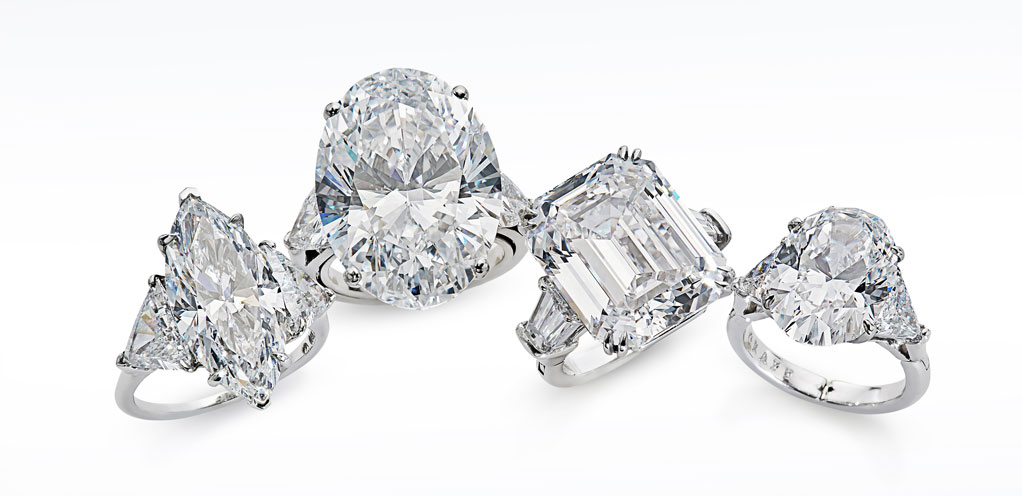
A 3 carat lab grown diamond as the center stone of an engagement ring creates a genuinely extraordinary piece — visually impressive, beautifully certified, and financially accessible in a way that a natural three-carat stone simply is not for most buyers. For couples who want a ring clearly and substantially beyond the everyday one-carat norm, this option delivers that experience at a price allowing meaningful budget to be directed toward the setting, honeymoon, or other priorities.
Solitaire settings — a clean four or six prong platinum or white gold mount — are the most popular choice, letting the stone’s size and cut speak without distraction. Halo settings add sparkle and perceived size. Three-stone settings with lab grown side stones create rings of exceptional total diamond weight at genuinely accessible prices.
Pendants and Necklaces
A 3 carat lab grown diamond pendant is one of the most elegant and impactful applications of this stone. Set in a simple solitaire bezel or prong mount on a platinum or gold chain, a three-carat pendant creates a remarkable focal point appropriate for any occasion from daily wear to formal events. Oval and pear shapes are particularly beautiful in pendant settings, where the elongated form hangs naturally and catches light from multiple angles.
Stud Earrings
A pair of stud earrings featuring two 3 carat lab grown diamonds — a combined 6 carats total — represents one of the most impressive fine jewelry configurations possible, made genuinely accessible by lab grown pricing. At natural diamond prices, 6 total carats of high-quality stud earrings would cost $80,000–$150,000+. With lab grown diamonds of equivalent certified quality, the same configuration typically costs $8,000–$20,000 — dramatic and extraordinary jewelry at a meaningful but manageable price.
Price Guide for a 3 Carat Lab Grown Diamond
By quality tier for a round brilliant:
- D–F color, VVS1–VVS2, Excellent cut, IGI or GIA: $4,000–$8,000
- G–H color, VS1–VS2, Excellent cut, IGI or GIA: $2,000–$5,000 — optimal value tier for most buyers
- I–J color, SI1, Excellent or Very Good cut: $900–$2,000 with careful per-stone selection
Fancy shapes — oval, cushion, pear, radiant — typically price 10–20% below equivalent round brilliants, following the same pattern as natural diamonds. Setting costs are separate: a simple platinum solitaire ring adds $800–$2,000; a halo or three-stone setting adds $1,500–$4,000 depending on design and accent stone specifications.
Lab Grown Diamond Myths and Facts
Myth: Lab grown diamonds are fake diamonds or simulants
Fact: Lab grown diamonds are real diamonds — pure carbon crystals with the same chemical and physical properties as mined diamonds. Diamond simulants such as cubic zirconia and moissanite have different chemical compositions and optical properties. A lab grown diamond is not a simulant; it is a diamond produced by a different method.
Myth: You can tell a lab grown diamond from a natural diamond by looking at it
Fact: Lab grown and natural diamonds are visually indistinguishable — even trained gemologists cannot differentiate them by eye. Specialized equipment can identify the origin based on trace element profiles and growth patterns, but these tools are laboratory instruments, not visible to the naked eye.
Myth: Lab grown diamonds fade or change over time
Fact: A lab grown diamond is chemically and physically identical to a natural diamond. It will not fade, discolor, or change appearance over time. Diamonds — natural or lab grown — are the hardest natural material and are permanent.
Myth: Lab grown diamonds have no resale value
Fact: Lab grown diamonds have limited secondary market value relative to purchase price, because production costs continue to decline. This is an honest and important consideration for buyers who prioritize resale potential. However, natural diamonds also have limited resale value relative to retail for most buyers — typically 20–50% of retail. The relevant comparison is not “lab grown vs zero” but “lab grown vs natural at the same tier” in resale terms.
Environmental Considerations
The environmental profile of lab grown diamond production is nuanced. Laboratory diamond production is energy-intensive — growing a 3 carat lab grown diamond requires significant electricity over weeks of growth time. The environmental impact depends entirely on the energy source: a laboratory powered by renewables has a dramatically lower carbon footprint than one powered by coal-fired electricity.
Natural diamond mining has significant environmental impacts including land disturbance, habitat displacement, and water use. However, leading mining operations have made substantial investments in environmental restoration and community development. Neither natural nor lab grown diamond production is without environmental impact. Buyers who prioritize sustainability should research the specific production methods and energy sources of the lab grown diamond they are considering, rather than assuming all lab grown diamonds are categorically more or less sustainable.
Caring for a 3 Carat Lab Grown Diamond
A 3 carat lab grown diamond requires exactly the same care as a natural diamond of the same size. Clean regularly using warm water, mild dish soap, and a soft-bristled toothbrush. Gently scrub beneath the stone and around prongs. Rinse thoroughly and pat dry. Remove before swimming, exercising, applying cosmetics, and manual activities. Store separately from other jewelry. Have settings professionally inspected annually.
Frequently Asked Questions
Is a 3 carat lab grown diamond a real diamond?
Yes — completely and unambiguously. A 3 carat lab grown diamond is chemically and physically identical to a mined natural diamond. The Federal Trade Commission has ruled that the term “diamond” applies to both natural and laboratory-grown diamonds without distinction. GIA and IGI certify both using identical grading standards.
How much does a 3 carat lab grown diamond cost?
A 3 carat lab grown diamond in excellent quality (G–H color, VS1–VS2 clarity, Excellent cut, IGI certified) typically costs $2,000–$5,000. D–F color, VVS1–VVS2 grades typically cost $4,000–$8,000. This compares to $20,000–$60,000+ for equivalent natural diamond grades.
What is the difference between HPHT and CVD lab grown diamonds?
HPHT uses extreme pressure and temperature to grow diamonds from a seed crystal. CVD uses carbon-rich gas deposited layer by layer onto a seed. CVD is now the dominant method for gem-quality lab grown diamonds and tends to produce stones with excellent color characteristics. Both methods produce real diamonds graded identically by GIA and IGI.
Will a 3 carat lab grown diamond pass a diamond tester?
Yes. Standard diamond testers measure thermal conductivity, which is identical in natural and lab grown diamonds. A 3 carat lab grown diamond will pass all standard diamond tests that cannot be passed by simulants like cubic zirconia or moissanite.
Should I buy a GIA or IGI certified 3 carat lab grown diamond?
Both GIA and IGI certifications are reliable and widely accepted. GIA is generally considered the most prestigious grading authority. IGI is the leading certification body in the lab grown diamond market with the largest volume of certifications. Either provides reliable quality verification for a 3 carat lab grown diamond.
Final Thoughts
A 3 carat lab grown diamond represents one of the most extraordinary value propositions in contemporary fine jewelry. It is a real diamond — chemically identical, optically identical, and certified by the same laboratories using the same standards as natural diamonds. At this carat weight, the price saving versus natural diamonds is so large in absolute terms that it opens up categories of jewelry — three-carat engagement rings, six-carat total weight stud earrings, impressive pendants — that would simply be inaccessible at natural diamond prices for most buyers.
The decision to purchase a 3 carat lab grown diamond is not a compromise. It is a choice to prioritize the visual beauty and physical perfection of a genuinely impressive diamond, made with full knowledge of its laboratory origin and appreciation for the technology that makes it possible. Insist on GIA or IGI certification, target Excellent cut and VS1 or better clarity, and choose the color grade that suits your setting and personal preference. The result will be a diamond of extraordinary beauty that can be worn, admired, and treasured for a lifetime.
For more expert guidance on diamond carat weights, lab grown diamonds, and the full spectrum of fine diamond jewelry, visit the Carat Diamond homepage.