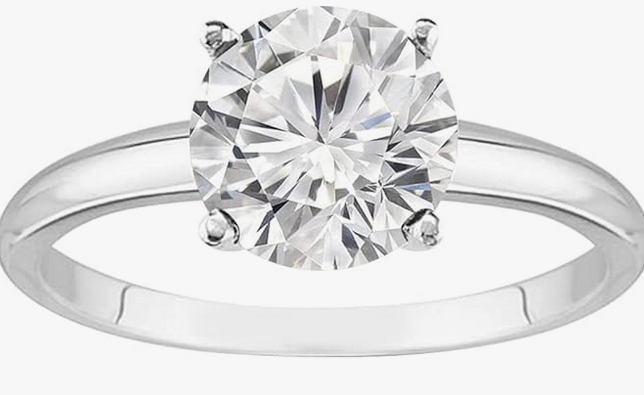
Houston Diamond District 1 to 10 Carat 14K White Gold IGI Certified Lab Grown Diamond Engagement Ring, Round Cut Solitaire, 4-Prong Setting (E–F Color VS2–SI1 Clarity)
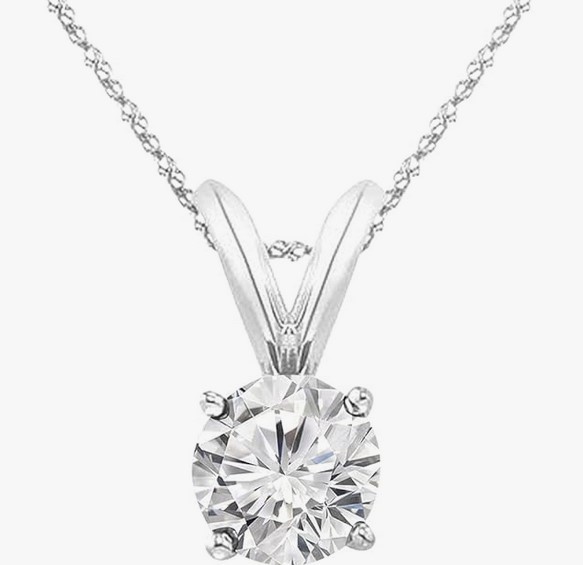
0.5-10 Carat Lab Grown Diamond Solitaire Pendant Necklace, Round Cut Solitaire, 4-Prong Setting, Jewelry for Women (E-F, VS)
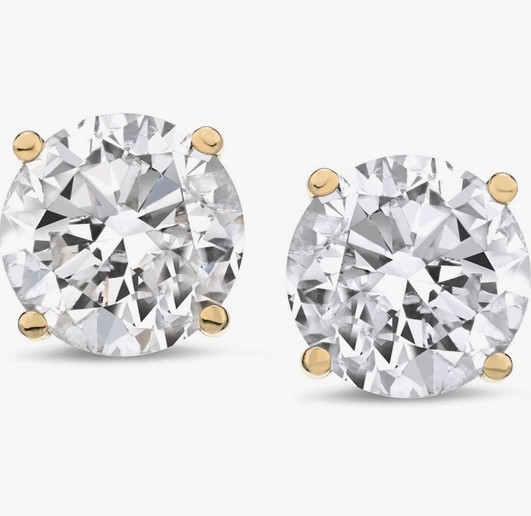
1 to 6 Carat LAB GROWN Solitaire Diamond Stud Earrings Round Cut 4 Prong Screw Back (F-G Color, VS1-VS2 Eye Clean Clarity)
The 3 carat diamond ring price is one of the most searched questions in the fine jewelry world — and for good reason. At three carats, a diamond ring crosses from the realm of everyday fine jewelry into something genuinely extraordinary, and the range of prices available is wider than most buyers expect. A 3 carat diamond ring price can range from under $3,000 for a lab-grown stone in a simple setting to well over $100,000 for a natural diamond of exceptional quality. Understanding what drives the 3 carat diamond ring price at every point in that spectrum is the foundation of making a wise and confident purchase.
This comprehensive guide breaks down every factor that determines the 3 carat diamond ring price — the quality of the diamond itself, the choice between natural and lab-grown, the setting design and metal, the shape of the center stone, and the certification that verifies what you are buying. Whether you are working with a specific budget or simply want to understand the full market, this guide gives you the complete picture.
What Determines the 3 Carat Diamond Ring Price?
The 3 carat diamond ring price is determined by two primary components: the price of the center diamond itself, and the cost of the ring setting. Understanding each component separately makes the total price far easier to evaluate.
The center diamond accounts for the large majority of the total 3 carat diamond ring price — typically 80–95% of the total cost for a ring with a simple to moderately complex setting. The diamond’s price is determined by its cut quality, color grade, clarity grade, shape, and whether it is a natural or lab-grown stone. Each of these factors can dramatically change the overall price.
The ring setting accounts for the remaining portion of the total 3 carat diamond ring price. A simple platinum solitaire setting might add $800–$2,000. An elaborate custom halo with micropavé diamonds in platinum might add $5,000–$10,000 or more. The metal choice — platinum versus 18k white gold versus yellow gold — also affects the setting price.
Natural vs. Lab-Grown: The Biggest Price Factor
The single most consequential factor in determining the 3 carat diamond ring price is the choice between a natural diamond and a lab-grown diamond. This decision alone creates a price difference of 85–95% for stones of identical certified quality.
Natural 3 Carat Diamond Ring Price
A natural 3 carat diamond ring features a stone formed in the Earth over billions of years. Natural three-carat diamonds are genuinely rare — only a small fraction of mined rough yields finished stones of this weight — and that rarity is the primary driver of the natural 3 carat diamond ring price.
For a natural 3 carat diamond ring in excellent quality — D–G color, VS1–VVS2 clarity, Excellent cut, GIA certified — the diamond alone typically costs $25,000–$60,000+. Adding a setting brings the total natural 3 carat diamond ring price to approximately $26,000–$65,000 for a quality piece. At the upper end of the quality spectrum — D color, VVS1 clarity, Excellent cut — the total price can reach $80,000–$120,000 or more. The very finest certified stones can be priced well into six figures.
At the value end, lower color and clarity grades bring the 3 carat diamond ring price down significantly. A natural ring with I–J color, SI1 clarity, and a Very Good cut might carry a total price of $12,000–$20,000. However, at this quality level, the stone may show visible warmth and require careful per-stone evaluation to ensure eye-clean appearance.
Lab-Grown 3 Carat Diamond Ring Price
A lab-grown 3 carat diamond ring offers a stone that is chemically, physically, and optically identical to a natural diamond — at dramatically lower cost. The lab-grown 3 carat diamond ring price reflects this fundamental difference, making genuinely excellent quality available at a fraction of the natural cost.
For a lab-grown 3 carat diamond ring in excellent quality — D–G color, VS1–VVS2 clarity, Excellent cut, IGI certified — the diamond alone typically costs $2,000–$6,000. Adding a quality setting brings the total lab-grown 3 carat diamond ring price to approximately $3,000–$9,000. This is the same visual and optical experience as a natural ring priced at $26,000–$65,000 — delivered at 85–90% lower cost. For buyers whose priority is the visual presence and brilliance of a three-carat diamond, the lab-grown 3 carat diamond ring price represents one of the most compelling value propositions in all of luxury retail.
How Cut Quality Affects the 3 Carat Diamond Ring Price
Cut quality is the most consequential quality factor for the beauty of a 3 carat diamond ring, and it has a significant impact on price. An Excellent cut round brilliant will typically cost 15–25% more than a Very Good cut stone of otherwise identical grades — a meaningful premium at this price level, but one that pays dividends in dramatically superior light performance.
For a natural ring, the price difference between an Excellent and a Very Good cut stone might be $3,000–$8,000 depending on the quality tier. For a lab-grown ring, the same premium is proportionally smaller — perhaps $300–$800 — making the Excellent cut even easier to justify relative to the total investment. Never compromise on cut quality to reduce the 3 carat diamond ring price. A poorly cut three-carat diamond looks dark and flat in daily wear, and no savings compensates for that result.
How Color Grade Affects the 3 Carat Diamond Ring Price
Color grade has a substantial impact on the 3 carat diamond ring price, and the effect is more pronounced at three carats than at smaller weights because color becomes more visible as stone size increases.
For a natural round brilliant, the price difference between a D color stone and a G color stone of otherwise identical grades (VS1 clarity, Excellent cut) can be $8,000–$15,000 — a very significant premium for a difference that most observers cannot detect in normal wear. G–H color represents the optimal balance between visual whiteness and value for most buyers considering the 3 carat diamond ring price.
For a lab-grown ring, the color premium is proportionally similar but dramatically smaller in absolute terms — a few hundred dollars between D and G color rather than thousands. For rings set in yellow gold or rose gold, targeting I–J color reduces the diamond cost significantly without any visible compromise in the warm-metal setting.
How Clarity Grade Affects the 3 Carat Diamond Ring Price
Clarity grade significantly influences the 3 carat diamond ring price, particularly at this carat weight where inclusions are more visible than at smaller sizes. For a natural ring, the price difference between VVS1 and VS2 clarity (same cut, color, shape) can be $5,000–$15,000. For most buyers, VS1 or VS2 clarity provides a reliably eye-clean result at a meaningfully lower price than VVS grades. SI1 clarity reduces the price further but requires careful stone-by-stone evaluation at this weight.
For a lab-grown ring, the clarity premium between VVS1 and VS2 is typically just a few hundred dollars — one of the reasons lab-grown buyers can afford to target higher clarity grades without significantly impacting the total cost.
How Shape Affects the 3 Carat Diamond Ring Price
The shape of the center stone has a meaningful effect on the 3 carat diamond ring price. Round brilliant diamonds command a 15–30% premium over equivalent fancy shapes at the same quality level, reflecting higher rough diamond wastage in cutting and consistently high market demand. For a natural ring, choosing an oval, cushion, pear, or radiant shape over a round brilliant can save $4,000–$15,000 on the total price while often producing a stone that appears equally or more impressive on the finger. For a lab-grown ring, the round brilliant premium is proportionally smaller — typically 10–20% — and many buyers choose rounds because the price difference is not a significant barrier at lab-grown price levels.
Price by Shape: A Detailed Comparison
Understanding how shape affects the 3 carat diamond ring price across different options helps buyers make direct cost comparisons before committing to a preference.
- Round brilliant: Highest price per carat. Natural: $25,000–$35,000 for the diamond at G/VS1/Excellent. Commands a 15–30% premium over equivalent fancy shapes.
- Oval: 10–20% below round brilliant. Natural: $20,000–$28,000 at G/VS1/excellent proportions. Appears larger than a round of equal weight — cost savings and visual size advantage combined.
- Cushion: 15–25% below round brilliant. Natural: $18,000–$28,000 at G/VS1. Romantic character and vintage appeal at meaningfully lower price.
- Pear: 10–20% below round brilliant. Natural: $20,000–$30,000 at G/VS1. Dramatic elongated form at lower cost than round.
- Emerald cut: 15–25% below round brilliant but requires VS1+ clarity for eye-clean result, partially offsetting the shape discount in total 3 carat diamond ring price.
- Marquise: 20–30% below round brilliant and the largest visual footprint per carat — most size-efficient choice when visual impression per dollar is the primary consideration.
- Radiant and princess: 10–20% below round brilliant, offering brilliant-cut sparkle in rectangular or square forms at a meaningful discount.
Setting Costs and Their Impact on the 3 Carat Diamond Ring Price
The setting is the second major component of the 3 carat diamond ring price, varying significantly based on design complexity, metal choice, and accent diamonds.
- Simple platinum solitaire: $800–$2,000. The cleanest, most classic option.
- Simple 18k gold solitaire: $600–$1,500.
- Platinum or white gold halo with pavé accents: $1,500–$3,500.
- Three-stone setting in platinum (setting only): $2,000–$4,000 plus side stone costs.
- Double halo with micropavé band in platinum: $4,000–$8,000.
- Fully custom elaborate setting: $5,000–$15,000+.
Platinum settings cost 20–40% more than equivalent 18k gold settings due to platinum’s greater density and higher metal cost. For a ring of this significance and value, platinum is the recommended choice for its durability, color stability, and superior long-term performance with precious stones.
Complete 3 Carat Diamond Ring Price Summary
Natural 3 carat diamond ring price by tier:
- Budget tier (I–J color, SI1, Very Good cut): $12,000–$20,000 total
- Mid tier (G–H color, VS1–VS2, Excellent cut): $26,000–$45,000 total — recommended sweet spot
- Premium tier (D–F color, VVS1–VVS2, Excellent cut): $55,000–$100,000+ total
- Ultra-premium (D color, IF/FL, Excellent cut): $100,000–$200,000+ total
Lab-grown 3 carat diamond ring price by tier:
- Budget tier (I–J color, SI1, Very Good cut): $1,500–$3,000 total
- Mid tier (G–H color, VS1–VS2, Excellent cut): $3,500–$7,000 total — optimal value tier
- Premium tier (D–F color, VVS1–VVS2, Excellent cut): $7,000–$12,000 total
Price Trends
Natural diamond prices at three carats have been generally stable to modestly declining over the past several years, reflecting reduced demand in some traditional markets and the emergence of lab-grown as a competitive alternative. For buyers focused on natural stones, this environment has created better value than was available several years ago.
Lab-grown diamond prices have declined substantially and continuously over the past five years, reflecting improvements in production efficiency and significant supply growth. A lab-grown three-carat diamond that cost $8,000–$10,000 in 2020 can now be purchased for $2,000–$5,000 for comparable quality. For buyers considering lab-grown stones as investments, this declining price trend is an important consideration — the current market makes clear that lab-grown diamonds are consumer goods whose price reflects production cost rather than geological rarity.
Resale Value Considerations
Natural three-carat diamonds in excellent quality grades retain meaningful resale value relative to most luxury goods. A GIA-certified natural round brilliant with D–H color and VS1–VVS2 clarity can typically be sold through reputable channels for 50–80% of current retail replacement cost. The rarity of high-quality stones at this weight supports ongoing demand.
Lab-grown three-carat diamonds currently have very limited resale value in the secondary market. As production costs have fallen and supply has grown, secondary market prices for lab-grown stones have declined sharply. The purchase economics of a lab-grown stone are best evaluated as a consumer purchase — the value is the beauty and experience of owning and wearing the ring, not any future financial return.
Budgeting Framework
A practical approach: first, decide the natural versus lab-grown question, as this defines the entire budget range. Second, allocate setting budget — for natural stones, $800–$3,000 for a quality solitaire or moderate halo; for lab-grown, $1,000–$2,500 typically covers an excellent platinum design. Third, identify your quality priority order: cut first, then color, then clarity. Fourth, compare multiple specific stones from at least two to three reputable retailers before committing — price competition between retailers for equivalent quality can differ by $1,000–$5,000, making comparison shopping genuinely valuable at this price level.
Certification and the 3 Carat Diamond Ring Price
GIA or IGI certification adds a modest cost — typically $100–$300 — but is mandatory for any purchase at this price level. A grading report verifies every quality parameter and provides the foundation for accurate price comparison. Beware of rings offered significantly below the ranges in this guide with certifications from lesser-known laboratories. EGL and similar labs have historically applied more lenient standards, meaning a stone certified G/VS1 by EGL might be graded H/VS2 or lower by GIA or IGI — a difference that justifies a meaningfully lower price and represents real value destruction for the buyer.
Frequently Asked Questions
What is the average 3 carat diamond ring price?
For a natural ring in good quality (G–H color, VS1–VS2 clarity, Excellent cut), the average 3 carat diamond ring price is approximately $26,000–$45,000 including setting. For a lab-grown ring of identical specifications, the average price is approximately $3,500–$7,000.
Why is the 3 carat diamond ring price so much higher than a 2 carat ring?
Diamond pricing is non-linear — it does not simply increase proportionally with carat weight. Three-carat natural diamonds are significantly rarer than two-carat stones, and this rarity creates a substantial per-carat premium. A natural 3 carat diamond ring price is typically 2–3 times higher than an equivalent 2 carat ring, not 1.5 times.
Does the 3 carat diamond ring price include the setting?
This varies by retailer. Many jewelers list the diamond price and setting price separately, requiring buyers to add both to determine the total 3 carat diamond ring price. Others offer complete ring prices inclusive of both. Always clarify which pricing model a retailer uses before comparing prices across sellers.
Is a lab-grown 3 carat diamond ring good value?
Yes — for buyers whose priority is the visual experience of a beautiful three-carat ring rather than geological rarity, the lab-grown 3 carat diamond ring price represents extraordinary value. The stone is physically identical to a natural diamond of the same certified grades, and the cost savings are dramatic.
How can I get the best 3 carat diamond ring price?
Choose lab-grown if geological origin is not a priority. Choose a fancy shape (oval, cushion, pear) over round brilliant to reduce diamond cost by 10–25%. Select G–H color and VS1–VS2 clarity rather than colorless or VVS grades. Choose a solitaire or moderate halo setting rather than an elaborate custom design. Insist on GIA or IGI certification to ensure the stated quality is genuine. Compare prices across multiple reputable retailers before committing.
Final Thoughts
The 3 carat diamond ring price spans one of the widest ranges of any product in luxury retail — from under $3,000 for a lab-grown stone to over $100,000 for a finest-quality natural diamond. Understanding exactly what drives price at each point in that spectrum allows buyers to make confident, well-informed decisions that align with their values, budget, and priorities.
Whether you are drawn to the rarity and investment value of a natural stone or the extraordinary price-to-beauty ratio of a lab-grown option, the principles of a wise purchase are identical: prioritize cut quality, insist on GIA or IGI certification, and choose the color and clarity grades that deliver eye-clean beauty without overpaying for imperceptible differences.
For more expert guidance on diamond pricing, quality grades, and fine diamond jewelry, visit the Carat Diamond homepage.