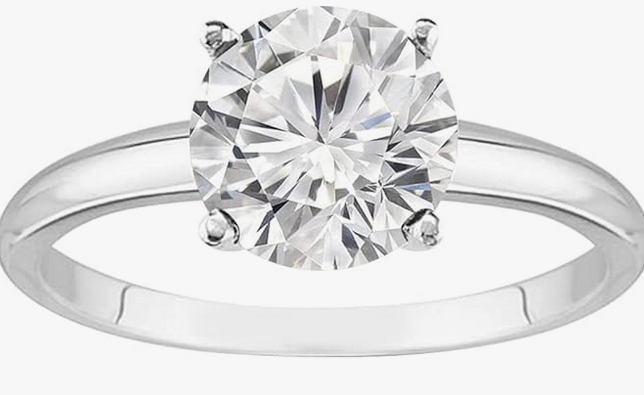
Houston Diamond District 1 to 10 Carat 14K White Gold IGI Certified Lab Grown Diamond Engagement Ring, Round Cut Solitaire, 4-Prong Setting (E–F Color VS2–SI1 Clarity)
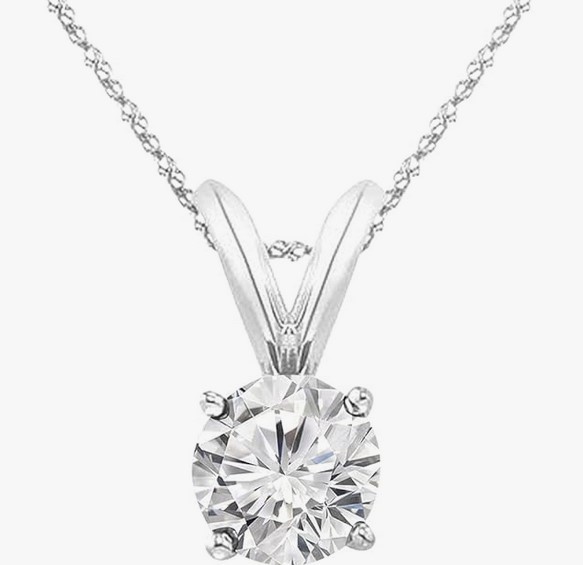
0.5-10 Carat Lab Grown Diamond Solitaire Pendant Necklace, Round Cut Solitaire, 4-Prong Setting, Jewelry for Women (E-F, VS)
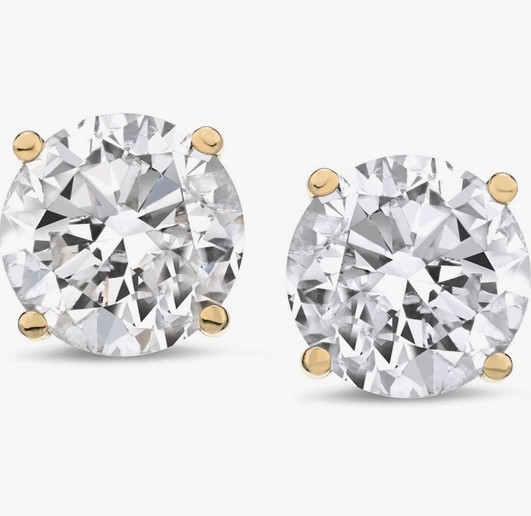
1 to 6 Carat LAB GROWN Solitaire Diamond Stud Earrings Round Cut 4 Prong Screw Back (F-G Color, VS1-VS2 Eye Clean Clarity)
4 Carat Diamond Earrings: The Complete Buyer’s Guide
4 carat diamond earrings are bold, brilliant, and utterly glamorous — a true statement of luxury that frames the face with dazzling light. Substantial enough to turn heads yet refined enough to wear from day to night, 4 carat diamond earrings deliver serious sparkle and timeless elegance. Whether you choose classic studs, glamorous drops, or dazzling hoops, 4 carat diamond earrings make an unforgettable impression and a lasting investment in beauty. This guide explains everything that shapes the look, quality, and value of 4 carat diamond earrings, so you can shop with total confidence.
At Mycaratdiamond, every pair of 4 carat diamond earrings is crafted from real, certified lab grown diamonds set in enduring precious metal — the combination that delivers extraordinary brilliance at a genuinely accessible price.
What Does “4 Carat” Mean for Diamond Earrings?
This is the most important thing to understand before you buy. For earrings, the carat figure almost always refers to the total carat weight of the pair. So 4 carat diamond earrings typically feature two diamonds totaling 4 carats — meaning roughly 2 carats in each ear. That’s a bold, head-turning size: each stone has the presence of a substantial center diamond, yet the weight is balanced across both ears for a luxurious, symmetrical look. Knowing the weight is split across the pair helps you set the right expectations for the size and price of your 4 carat diamond earrings.
Why Choose 4 Carat Diamond Earrings?
There are many reasons 4 carat diamond earrings are so coveted:
- Glamorous presence: 4 carat diamond earrings deliver bold, eye-catching sparkle that frames and brightens the face.
- Versatile elegance: they pair effortlessly with everything from jeans to evening wear.
- Everyday luxury: impressive enough for special occasions, yet wearable day to day.
- An unforgettable gift: 4 carat diamond earrings make a spectacular present for anniversaries, milestones, or a major celebration.
- Exceptional value with lab grown: stunning size and sparkle at a fraction of the traditional cost.
How Big Do 4 Carat Diamond Earrings Look?
Because the weight is split between two stones, each diamond in a pair of 4 carat diamond earrings is about 2 carats — roughly 8 millimeters across for a round diamond. That’s a commanding, glamorous size that reads clearly from across a room and makes a real statement on the ear. Round studs offer classic brilliance, while elongated shapes like oval or pear can appear even larger. Whatever shape you choose, 4 carat diamond earrings deliver a bold, luxurious look.
What Determines the Price of 4 Carat Diamond Earrings?
No two pairs are identical, so the price of 4 carat diamond earrings is never a single fixed number. Several measurable factors work together to set the final figure:
- Origin (natural vs. lab grown) — the single biggest driver of the price of 4 carat diamond earrings.
- The 4Cs — Carat weight, Color, Clarity, and Cut.
- Diamond shape — round brilliants typically cost more per carat than fancy shapes.
- Metal and setting — 14K gold, 18K gold, or platinum, plus the style of the mounting and backs.
- Certification and matching — independent grading and how well the two diamonds are matched.
Once you understand how each factor moves the needle, spotting real value in 4 carat diamond earrings becomes simple.
Natural vs. Lab Grown 4 Carat Diamond Earrings
This is where the price gap is most dramatic. Natural diamonds totaling 4 carats — a pair of substantial two-carat stones — are rare and carry a steep premium. Lab grown 4 carat diamond earrings, by contrast, offer the same sparkle, the same durability, and the same certified quality for a fraction of the cost — often a small percentage of the natural equivalent.
Lab grown diamonds are chemically, physically, and optically identical to mined diamonds. They earn a perfect 10 on the Mohs hardness scale and display the same fire and brilliance. The only difference is origin: lab grown stones are created in a controlled environment rather than deep underground. Because the savings grow with carat weight, the larger stones in 4 carat diamond earrings are exactly where lab grown pays off most.
As a general guide, a quality pair of lab grown 4 carat diamond earrings typically lands in the mid four to low five figures, while a comparable natural pair can cost many times more for the same size and appearance.
The 4Cs and Your 4 Carat Diamond Earrings
The 4Cs are the universal language of diamond value, and each one shapes how 4 carat diamond earrings look and what they cost.
Carat weight is the headline. At 4 carats total, each 2-carat stone has commanding presence, giving your 4 carat diamond earrings a substantial, luxurious sparkle.
Color runs from colorless (D) downward. A near-colorless E-F grade keeps the diamonds bright and white while avoiding the steep premium of a flawless D — a smart sweet spot for 4 carat diamond earrings.
Clarity measures internal characteristics. A VS-SI range delivers eye-clean diamonds — no inclusions visible to the naked eye. Since each stone is now larger, eye-clean clarity keeps your 4 carat diamond earrings looking flawless while keeping the price efficient.
Cut is the most important C for sparkle. Precise faceting maximizes light return, so well-cut 4 carat diamond earrings catch the light beautifully with every movement. Always prioritize cut quality.
Matching the Pair
One thing that sets earrings apart from a single-stone ring is matching. For 4 carat diamond earrings to look their best, the two diamonds should be well matched in size, shape, color, and clarity, so the pair appears balanced and symmetrical. This is even more important at this larger size, where any difference between the stones would be easier to notice. A reputable jeweler carefully pairs stones so your 4 carat diamond earrings sparkle in perfect harmony.
Settings and Backs: Choosing 4 Carat Diamond Earrings
The setting and the back both matter for security and style — and with larger, heavier stones, secure backs are essential. Popular choices for 4 carat diamond earrings include:
- Three-prong (martini) setting: a sleek mount that shows off more of each diamond.
- Four-prong (basket) setting: a secure, classic look that cradles each stone.
- Bezel setting: a metal rim that surrounds and protects each diamond — ideal for active lifestyles.
- Screw-back posts: a highly secure back that’s strongly recommended for larger studs like 4 carat diamond earrings.
Because the stones are larger, quality craftsmanship and comfortable, secure backs help your 4 carat diamond earrings sit beautifully on the ear. Metal choice matters too: 14K and 18K gold offer warm, classic luxury in white, yellow, or rose, while platinum delivers a premium, naturally white finish. A secure setting and back keep your 4 carat diamond earrings safe through years of wear.
Why Lab Grown Makes 4 Carat Diamond Earrings Attainable
Lab grown diamonds are produced using two advanced methods — HPHT (High Pressure High Temperature) and CVD (Chemical Vapor Deposition). Both recreate the natural diamond-forming process, but far more efficiently. That efficiency is why lab grown 4 carat diamond earrings offer such remarkable value, especially at this larger size.
Crucially, this lower price involves no compromise on quality. You are not buying simulants or imitations — you are buying real, certified diamonds graded by the same 4Cs and indistinguishable from mined stones without specialized equipment. For most buyers, lab grown 4 carat diamond earrings are the clear value winner, offering the size, sparkle, and everyday luxury you want for the budget you have.
How to Choose the Perfect 4 Carat Diamond Earrings
To secure the best value without sacrificing beauty, keep these tips in mind when choosing 4 carat diamond earrings:
- Remember the weight is for the pair. Each stone in your 4 carat diamond earrings is about 2 carats.
- Favor E-F color and eye-clean VS-SI clarity. This combination looks stunning and keeps the price efficient.
- Prioritize cut quality. Excellent faceting is what makes diamonds sparkle.
- Confirm the pair is well matched. Balanced stones make 4 carat diamond earrings look their best.
- Choose secure screw-backs. Security matters even more for studs of this size.
- Choose lab grown and insist on certification. It’s the smartest way to get genuine, certified 4 carat diamond earrings at a fair price.
Bottom line: 4 carat diamond earrings bring together bold sparkle, glamorous size, and timeless versatility in one unforgettable pair. With premium lab grown diamonds in near-colorless, eye-clean grades, set in beautifully crafted gold or platinum, you can own a true 4 carat look at a price that finally makes sense. Explore our collection above to find the perfect 4 carat diamond earrings for you.
A 4 carat diamond earrings represents a significant milestone in luxury jewelry, measuring approximately 10.2mm in diameter for round cuts and commanding prices from $15,000 to over $200,000 depending on quality grades. These substantial stones deliver remarkable visual impact with exceptional light performance that’s immediately noticeable across a room. The weight translates to impressive finger coverage while maintaining elegance and wearability for daily occasions. A 4 carat diamond earrings offers the perfect balance between substantial presence and practical luxury, making it a popular choice for milestone celebrations, engagements, and investment purchases. The size provides excellent clarity visibility and allows premium cuts to showcase their full brilliance potential.
What Is a 4 carat diamond earrings?
A carat measures diamond weight, with one carat equaling exactly 200 milligrams or 0.2 grams. When discussing 4 carat diamond earrings, we’re referring to stones that weigh precisely 4.00 carats, though the jewelry industry accepts ranges from 3.95 to 4.04 carats within this classification. The physical dimensions vary significantly by cut shape, with round brilliants measuring approximately 10.2mm in diameter, while princess cuts measure about 9.0mm square, and emerald cuts extend to roughly 11.0mm by 8.5mm. These measurements represent the average proportions for well-cut stones with proper depth ratios.
The visual impact of these substantial stones extends far beyond their technical specifications. 4 carat diamond earrings create commanding presence that’s immediately recognizable as luxury jewelry, yet they maintain sophisticated elegance without appearing ostentatious. The generous surface area allows for maximum light reflection, creating the intense sparkle and fire that diamond enthusiasts seek. Professional gemologists note that this carat weight represents the sweet spot where clarity characteristics become easily visible to the naked eye, making quality selection particularly crucial for optimal beauty and value retention.
Market positioning places these stones firmly in the luxury category, representing approximately 0.5% of all diamond sales globally. The rarity factor increases exponentially at this weight, as mining operations rarely produce gem-quality stones exceeding 3 carats. This scarcity drives both price premiums and investment potential, with high-grade examples appreciating consistently over decades. Buyers typically consider 4 carat diamond earrings for major life events, milestone anniversaries, or as heirloom pieces intended for generational transfer.
4 carat diamond earrings Price Guide
Pricing for these substantial stones varies dramatically based on the Four Cs grading, with differences in color, clarity, and cut quality creating price ranges spanning tens of thousands of dollars. The following breakdown represents current market pricing for certified stones from reputable dealers, with prices reflecting loose diamond costs before setting expenses. Market conditions, supplier relationships, and seasonal demand fluctuations can influence these ranges by 10-20% in either direction.
- A 4 carat diamond earrings in D-F color, FL-VVS2 clarity, Excellent cut: $80,000-$200,000
- G-H color, VVS2-VS1 clarity, Excellent cut: $45,000-$75,000
- A 4 carat diamond earrings in I-J color, VS1-VS2 clarity, Very Good cut: $25,000-$40,000
- K-L color, SI1-SI2 clarity, Good cut: $15,000-$25,000
- A 4 carat diamond earrings in M+ color, SI2-I1 clarity, Fair cut: $8,000-$15,000
Complete jewelry piece pricing adds setting costs, labor, and retail markups to these base stone prices. Simple solitaire settings typically add $2,000-$5,000, while elaborate halo or vintage-inspired designs can increase total costs by $8,000-$15,000. Premium designers and luxury brands often command additional premiums of 50-200% above independent jeweler pricing. Insurance appraisals frequently value finished pieces at 150-200% of actual purchase prices to account for replacement costs at retail pricing levels.
Laboratory-grown alternatives offer significant savings, typically priced at 60-80% less than natural stones of comparable grades. These synthetic options provide identical physical and optical properties while offering larger stones within similar budgets. However, resale values and long-term appreciation potential differ substantially from natural diamonds, making the choice dependent on individual priorities regarding investment potential versus immediate value. Financing options through jewelers typically range from 6-36 months with approved credit, while some dealers offer longer terms for high-value purchases.
The Four Cs for a 4 carat diamond earrings
Cut quality becomes paramount at this carat weight, as larger surface areas amplify both excellent and poor proportions dramatically. Premium cuts like Ideal or Excellent grades maximize light return, creating the intense brilliance and fire that justifies premium pricing for 4 carat diamond earrings. Poorly cut stones appear noticeably dull despite high color and clarity grades, making cut the most crucial factor for visual beauty. Depth percentages between 58-62% and table percentages of 54-58% typically produce optimal light performance for round brilliants, while fancy shapes have specific proportion guidelines for maximum beauty.
Color grading affects both appearance and value significantly at this size, as larger stones tend to show body color more prominently than smaller diamonds. D-F colorless grades command premium pricing but offer the purest white appearance that many buyers prefer for important purchases. G-H near-colorless grades provide excellent value, appearing virtually colorless when viewed face-up while offering substantial savings over colorless grades. I-J faint color grades show slight warmth that some buyers find appealing, especially in vintage-inspired settings, while K and below show noticeable yellow tints that may detract from the stone’s beauty.
Clarity considerations change dramatically with increased carat weight, as inclusions become more visible in larger stones. FL-IF flawless grades offer museum-quality perfection but command extreme premiums that many buyers find unnecessary for practical purposes. VVS1-VVS2 grades provide eye-clean appearance with minimal inclusions visible only under magnification, representing excellent balance between quality and value for 4 carat diamond earrings. VS1-VS2 grades typically remain eye-clean at this size with careful selection, while SI1-SI2 grades require expert evaluation to ensure inclusions don’t affect durability or beauty significantly.
Carat weight verification becomes increasingly important at premium sizes, as slight differences can affect pricing substantially. Certified stones include precise weight measurements to three decimal places, with even 0.05-carat differences potentially worth thousands of dollars. Buyers should verify that certificates match stones exactly and understand that mounting processes might slightly alter total weight through polishing or repair work. The relationship between carat weight and visual size isn’t linear, meaning that doubling weight doesn’t double apparent size, making careful comparison shopping essential for value optimization.
Shape Options and Trade-Offs
Round brilliant cuts remain the most popular choice, representing approximately 60% of all sales for stones in this carat range. The 58-facet design maximizes light return and provides the most intensive sparkle, while maintaining strong resale value and broad market appeal. Pricing premiums for rounds typically run 15-25% higher than comparable fancy shapes, but the trade-off includes superior brilliance and easier matching for future purchases. The classic circular shape complements virtually all setting styles and personal aesthetics, making it the safest choice for conservative buyers.
Princess cuts offer square elegance with brilliant-cut light performance, measuring approximately 9.0mm square for well-proportioned stones. The contemporary geometric appearance appeals to modern design sensibilities while providing excellent value compared to rounds. However, the pointed corners require protective prong placement and can be vulnerable to chipping if struck sharply. Color tends to concentrate in the corners, making higher color grades more important than with round stones for optimal beauty.
Emerald cuts create sophisticated rectangular elegance measuring roughly 11.0mm by 8.5mm, with the elongated proportions creating impressive finger coverage and vintage glamour. The step-cut faceting pattern emphasizes clarity over brilliance, making higher clarity grades essential for beauty since inclusions are more visible than in brilliant cuts. The hall-of-mirrors effect creates unique beauty that many find more sophisticated than traditional brilliant cuts, though sparkle differs significantly from round stones. Asscher cuts provide similar step-cut appeal in square format, measuring approximately 9.5mm square.
Oval, pear, and marquise shapes offer unique elegance with elongated proportions that maximize apparent size compared to rounds of equal weight. These shapes can appear 10-15% larger than round stones while typically costing 10-20% less, providing excellent value for size-conscious buyers. However, these shapes are more prone to bow-tie effects, which are dark areas across the center that reduce brilliance when proportions are suboptimal. Careful selection becomes crucial to find well-cut examples that maximize beauty rather than simply size.
Wearing a 4 carat diamond earrings: Size and Presence
The substantial size of these stones creates immediate visual impact that commands attention in both professional and social settings. 4 carat diamond earrings provide impressive finger coverage without appearing unwieldy, though the substantial presence requires confidence and appropriate styling to carry effectively. The weight is noticeable when worn, particularly during extended periods, though most wearers adapt quickly to the additional mass. The stones work well for both everyday wear and special occasions, though some owners reserve them for important events to minimize wear and security risks.
Lifestyle considerations include practical aspects like glove fit, which may require larger sizes to accommodate the raised profile of substantial stones. Professional environments generally accept luxury jewelry positively, though extremely high-grade stones might attract unwanted attention in certain contexts. Storage and security become important factors, as these valuable pieces require proper insurance coverage and secure storage when not being worn. Travel considerations include whether to wear or pack the jewelry, with many owners preferring to keep valuable pieces secure during transportation.
Complementary jewelry requires careful coordination, as competing elements can create visual confusion rather than enhancement. Simple, elegant pieces typically work best with substantial stones, allowing the main stone to remain the focal point of any jewelry ensemble. Matching wedding bands present opportunities for coordination, though plain bands often provide the most elegant complement to significant center stones. Personal style evolution means that 4 carat diamond earrings represent long-term investments that should align with enduring aesthetic preferences rather than temporary fashion trends.
Comfort factors include ring sizing, which should account for finger swelling during different seasons and activities. Professional sizing ensures optimal comfort while maintaining security, as loose fits pose theft risks while tight fits can restrict circulation. The substantial weight distribution typically feels comfortable once properly fitted, though buyers accustomed to smaller jewelry might need adjustment periods. Professional consultation helps optimize both comfort and security for daily wear of valuable pieces.
Setting Recommendations
Solitaire settings remain the classic choice for showcasing substantial stones, providing clean lines that emphasize the diamond’s natural beauty without competing elements. Four or six-prong configurations offer optimal security while maintaining maximum light access for brilliance. Platinum provides the most durable mounting material, though 18k white gold offers similar appearance at lower cost. The setting height affects both appearance and practicality, with lower profiles providing better protection while higher settings maximize light access and visual impact.
Halo designs can enhance apparent size by 0.5-1.0 carat equivalent while providing vintage-inspired elegance that many find appealing. However, these substantial center stones often provide sufficient impact without enhancement, making halos potentially redundant or visually cluttered. When chosen, halos should use high-quality accent diamonds that complement rather than detract from the center stone’s brilliance. Micro-pavé work requires exceptional craftsmanship to maintain long-term durability and beauty with daily wear.
Three-stone settings offer symbolic meaning while providing opportunities to showcase additional high-quality diamonds or colored gemstones. The center stone typically represents 60-70% of total carat weight, with side stones ranging from 0.50-1.00 carats each for proper proportion. This design works particularly well for anniversary upgrades, incorporating stones from previous jewelry pieces into new mounting designs. Color and clarity coordination across all three stones ensures visual harmony and optimal beauty for the complete design.
Vintage-inspired settings provide character and uniqueness while often offering better value than contemporary designer pieces. Art Deco designs complement emerald and Asscher cuts particularly well, while Edwardian styles enhance round and cushion shapes beautifully. Antique settings require careful evaluation for structural integrity, as century-old metalwork might need reinforcement for modern wearing habits. Reproduction vintage settings provide similar aesthetics with modern durability standards and warranties for peace of mind. Custom design options allow personalization while ensuring optimal fit for specific stone proportions and personal preferences.
Comparing Nearby Carat Weights
The 3.50-carat range offers substantial savings while providing significant visual impact that approaches the presence of full 4-carat stones. Price differences typically range from $8,000-$25,000 depending on quality grades, representing 15-25% savings for approximately 10% size reduction. The visual difference is minimal in most setting styles, making this an excellent value option for budget-conscious buyers seeking maximum impact. However, the psychological satisfaction of reaching the 4-carat milestone motivates many buyers to invest in the larger size despite cost considerations.
Moving up to 4.50-5.00 carat ranges creates substantial price increases that often exceed $15,000-$40,000 premiums over 4-carat equivalents. The visual enhancement is noticeable but incremental, particularly compared to the dramatic jump from 3 to 4 carats. Rarity factors increase exponentially in higher ranges, creating supply limitations that drive premium pricing beyond normal per-carat calculations. Many buyers find that 4 carat diamond earrings represent the optimal balance between size, impact, and value before reaching diminishing returns territory.
Half-carat increments like 3.75 or 4.25 carats provide compromise options for buyers seeking specific price points or visual characteristics. These intermediate sizes often offer better value than full-carat weights, as market psychology tends to create premium pricing at round numbers. Availability can be more limited, requiring longer search times or custom cutting arrangements. However, the savings potential makes these alternatives worth considering for value-focused buyers who prioritize substance over psychological milestones.
Market trends show that 4-carat stones hold value more consistently than intermediate sizes, as round numbers appeal to broader buyer pools during resale situations. The prestige factor associated with major carat milestones creates lasting value that transcends temporary market fluctuations. Investment considerations favor full-carat weights for liquidity and value retention, though personal satisfaction should remain the primary motivation for luxury purchases. Professional appraisers note that well-documented provenance and certification become increasingly important for value retention in all premium size ranges.
Certification: What a 4 carat diamond earrings Certificate Should Show
Gemological Institute of America (GIA) certification remains the gold standard for diamond evaluation, providing comprehensive analysis that includes the Four Cs plus detailed plotting of internal and external characteristics. The certificate should show precise measurements, weight to three decimal places, and detailed cut grading that includes proportions, symmetry, and polish ratings. For 4 carat diamond earrings, GIA reports include photographic documentation and detailed plotting diagrams that serve as fingerprints for identification purposes. The laser inscription number should match between the certificate and the diamond’s girdle for verification.
American Gem Society (AGS) provides alternative certification with particularly rigorous cut grading standards that use numerical scales (0-10) rather than descriptive terms. Their light performance analysis includes detailed measurements of brilliance, dispersion, and scintillation that some buyers find more informative than traditional grading approaches. AGS certification typically costs slightly more but provides additional technical data that appeals to specification-focused buyers. The dual grading system allows direct comparison with GIA standards while providing enhanced cut analysis.
European Gemological Laboratory (EGL) and other alternative laboratories generally provide more liberal grading standards that can result in higher grades for equivalent stones compared to GIA or AGS standards. While these certificates cost less, the grade inflation can create false value perceptions that don’t translate to resale markets. Professional buyers and auction houses typically discount EGL grades by 1-2 levels when evaluating stones, making GIA or AGS certification preferable for investment purposes. Insurance companies and appraisers also generally prefer major laboratory certification for valuation purposes.
Certificate verification requires checking multiple security features including holograms, watermarks, and database verification through laboratory websites. Fraudulent certificates exist in the marketplace, making verification essential for high-value purchases like substantial diamond investments. Buyers should personally verify certificate details against diamonds using the laser inscription numbers and plotting diagrams before completing transactions. Professional gemologists can provide independent verification services for additional security when making significant investments in certified diamonds.
Where to Buy
Established jewelry retailers provide comprehensive services including selection assistance, custom setting design, financing options, and after-sale support for warranty and maintenance needs. Their overhead costs typically result in higher pricing, but the trade-off includes professional expertise, physical examination opportunities, and local service availability. Reputation and longevity in the marketplace provide confidence for major purchases, while established relationships can benefit future upgrade or trade-in opportunities. Insurance and warranty coverage through established retailers often provides superior protection compared to online-only vendors.
Online diamond retailers offer substantial cost savings through reduced overhead while providing extensive inventory and competitive pricing for 4 carat diamond earrings. Advanced photography, video documentation, and detailed specifications help overcome the inability to physically examine stones before purchase. Return policies typically allow 30-day evaluation periods, though shipping insurance and security become important considerations for high-value items. Technology improvements in online viewing tools provide increasingly accurate representations of actual stone appearance and light performance characteristics.
Estate jewelry specialists and auction houses provide opportunities to acquire unique pieces with historical significance or designer provenance at potentially favorable pricing. However, condition evaluation, authenticity verification, and grading accuracy require expert assessment before bidding or purchasing. Vintage pieces might require restoration or resetting work that adds to total costs while potentially affecting historical value. Professional evaluation services help assess both condition and market value before committing to estate purchases of significant jewelry pieces.
Private sellers through classified advertisements or social media platforms sometimes offer attractive pricing but require extreme caution regarding authenticity, condition, and legal ownership verification. Professional appraisal and certification verification become essential for private transactions, as return policies and warranties are typically unavailable. Security considerations for viewing and transaction completion require careful planning and potentially professional assistance. Legal documentation and insurance coverage require special attention when purchasing high-value items through private channels rather than established commercial vendors.
How much should I expect to pay for a 4 carat diamond earrings?
4 carat diamond earrings pricing ranges from approximately $15,000 for lower-grade stones to over $200,000 for premium D-FL examples, with most buyers spending $25,000-$75,000 for excellent quality stones in G-I color and VS1-SI1 clarity ranges. Setting costs add $2,000-$15,000 depending on design complexity and metal choice. Market conditions, certification laboratory, and seller type significantly influence pricing within these ranges, making comparison shopping essential for value optimization.
What size setting works best for stones this large?
Substantial stones require robust mounting systems with adequate prong coverage and secure baskets to protect the significant investment while maintaining comfortable wear. Four-prong settings provide classic elegance, while six-prong configurations offer enhanced security for active lifestyles. Setting height should balance light access with practical considerations like glove fit and jewelry storage. Professional consultation ensures optimal proportion between stone size and mounting design for both beauty and durability.
Are 4 carat diamond earrings suitable for daily wear?
4 carat diamond earrings can serve as daily wear jewelry with appropriate setting selection and lifestyle considerations, though many owners prefer to reserve them for special occasions due to security and wear concerns. Professional settings designed for durability can withstand normal activities, while proper insurance coverage protects against loss or damage. Comfort factors including weight distribution and profile height affect wearability for extended periods, making personal try-on essential before final selection.
How do lab-grown options compare to natural stones?
Laboratory-created alternatives provide identical physical and optical properties at 60-80% cost savings compared to natural stones of equivalent grades. The manufacturing process creates fewer inclusions, often resulting in higher clarity grades at given price points. However, resale value and long-term appreciation potential differ significantly from natural diamonds, making the choice dependent on personal priorities regarding investment versus immediate value. Certification and disclosure requirements ensure transparency in laboratory-grown stone transactions.
What insurance coverage do I need for a 4 carat diamond earrings?
Comprehensive jewelry insurance should cover full replacement value including both stone and setting costs, with coverage for loss, theft, damage, and mysterious disappearance situations. Professional appraisals updated every 2-3 years ensure adequate coverage limits as market values appreciate over time. Specialized jewelry insurers often provide better coverage and claims processing than homeowner’s policy riders, with some offering worldwide coverage and no deductible options for qualified pieces.
How can I verify authenticity and quality before purchasing?
Independent gemological evaluation provides unbiased assessment of stone quality, certification accuracy, and market value for significant purchases like premium diamond jewelry. Professional services include microscopic examination, measurement verification, and market analysis to ensure informed buying decisions. Certificate verification through laboratory databases confirms authenticity and prevents fraud, while laser inscription matching provides additional security. Expert consultation helps navigate technical specifications and market conditions for optimal purchase outcomes.
Investment in premium diamond jewelry requires careful consideration of multiple factors including quality grades, certification standards, setting design, and long-term value retention potential. 4 carat diamond earrings represent significant luxury purchases that provide both immediate enjoyment and potential heirloom value for future generations. The substantial size creates commanding presence while maintaining elegant wearability that suits various lifestyle preferences and aesthetic sensibilities. Professional guidance throughout the selection process ensures optimal balance between beauty, quality, and value for individual preferences and budget considerations.
The market for substantial diamond jewelry continues evolving with technological advances in cutting, certification, and online retail platforms providing enhanced access to premium stones worldwide. Whether choosing natural or laboratory-grown options, buyers benefit from increased transparency and competitive pricing that makes luxury accessible to broader markets than ever before. The enduring appeal of 4 carat diamond earrings transcends temporary fashion trends, providing timeless elegance that appreciates both emotionally and financially over decades of ownership. For detailed selection assistance and current inventory, visit the Carat Diamond homepage.