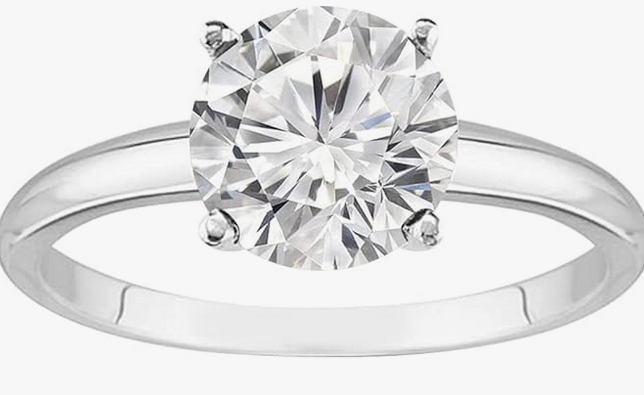
Houston Diamond District 1 to 10 Carat 14K White Gold IGI Certified Lab Grown Diamond Engagement Ring, Round Cut Solitaire, 4-Prong Setting (E–F Color VS2–SI1 Clarity)
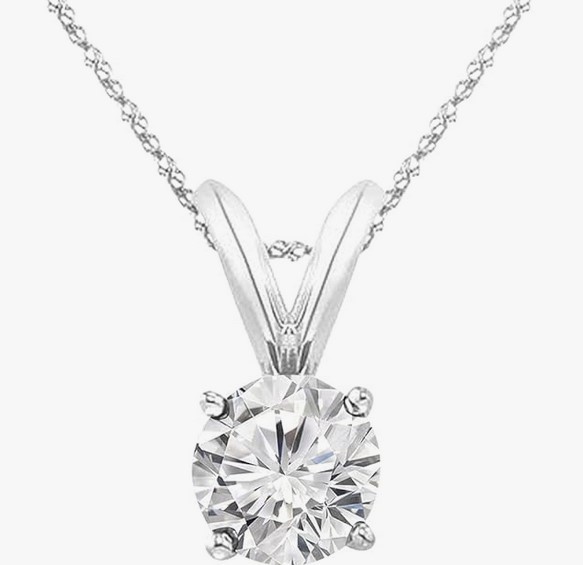
0.5-10 Carat Lab Grown Diamond Solitaire Pendant Necklace, Round Cut Solitaire, 4-Prong Setting, Jewelry for Women (E-F, VS)
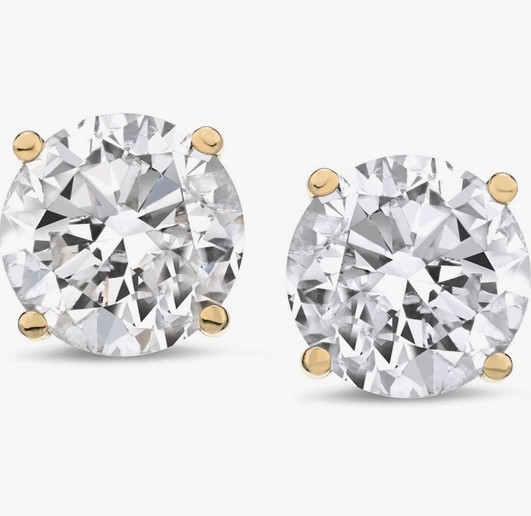
1 to 6 Carat LAB GROWN Solitaire Diamond Stud Earrings Round Cut 4 Prong Screw Back (F-G Color, VS1-VS2 Eye Clean Clarity)
3 Carat Diamond Earrings: The Complete Buyer’s Guide
3 carat diamond earrings are the perfect blend of everyday elegance and serious sparkle. Substantial enough to make a statement yet refined enough to wear from morning to night, 3 carat diamond earrings frame the face with brilliant, eye-catching light. Whether you choose classic studs, glamorous drops, or dazzling hoops, 3 carat diamond earrings are a timeless investment in beauty that never goes out of style. This guide explains everything that shapes the look, quality, and value of 3 carat diamond earrings, so you can shop with total confidence.
At Mycaratdiamond, every pair of 3 carat diamond earrings is crafted from real, certified lab grown diamonds set in enduring precious metal — the combination that delivers extraordinary brilliance at a genuinely accessible price.
What Does “3 Carat” Mean for Diamond Earrings?
This is the most important thing to understand before you buy. For earrings, the carat figure almost always refers to the total carat weight of the pair. So 3 carat diamond earrings typically feature two diamonds totaling 3 carats — meaning roughly 1.5 carats in each ear. That’s a beautifully balanced size: large enough to sparkle boldly, yet comfortable and elegant for daily wear. Knowing that the weight is split across the pair helps you set the right expectations for the size and price of your 3 carat diamond earrings.
Why Choose 3 Carat Diamond Earrings?
There are many reasons 3 carat diamond earrings are so sought after:
- Versatile elegance: 3 carat diamond earrings pair effortlessly with everything from jeans to evening wear.
- Brilliant presence: the size delivers noticeable sparkle that frames and brightens the face.
- Everyday luxury: comfortable enough to wear daily, yet glamorous enough for special occasions.
- A timeless gift: 3 carat diamond earrings make an unforgettable present for anniversaries, milestones, or “just because.”
- Exceptional value with lab grown: stunning sparkle at a fraction of the traditional cost.
How Big Do 3 Carat Diamond Earrings Look?
Because the weight is split between two stones, each diamond in a pair of 3 carat diamond earrings is about 1.5 carats — roughly 7.3 millimeters across for a round diamond. That’s a confident, head-turning size that reads clearly from across a room without overwhelming the ear. Round studs offer classic brilliance, while elongated shapes like oval or pear can appear even larger. Whatever shape you choose, 3 carat diamond earrings deliver a bold, luxurious look.
What Determines the Price of 3 Carat Diamond Earrings?
No two pairs are identical, so the price of 3 carat diamond earrings is never a single fixed number. Several measurable factors work together to set the final figure:
- Origin (natural vs. lab grown) — the single biggest driver of the price of 3 carat diamond earrings.
- The 4Cs — Carat weight, Color, Clarity, and Cut.
- Diamond shape — round brilliants typically cost more per carat than fancy shapes.
- Metal and setting — 14K gold, 18K gold, or platinum, plus the style of the mounting and backs.
- Certification and matching — independent grading and how well the two diamonds are matched.
Once you understand how each factor moves the needle, spotting real value in 3 carat diamond earrings becomes simple.
Natural vs. Lab Grown 3 Carat Diamond Earrings
This is where the price gap is most dramatic. Natural diamonds totaling 3 carats are rare and carry a steep premium. Lab grown 3 carat diamond earrings, by contrast, offer the same sparkle, the same durability, and the same certified quality for a fraction of the cost — often a small percentage of the natural equivalent.
Lab grown diamonds are chemically, physically, and optically identical to mined diamonds. They earn a perfect 10 on the Mohs hardness scale and display the same fire and brilliance. The only difference is origin: lab grown stones are created in a controlled environment rather than deep underground. That efficiency is precisely why lab grown 3 carat diamond earrings make a bold 3 carat look so attainable.
As a general guide, a quality pair of lab grown 3 carat diamond earrings typically lands in the low-to-mid four figures, while a comparable natural pair can cost several times more for the same size and appearance.
The 4Cs and Your 3 Carat Diamond Earrings
The 4Cs are the universal language of diamond value, and each one shapes how 3 carat diamond earrings look and what they cost.
Carat weight is the headline. At 3 carats total, each stone has real presence, giving your 3 carat diamond earrings a substantial, luxurious sparkle.
Color runs from colorless (D) downward. A near-colorless E-F grade keeps the diamonds bright and white while avoiding the steep premium of a flawless D — a smart sweet spot for 3 carat diamond earrings.
Clarity measures internal characteristics. A VS-SI range delivers eye-clean diamonds — no inclusions visible to the naked eye. Since earrings are typically viewed from a short distance, eye-clean clarity keeps your 3 carat diamond earrings looking flawless while keeping the price efficient.
Cut is the most important C for sparkle. Precise faceting maximizes light return, so well-cut 3 carat diamond earrings catch the light beautifully with every movement. Always prioritize cut quality.
Matching the Pair
One thing that sets earrings apart from a single-stone ring is matching. For 3 carat diamond earrings to look their best, the two diamonds should be well matched in size, shape, color, and clarity, so the pair appears balanced and symmetrical. A reputable jeweler carefully pairs stones so your 3 carat diamond earrings sparkle in harmony. This attention to matching is a hallmark of quality and is well worth confirming before you buy.
Settings and Backs: Choosing 3 Carat Diamond Earrings
The setting and the back both matter for security and style. Popular choices for 3 carat diamond earrings include:
- Three-prong (martini) setting: a sleek mount that shows off more of each diamond.
- Four-prong (basket) setting: a secure, classic look that cradles each stone.
- Bezel setting: a metal rim that surrounds and protects each diamond — ideal for active lifestyles.
- Screw-back posts: a highly secure back that’s recommended for larger studs like 3 carat diamond earrings.
Metal choice matters too. 14K and 18K gold offer warm, classic luxury in white, yellow, or rose, while platinum delivers a premium, naturally white finish. A secure setting and back keep your 3 carat diamond earrings safe through years of everyday wear.
Why Lab Grown Makes 3 Carat Diamond Earrings Attainable
Lab grown diamonds are produced using two advanced methods — HPHT (High Pressure High Temperature) and CVD (Chemical Vapor Deposition). Both recreate the natural diamond-forming process, but far more efficiently. That efficiency is why lab grown 3 carat diamond earrings offer such remarkable value.
Crucially, this lower price involves no compromise on quality. You are not buying simulants or imitations — you are buying real, certified diamonds graded by the same 4Cs and indistinguishable from mined stones without specialized equipment. For most buyers, lab grown 3 carat diamond earrings are the clear value winner, offering the size, sparkle, and everyday luxury you want for the budget you have.
How to Choose the Perfect 3 Carat Diamond Earrings
To secure the best value without sacrificing beauty, keep these tips in mind when choosing 3 carat diamond earrings:
- Remember the weight is for the pair. Each stone in your 3 carat diamond earrings is about 1.5 carats.
- Favor E-F color and eye-clean VS-SI clarity. This combination looks stunning and keeps the price efficient.
- Prioritize cut quality. Excellent faceting is what makes diamonds sparkle.
- Confirm the pair is well matched. Balanced stones make 3 carat diamond earrings look their best.
- Choose a secure setting and screw-backs. Security matters for studs of this size.
- Choose lab grown and insist on certification. It’s the smartest way to get genuine, certified 3 carat diamond earrings at a fair price.
Bottom line: 3 carat diamond earrings bring together bold sparkle, everyday versatility, and timeless elegance in one unforgettable pair. With premium lab grown diamonds in near-colorless, eye-clean grades, set in beautifully crafted gold or platinum, you can own a true 3 carat look at a price that finally makes sense. Explore our collection above to find the perfect 3 carat diamond earrings for you.
A 3 carat diamond earrings represents a significant milestone in diamond jewelry, offering impressive visual impact and substantial presence that commands attention in any setting. Measuring approximately 9.1mm in diameter for a round brilliant cut, these diamonds deliver exceptional sparkle and fire that creates stunning light performance. With prices typically ranging from $15,000 to $150,000 depending on quality factors, a 3 carat diamond earrings provides excellent value for those seeking a balance between size and investment potential. The substantial carat weight ensures the diamond will be noticed and appreciated, making it an ideal choice for special occasions or as a statement piece that reflects refined taste and appreciation for fine jewelry.
What Is a 3 carat diamond earrings?
A 3 carat diamond earrings weighs exactly 600 milligrams or 0.6 grams, placing it firmly in the premium diamond category. This carat weight represents a sweet spot for many buyers who want significant size without crossing into the ultra-luxury market segment. The term “carat” derives from the carob seed, which ancient merchants used as a standard weight for measuring precious stones. Today’s modern carat system divides each carat into 100 points, so 3 carat diamond earrings can also be described as 300 points, allowing for precise weight measurements and pricing calculations.
The visual dimensions of this diamond vary by cut, but a round brilliant 3 carat diamond earrings typically measures 9.1mm in diameter and approximately 5.5mm in depth. Princess cut stones measure roughly 7.3mm square, while oval cuts extend to approximately 10.5mm by 7.8mm. These measurements represent ideal proportions that maximize brilliance and light return. The substantial size ensures the diamond creates impressive finger coverage, typically spanning from one side of the finger to the other on most hand sizes.
Market positioning places 3 carat diamond earrings in the premium segment, representing approximately 3% of all diamond purchases globally. This rarity contributes to their investment appeal and ensures exclusivity. The size commands respect in both professional and social settings, offering versatility that works equally well for business presentations and elegant evening events. Quality becomes increasingly important at this carat weight, as any inclusions or color tints become more visible to the naked eye.
Certification from reputable laboratories like GIA, AGS, or Sarine becomes essential for 3 carat diamond earrings purchases. These certificates provide detailed analysis of the four Cs and serve as verification of authenticity and quality. The substantial investment involved makes professional grading reports invaluable for insurance purposes and future resale considerations. Most premium jewelers will only sell certified stones in this size range, ensuring buyers receive accurate information about their purchase.
3 carat diamond earrings Price Guide
Understanding the price structure for 3 carat diamond earrings requires examining how quality factors interact to influence value. The diamond market uses exponential pricing, meaning costs increase dramatically as carat weight rises. Color, clarity, and cut quality create significant price variations within the same carat weight, often resulting in price differences of $50,000 or more between stones of varying quality levels. Market conditions, certification laboratory, and retailer markup also affect final pricing.
- D-F color, FL-VVS2 clarity, Excellent cut: $45,000-$85,000
- G-H color, VVS1-VS1 clarity, Very Good-Excellent cut: $25,000-$45,000
- A 3 carat diamond earrings in I-J color, VS2-SI1 clarity, Good-Very Good cut: $18,000-$30,000
- A 3 carat diamond earrings in K-L color, SI1-SI2 clarity, Good cut: $12,000-$22,000
- A 3 carat diamond earrings in M-N color, SI2-I1 clarity, Fair-Good cut: $8,000-$15,000
Shape selection significantly impacts pricing, with round brilliant cuts commanding premium prices due to higher rough diamond waste during cutting. Fancy shapes like oval, emerald, and cushion cuts typically cost 15-25% less than comparable round diamonds. Princess cuts offer moderate savings of 10-20%, while less popular shapes like marquise or pear can provide savings up to 30%. However, the potential resale value should be considered when selecting shapes, as round diamonds maintain the strongest secondary market.
Laboratory-grown diamonds present an alternative option, typically priced 40-60% below natural diamond equivalents. These stones offer identical physical and optical properties while providing greater value for size-focused buyers. Natural diamond advocates argue for superior long-term value retention, while lab-grown supporters emphasize immediate savings and ethical considerations. Both options require careful consideration of personal priorities and long-term ownership goals.
Geographic sourcing can influence pricing, with certain origins commanding premium prices due to marketing efforts or perceived quality differences. Canadian diamonds often carry 5-10% premiums for ethical sourcing appeals, while Russian diamonds may offer slight discounts due to political considerations. However, the certification and individual stone quality remain far more important factors than geographic origin for determining actual value and beauty.
The Four Cs for a 3 carat diamond earrings
Color grading becomes critically important for 3 carat diamond earrings because the larger size makes color tints more visible to the naked eye. The GIA color scale ranges from D (colorless) to Z (light yellow or brown), with most premium stones falling in the D-J range. D, E, and F grades represent the colorless category and command premium prices, especially in larger stones. G and H colors offer near-colorless quality with subtle tints visible only under close inspection, providing excellent value for quality-conscious buyers seeking the best balance of beauty and price.
I and J color grades show slight yellow tints that become more noticeable in larger stones, but can still appear beautiful when properly cut and set. Many buyers find these grades acceptable for 3 carat diamond earrings when prioritizing size over absolute color perfection. Warm metal settings like yellow or rose gold can complement lower color grades by masking yellow tints, while platinum and white gold settings emphasize any color presence. Professional evaluation under controlled lighting conditions helps buyers make informed color decisions.
Clarity assessment requires careful attention in larger diamonds because inclusions become more visible as size increases. The clarity scale progresses from Flawless (FL) through Very Very Slightly Included (VVS1, VVS2), Very Slightly Included (VS1, VS2), Slightly Included (SI1, SI2), and Included (I1, I2, I3). For 3 carat diamond earrings, VS1 and VS2 grades often provide the best value, offering eye-clean appearance while avoiding the premium prices of VVS grades.
Cut quality determines how effectively the diamond reflects light, creating the sparkle and fire that makes diamonds desirable. The cut grade encompasses proportions, symmetry, and polish quality, with Excellent and Very Good cuts recommended for maximum beauty. Ideal cut proportions include table percentages between 53-58%, crown angles of 34-35 degrees, and pavilion angles of 40.6-41.8 degrees. These specifications ensure optimal light return and create the brilliant sparkle that makes 3 carat diamond earrings truly spectacular. Poor cut quality can make even high-color, high-clarity diamonds appear dull and lifeless.
Shape Options and Trade-Offs
Round brilliant cuts represent the most popular choice for premium diamonds, offering maximum brilliance through their 58-facet design optimized over centuries of development. The circular shape provides timeless appeal and superior light performance, making it an excellent choice for those prioritizing sparkle above all other factors. However, round diamonds command premium prices due to the significant rough diamond waste during cutting, with up to 60% of the original rough being lost in the cutting process.
Princess cut diamonds offer a modern square shape with brilliant-style faceting that provides excellent sparkle at more accessible prices. These stones typically cost 10-20% less than equivalent round diamonds while maintaining impressive fire and scintillation. The square shape works particularly well in contemporary settings and appeals to buyers seeking geometric precision. However, the pointed corners require protective prong placement to prevent chipping during daily wear activities.
Oval diamonds create an elegant elongated appearance that can make fingers appear longer and more slender. The modified brilliant cut provides excellent light performance while offering unique visual appeal that stands out from more common round stones. Price advantages of 15-25% compared to rounds make ovals attractive for budget-conscious buyers seeking maximum visual impact. Length-to-width ratios between 1.35-1.50 provide the most pleasing proportions for most tastes.
Emerald cut diamonds showcase a sophisticated step-cut faceting pattern that emphasizes clarity and creates distinctive flashes of light rather than brilliant sparkle. The rectangular shape with cut corners offers timeless elegance favored by those appreciating understated luxury. These diamonds require higher clarity grades because the large, open facets make inclusions more visible. However, the unique beauty and typically lower prices make emerald cuts appealing for discerning buyers seeking something distinctive and refined.
Wearing a 3 carat diamond earrings: Size and Presence
The visual impact of wearing a 3 carat diamond earrings cannot be understated, as this size creates commanding presence that draws attention and admiration. The substantial size ensures the diamond remains clearly visible from conversational distances, making it an excellent choice for those who want their jewelry to be noticed and appreciated. Professional settings benefit from the confident image projected by quality diamond jewelry, while social occasions provide opportunities to showcase refined taste and success.
Hand compatibility varies significantly among individuals, with finger length and width affecting how 3 carat diamond earrings appear when worn. Longer, slender fingers can accommodate large stones elegantly, while shorter or wider fingers might find the proportions overwhelming for everyday wear. Ring size also influences appearance, as the same diamond will appear larger on smaller ring sizes and more proportionate on larger sizes. Trying on similar-sized stones or using sizing tools helps buyers visualize the actual wearing experience.
Lifestyle considerations play crucial roles in determining whether 3 carat diamond earrings suit individual needs and preferences. Active lifestyles requiring frequent hand use might find large stones impractical for daily wear, while those in professional or social roles may appreciate the positive impression created by substantial diamond jewelry. The investment involved also suggests these stones work best for buyers who plan to wear them regularly rather than reserving them for rare special occasions.
Setting selection significantly influences how 3 carat diamond earrings appear and feel during wear. Low-profile settings reduce the overall height and minimize catching on clothing or other objects, while higher settings maximize light entry for enhanced brilliance. Prong settings offer maximum light exposure but require more careful handling, while bezel settings provide superior protection with slightly reduced sparkle. The choice between platinum, white gold, yellow gold, or rose gold affects both appearance and maintenance requirements over time.
Certification: What a 3 carat diamond earrings Certificate Should Show
Professional certification becomes essential for 3 carat diamond earrings purchases due to the significant investment involved and the need for accurate quality assessment. The Gemological Institute of America (GIA) remains the most respected certification body globally, providing detailed analysis of all quality factors using consistent standards. GIA certificates include precise measurements, color and clarity grades, cut quality assessment, and identification of any treatments or enhancements. The laser inscription feature links the physical stone to its certificate, providing security against substitution.
American Gem Society (AGS) certificates offer an alternative assessment using a 0-10 grading scale where 0 represents the highest quality. AGS pioneered scientific cut grading and provides particularly detailed analysis of light performance characteristics. Their triple-zero designation (0-0-0 for cut, color, and clarity) represents the ultimate quality designation. For 3 carat diamond earrings, AGS certification provides valuable cut quality information that helps buyers understand light performance capabilities.
Certificate authentication requires verification through the issuing laboratory’s online database using the report number. This process confirms the certificate’s authenticity and ensures the grades haven’t been altered. Buyers should insist on seeing certificates before making purchase decisions and verify the information matches the actual diamond being considered. Any discrepancies or reluctance to provide certification should raise immediate concerns about the seller’s legitimacy and the stone’s actual quality.
Additional features like fluorescence ratings, plotting diagrams showing inclusion positions, and proportion measurements provide comprehensive quality information. Fluorescence ratings indicate how the diamond reacts under ultraviolet light, with strong fluorescence potentially affecting appearance in certain lighting conditions. Plotting diagrams map inclusion positions and types, helping buyers understand clarity characteristics that influence beauty and durability. Proportion measurements enable comparison with ideal standards for optimal light performance in 3 carat diamond earrings selections.
Setting Recommendations
Solitaire settings remain the classic choice for showcasing large diamonds, allowing maximum light entry while providing secure stone mounting. The six-prong Tiffany-style setting offers excellent security and light exposure, making it ideal for those prioritizing brilliance and traditional elegance. Four-prong settings provide a more modern appearance while still offering adequate security for daily wear. The choice between platinum and gold affects both appearance and durability, with platinum offering superior strength and hypoallergenic properties.
Halo settings surround the center diamond with smaller diamonds, creating additional sparkle and making the center stone appear larger. This style works particularly well for buyers seeking maximum visual impact and can add significant perceived size to the overall appearance. However, the additional diamonds increase cost and complexity while potentially overshadowing the center stone’s natural beauty. Maintenance requirements also increase due to the multiple small diamonds that can become loose over time.
Three-stone settings symbolize past, present, and future while providing additional diamond content for enhanced overall sparkle. Side stones typically range from 0.25 to 0.75 carats each, creating balanced proportions that complement rather than compete with the center diamond. This style offers excellent value by combining multiple diamonds in a single setting while maintaining focus on the center stone. The additional weight and complexity require careful design to ensure comfortable daily wear.
Vintage and antique-inspired settings provide unique character through intricate metalwork, milgrain details, and period-appropriate design elements. These styles often incorporate additional smaller diamonds in complex patterns that create distinctive appearances unavailable in contemporary settings. Hand-crafted details and custom modifications allow personalization that creates truly unique pieces. However, vintage-style settings typically require more maintenance and may not provide the same security levels as modern mounting techniques designed for active lifestyles.
Comparing Nearby Carat Weights
The 2.5 to 2.9 carat range offers substantial savings while maintaining impressive size and presence. A 2.75 carat diamond provides approximately 90% of the visual impact at potentially 25-35% lower cost than full 3-carat stones. These weights work particularly well for buyers prioritizing value while still achieving significant diamond presence. The size difference becomes minimal when viewed from normal distances, making this range attractive for practical luxury seekers.
Moving up to 3.25 to 3.5 carat weights provides noticeably increased presence but requires significantly higher investment. The price jump often exceeds 30-50% for comparable quality stones, representing diminishing returns for many buyers. However, those seeking maximum impact within reasonable budgets may find these sizes offer the perfect balance of presence and value. The increased finger coverage and light reflection create substantially more dramatic appearances in all lighting conditions.
Four carat diamonds represent a significant milestone that commands premium prices due to rarity and psychological appeal. The visual difference between 3 and 4 carats is substantial, with the larger stone providing approximately 15% more surface area and dramatically increased presence. However, prices often double or triple for comparable quality, making this jump suitable primarily for buyers with substantial budgets who prioritize size above value considerations.
Half-carat increments like 3.5 carats can provide compromise solutions that offer increased size without full 4-carat pricing. These weights often receive less market attention, potentially creating value opportunities for informed buyers. The 3.5 carat size provides substantial visual presence while maintaining relatively reasonable pricing compared to the psychological 4-carat milestone. Availability may be more limited, requiring patience to find optimal quality examples at fair market prices.
Where to Buy
Online retailers have revolutionized diamond purchasing by providing extensive inventories, detailed photography, and competitive pricing structures. Established online platforms offer thousands of certified diamonds with comprehensive filtering tools that help buyers locate stones meeting specific criteria. Advanced imaging technology including 360-degree videos and magnified photographs enables detailed quality assessment from home. However, the inability to physically examine stones before purchase requires confidence in the retailer’s reputation and return policies.
Traditional jewelry stores provide hands-on examination opportunities and personalized service that many buyers value for significant purchases. Experienced staff can provide guidance on quality factors and help customers understand the differences between similar stones. The ability to compare multiple diamonds side-by-side under consistent lighting conditions helps buyers make confident decisions. However, limited inventory and higher overhead costs often result in premium pricing compared to online alternatives.
Estate and auction houses occasionally offer exceptional values on previously owned diamonds, particularly for buyers seeking unique vintage cuts or period settings. These venues require expertise to assess condition and authenticity, as return policies may be limited or non-existent. Professional appraisal becomes essential before bidding to avoid overpaying for stones with hidden problems. The potential for significant savings attracts knowledgeable buyers willing to invest time in research and evaluation.
Wholesale diamond districts in major cities provide access to industry pricing for buyers willing to navigate the professional trade environment. These locations offer extensive inventories and competitive pricing but require diamond knowledge to evaluate quality independently. Building relationships with reputable wholesale dealers can provide access to exceptional stones at favorable prices. However, limited consumer protections and minimal return policies make these purchases suitable primarily for experienced buyers with substantial diamond expertise and industry connections.
How much should I expect to pay for quality 3 carat diamond earrings?
3 carat diamond earrings pricing varies dramatically based on quality factors, typically ranging from $15,000 to $85,000 for certified natural diamonds. Color, clarity, and cut quality create the most significant price variations, with D-F color, VVS-VS clarity stones commanding premium prices. G-I color diamonds with VS-SI1 clarity offer excellent value, typically ranging from $20,000 to $45,000. Shape selection also influences pricing, with fancy shapes offering 15-25% savings compared to round brilliants. Market conditions, retailer markup, and certification source can add additional price variations of 10-20% for comparable stones.
What size setting works best for 3 carat diamond earrings?
Setting selection for large diamonds should balance security, comfort, and light performance to showcase the stone’s natural beauty effectively. Six-prong solitaire settings provide excellent security while maximizing light entry for optimal brilliance and fire. The prong height should accommodate the diamond’s depth while maintaining reasonable overall profile for comfortable daily wear. Ring shank width of 2.5-3.5mm provides appropriate proportional balance without appearing too delicate. Custom sizing ensures proper fit and comfort for extended wearing periods.
Are 3 carat diamond earrings suitable for everyday wear?
3 carat diamond earrings can absolutely serve as everyday jewelry for buyers whose lifestyles accommodate substantial diamond jewelry. The size provides excellent durability and impact resistance when properly set and maintained. However, active lifestyles requiring frequent hand use may find large stones impractical for daily activities. Professional settings often welcome substantial diamond jewelry as symbols of success and reliability. Insurance coverage becomes essential for daily wear scenarios to protect against loss or damage during routine activities.
How do I verify the authenticity of a large diamond?
Verification requires professional certification from recognized laboratories like GIA, AGS, or other respected institutions that provide detailed quality analysis. The certificate should include precise measurements, quality grades, and unique characteristics that match the actual diamond being examined. Laser inscriptions link certified diamonds to their reports, providing additional security against substitution or fraud. Independent appraisal by qualified gemologists offers secondary verification and establishes insurance replacement values for significant purchases.
What’s the difference between lab-grown and natural diamonds at this size?
Physical and optical properties remain identical between lab-grown and natural diamonds, with both displaying equivalent hardness, brilliance, and durability characteristics. The primary differences involve pricing, with lab-grown stones typically costing 40-60% less than natural equivalents of comparable quality. Long-term value retention favors natural diamonds based on historical market performance and consumer preferences. Certification clearly identifies origin, allowing buyers to make informed decisions based on personal values regarding natural versus laboratory creation processes.
How should I care for and maintain my investment?
Regular professional cleaning and inspection ensure continued beauty and security for valuable diamond jewelry throughout ownership. Ultrasonic cleaning removes accumulated oils and debris that can dull sparkle, while professional inspection identifies potential setting problems before they cause stone loss. Home care involves gentle cleaning with warm soapy water and soft brushes, avoiding harsh chemicals that can damage metal settings. Insurance coverage, secure storage, and periodic appraisal updates protect the financial investment while ensuring continued enjoyment of this significant purchase.
Selecting the perfect 3 carat diamond earrings requires careful consideration of personal priorities, quality preferences, and budget constraints to ensure long-term satisfaction with this significant investment. The substantial size provides impressive visual impact and excellent long-term value potential when quality factors are properly balanced. Understanding the four Cs, certification importance, and market pricing helps buyers make informed decisions that align with their specific needs and preferences. Professional guidance from experienced jewelers or gemologists can provide valuable insights during the selection process.
The enduring beauty and substantial presence of 3 carat diamond earrings make them exceptional choices for celebrating life’s most important milestones and achievements. Whether chosen for engagement, anniversary, or personal milestone recognition, these diamonds provide lasting symbols of love, success, and appreciation for life’s finest pleasures. The investment in quality certification, professional setting, and proper insurance protection ensures decades of enjoyment and potential family heirloom status. For additional information about diamond selection and jewelry services, visit the Carat Diamond homepage.