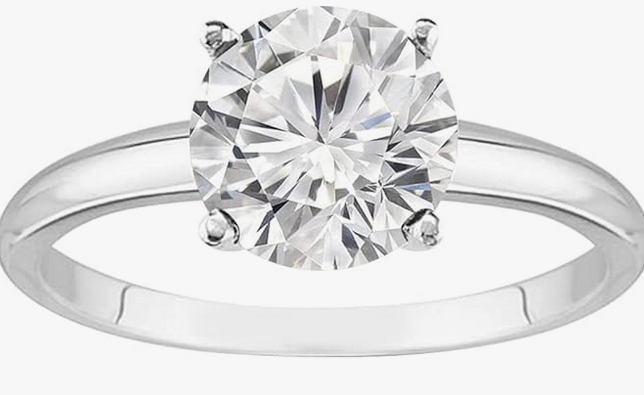
Houston Diamond District 1 to 10 Carat 14K White Gold IGI Certified Lab Grown Diamond Engagement Ring, Round Cut Solitaire, 4-Prong Setting (E–F Color VS2–SI1 Clarity)
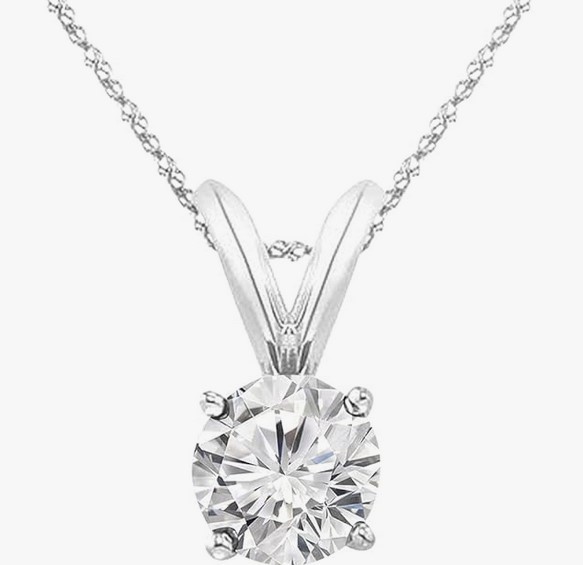
0.5-10 Carat Lab Grown Diamond Solitaire Pendant Necklace, Round Cut Solitaire, 4-Prong Setting, Jewelry for Women (E-F, VS)
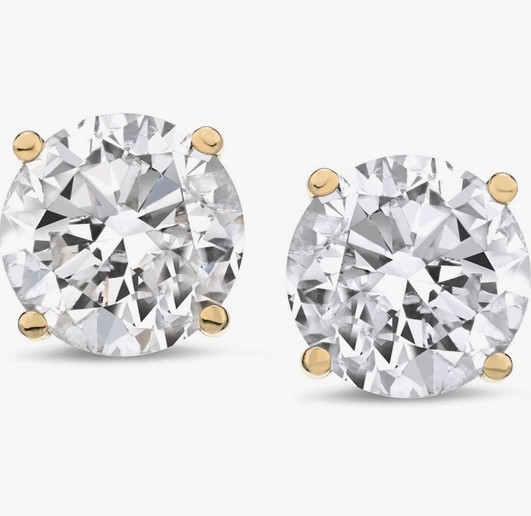
1 to 6 Carat LAB GROWN Solitaire Diamond Stud Earrings Round Cut 4 Prong Screw Back (F-G Color, VS1-VS2 Eye Clean Clarity)
.75 Carat Diamond: The Complete Guide to a Three-Quarter Carat
A .75 carat diamond — that’s three-quarters of a carat, written as 0.75 ct — is one of the smartest, most beautiful value choices in fine jewelry. Sitting just below the one-carat mark, a .75 carat diamond offers a look that’s remarkably close to a full carat, yet at a noticeably lower price. It’s elegant, substantial, and easy to wear, making a three-quarter carat diamond a favorite for those who want impressive presence without crossing into a higher price bracket. This guide explains everything that shapes the look, quality, and value of a .75 carat diamond, so you can choose with total confidence.
At Mycaratdiamond, every diamond is real, certified, and crafted for maximum brilliance, so the price you pay always reflects genuine quality and value.
How Big Is a .75 Carat Diamond?
Carat is a measure of weight, not size, but the two are closely related. A round .75 carat diamond measures roughly 5.8 millimeters across — only a little smaller than a full one-carat diamond at about 6.4 millimeters, yet meaningfully larger than a half carat. That’s the magic of a three-quarter carat: it delivers nearly the visual impact of a one-carat stone. Elongated shapes like oval, pear, and marquise can make a .75 carat diamond look even larger, thanks to their extra length across the finger.
Why Choose a .75 Carat Diamond?
There are many reasons a three-quarter carat is such a popular choice:
- Smart value: a .75 carat diamond looks close to a full carat but costs less, since it sits just below the one-carat price jump.
- Beautiful presence: substantial, elegant sparkle that’s clearly visible on the finger.
- Comfortable everyday wear: a great balance of size and practicality.
- Versatile: a three-quarter carat diamond shines as a solitaire, in a halo that makes it look even bigger, or with accent stones.
What Determines the Price of a .75 Carat Diamond?
No two stones are identical, so the price of a .75 carat diamond is never a single fixed number. Several measurable factors work together to set the final figure:
- Origin (natural vs. lab grown) — the biggest single influence on price.
- The 4Cs — Carat weight, Color, Clarity, and Cut.
- Shape — round brilliants typically cost more per carat than fancy shapes.
- Certification — independent grading supports a fair, transparent price.
- Setting and metal — for a finished ring, 14K gold, 18K gold, or platinum add to the total.
Because it sits just under the one-carat threshold, a .75 carat diamond is an especially clever way to maximize size for your budget.
Natural vs. Lab Grown .75 Carat Diamond
The biggest difference in price comes down to origin. A natural three-quarter carat diamond carries a premium, while a lab grown .75 carat diamond offers the same sparkle, the same durability, and the same certified quality for a fraction of the cost.
Lab grown diamonds are chemically, physically, and optically identical to mined diamonds. They earn a perfect 10 on the Mohs hardness scale and display the same fire and brilliance. The only difference is origin: lab grown stones are created in a controlled environment rather than deep underground. That efficiency means a lab grown three-quarter carat diamond is wonderfully affordable — letting you choose higher color, clarity, or cut grades for the same budget, or simply enjoy a beautiful stone at a very accessible price.
The 4Cs of a .75 Carat Diamond
The 4Cs — Carat, Color, Clarity, and Cut — are the universal language of diamond quality.
Carat is the weight, fixed here at three-quarters of a carat — a near-one-carat size at a friendlier price.
Color runs from colorless (D) downward. A near-colorless E-F grade keeps the diamond bright and white while keeping the price efficient — a smart sweet spot for a .75 carat diamond.
Clarity measures internal characteristics. An eye-clean VS-SI range shows no inclusions visible to the naked eye, which protects brilliance while keeping the price reasonable.
Cut is the most important factor for sparkle. Precise faceting maximizes light return, so a well-cut .75 carat diamond looks bright, lively, and even a little larger. Always prioritize cut quality.
Best Shapes for a .75 Carat Diamond
Shape is a deeply personal choice and shapes the diamond’s character:
- Round brilliant: the most popular shape, prized for maximum sparkle.
- Oval: elongates the finger and looks larger than its weight suggests.
- Princess: a sharp, modern square with brilliant shine.
- Cushion: soft, rounded corners with romantic, vintage fire.
- Pear and emerald: distinctive shapes for a unique, refined look.
Elongated shapes are a great way to make a three-quarter carat diamond appear closer to — or even larger than — a full carat.
Certification: Buy with Confidence
Always choose a certified diamond. An independent grading report confirms the stone’s carat weight, color, clarity, and cut, so you know exactly what you’re buying. Certification protects you, verifies authenticity, and ensures a fair price — well worth seeking out for any .75 carat diamond.
How to Choose the Perfect .75 Carat Diamond
To get the best combination of beauty and value, keep these tips in mind:
- Favor E-F color and eye-clean VS-SI clarity. This combination looks stunning while keeping the price efficient.
- Prioritize cut quality. Excellent faceting makes the diamond sparkle and look a bit larger.
- Consider an elongated shape or halo. Both can make a .75 carat diamond look closer to a full carat.
- Pick a shape you love. Each shape gives the stone its own personality.
- Choose lab grown and insist on certification. It’s the smartest way to own a genuine, certified stone at a fair price.
Bottom line: a .75 carat diamond brings together near-one-carat presence, brilliant sparkle, and outstanding value in one smart, beautiful stone. With a real, certified diamond in a near-colorless, eye-clean grade and an excellent cut, you can own a stunning three-quarter carat diamond at a price that finally makes sense. Explore our collection above to find the perfect .75 carat diamond for you.
A .75 carat diamond represents an exceptional balance between impressive size and practical value, measuring approximately 5.9mm in diameter for round cuts and weighing exactly three-quarters of a carat. This popular weight delivers substantial visual impact on the finger while remaining more accessible than full carat stones, typically ranging from $2,000 to $8,000 depending on quality grades. A .75 carat diamond offers the perfect sweet spot for engagement rings, providing noticeable presence without the premium pricing associated with psychological weight thresholds, making it an intelligent choice for discerning buyers seeking maximum beauty and value.
What Is a .75 carat diamond?
Understanding diamond weight begins with the carat system, where one carat equals 200 milligrams or 0.2 grams. A .75 carat diamond therefore weighs exactly 150 milligrams, placing it in the substantial yet accessible category that appeals to many engagement ring shoppers. This weight represents three-quarters of a full carat, avoiding the significant price premiums that occur at the one-carat threshold while delivering impressive visual presence. The decimal notation .75 is industry standard, though some retailers may list it as 3/4 carat for consumer clarity.
Carat weight directly impacts a diamond’s dimensions, though the relationship varies by cut shape. Round brilliant .75 carat diamond stones typically measure 5.8-6.0mm in diameter, while princess cuts measure approximately 5.2-5.4mm per side. Oval and marquise shapes maximize surface area, appearing larger than their actual weight suggests, while emerald and asscher cuts prioritize depth over spread. These dimensional differences significantly affect how impressive the stone appears when worn, making shape selection crucial for achieving desired visual impact.
The market positioning of three-quarter carat stones makes them particularly attractive to informed buyers. Unlike one-carat diamonds that carry substantial premiums due to psychological pricing, these stones offer exceptional value while delivering noticeable size. Most people cannot visually distinguish between properly cut .75 and 1.0 carat diamonds when mounted in rings, yet the price difference can reach 25-40%. This represents smart purchasing for couples prioritizing overall ring beauty over specific weight benchmarks.
Professional gemologists measure carat weight to the third decimal place using precision scales. A .75 carat diamond may actually weigh .748 or .753 carats, with industry standards allowing slight variations while maintaining the .75 designation. Certification laboratories like GIA and AGSL provide exact weight measurements on grading reports, ensuring buyers receive accurate specifications. Understanding these precise measurements helps buyers compare stones effectively and verify they’re receiving advertised weights.
.75 carat diamond Price Guide
Pricing for three-quarter carat diamonds varies dramatically based on the Four Cs, with excellent combinations commanding premium prices while strategic compromises offer significant savings. Current market conditions show natural diamonds ranging from approximately $1,800 for lower grades to over $9,000 for exceptional stones. A .75 carat diamond with balanced specifications typically falls between $3,500-$5,500, representing the sweet spot where quality meets value. Lab-grown alternatives offer identical beauty at 40-60% lower prices, expanding options for budget-conscious buyers.
- A .75 carat diamond in D-F color, VVS1-VVS2 clarity, Excellent cut: $6,500-$9,200
- G-H color, VS1-VS2 clarity, Very Good-Excellent cut: $4,200-$6,800
- A .75 carat diamond in I-J color, SI1-SI2 clarity, Good-Very Good cut: $2,800-$4,500
- K-L color, SI2-I1 clarity, Fair-Good cut: $1,800-$3,200
- A .75 carat diamond lab-grown premium grades: $2,500-$4,200
Complete engagement ring pricing includes mounting costs, which typically range from $800-$3,500 depending on metal choice and design complexity. Simple solitaire settings in 14k white gold start around $800, while elaborate halo designs in platinum can exceed $2,500. When budgeting for the complete ring, buyers should allocate 60-70% toward the diamond and 30-40% toward the setting to achieve optimal balance between stone quality and mounting attractiveness.
- Complete ring with premium .75ct stone, platinum solitaire: $8,500-$12,000
- Balanced specifications, 14k gold halo setting: $6,200-$9,500
- Strategic quality choices, simple mounting: $4,800-$7,200
- Lab-grown stone, designer setting: $5,000-$8,500
- Budget-conscious natural diamond, basic solitaire: $3,500-$5,800
Regional pricing variations and seasonal demand fluctuations can impact final costs by 10-20%. Major metropolitan areas typically command higher prices due to increased overhead costs, while online retailers often offer better values through reduced operational expenses. Shopping during slower periods like January-February or late summer can yield better negotiating positions, though exceptional stones sell quickly regardless of timing. Smart buyers compare multiple sources and remain flexible on minor specification differences to maximize value.
The Four Cs for a .75 carat diamond
Cut quality represents the most crucial factor affecting a three-quarter carat diamond’s beauty, directly controlling light performance and visual brilliance. Excellent and Ideal cut grades ensure maximum light return, creating the fiery sparkle that makes diamonds captivating. A .75 carat diamond with superior cut proportions will significantly outperform larger stones with poor cutting, making this specification the top priority for discerning buyers. Premium cuts command 15-25% price premiums but deliver dramatically superior visual performance that justifies the investment.
Color grading becomes increasingly important as diamond size increases, with three-quarter carat stones showing more noticeable color than smaller weights. D-F grades represent colorless perfection but carry substantial premiums, while G-H grades offer near-colorless beauty at better values. Most buyers find I-J colors acceptable when prioritizing size over absolute colorlessness, particularly when mounted in yellow gold settings that mask slight warmth. The key lies in viewing stones in person or requesting detailed photography to assess color tolerance accurately.
Clarity considerations for .75 carat diamonds focus on eye-clean appearance rather than microscopic perfection. VS1-VS2 grades guarantee invisible inclusions to the naked eye while offering better value than flawless grades. SI1 clarity can provide excellent value when inclusions are well-positioned, though careful selection becomes essential. A .75 carat diamond with strategic SI1 clarity allows budget allocation toward superior cut and color grades, maximizing overall visual impact while maintaining eye-clean beauty.
Balancing the Four Cs requires understanding their relative impact on beauty and value. For three-quarter carat stones, prioritizing cut excellence first, then color preference, followed by eye-clean clarity creates optimal combinations. Carat weight remains fixed at .75, so maximizing the other three factors within budget constraints ensures the most impressive final result. Professional guidance helps navigate these complex relationships and identify stones offering the best combination of beauty and value for individual preferences and budgets.
Shape Options and Trade-Offs
Round brilliant cuts remain the most popular choice for three-quarter carat diamonds, delivering maximum light performance through their 58-facet design optimized over centuries of development. These stones measure approximately 5.9mm in diameter, providing substantial finger coverage while maintaining perfect proportions. Round cuts command 20-30% premiums over fancy shapes due to higher rough diamond waste during cutting, but their superior brilliance and timeless appeal justify the investment for many buyers. The standardized grading systems for round cuts also simplify quality assessment and comparison shopping.
Princess cuts offer contemporary square elegance with brilliant-style faceting that creates impressive sparkle. At .75 carats, princess cuts measure roughly 5.3mm per side, delivering slightly less surface area than rounds but appealing to buyers preferring geometric lines. A .75 carat diamond in princess cut typically costs 15-20% less than equivalent round stones, offering value-conscious buyers significant savings. However, princess cuts require protective settings due to vulnerable pointed corners, and clarity becomes more critical as the faceting pattern can highlight inclusions.
Oval, marquise, and pear shapes maximize surface area through elongated proportions, creating impressive visual presence that can appear 10-15% larger than round stones of identical weight. These fancy shapes suit buyers prioritizing apparent size over traditional aesthetics, though finding well-cut examples requires more patience and expertise. Length-to-width ratios significantly impact appearance, with personal preference determining optimal proportions. Bow-tie effects common in elongated shapes require careful evaluation to ensure even light distribution across the stone.
Emerald and asscher cuts appeal to buyers appreciating vintage elegance and subtle sophistication over maximum sparkle. These step-cut styles emphasize clarity and create distinctive hall-of-mirrors effects through their large, open facets. A .75 carat diamond in emerald cut requires higher clarity grades since inclusions become more visible, but the resulting elegance appeals to those seeking understated luxury. These cuts also pair beautifully with Art Deco and vintage-inspired settings, creating cohesive design themes that stand apart from mainstream brilliant cuts.
Wearing a .75 carat diamond: Size and Presence
Visual impact on the finger represents a crucial consideration for engagement ring selection, with three-quarter carat diamonds delivering substantial presence without overwhelming smaller hands. A .75 carat diamond provides noticeable sparkle and elegance that photographs beautifully while remaining comfortable for daily wear. The size creates impressive light reflection that catches attention in both natural and artificial lighting, ensuring the ring makes a statement without appearing ostentatious. Most wearers find this weight optimal for balancing visual drama with practical considerations.
Hand size and finger length significantly influence how impressive three-quarter carat stones appear when worn. Petite hands showcase these diamonds particularly well, with the substantial size creating beautiful proportions that enhance rather than overwhelm feminine elegance. Longer fingers can accommodate the size easily while benefiting from the width that round cuts provide. The 5.9mm diameter of round .75 carat stones covers substantial finger real estate, creating the presence many buyers seek in engagement rings.
Setting choices dramatically affect perceived size and overall visual impact of three-quarter carat diamonds. Halo settings surround the center stone with smaller diamonds, creating the illusion of significantly larger size while adding extra sparkle and brilliance. Solitaire mountings showcase the diamond’s natural beauty without distraction, appealing to those preferring classic elegance. A .75 carat diamond in a well-designed three-stone setting creates impressive finger coverage while incorporating meaningful symbolism of past, present, and future.
Lifestyle considerations influence the practicality of three-quarter carat engagement rings for daily wear. The substantial size may catch on clothing or gloves more than smaller stones, though most wearers adapt quickly to the presence. Professional environments generally accommodate this size well, as it projects success without appearing excessive. Active lifestyles benefit from protective settings that shield the diamond from impacts, while those preferring low-profile designs can choose bezel or flush-mount options that reduce projection while maintaining beauty.
Setting Recommendations
Solitaire settings provide the classic foundation for showcasing three-quarter carat diamonds, allowing the stone’s natural beauty to take center stage without competing elements. Six-prong mountings offer maximum light entry while securing the diamond safely, though four-prong options create cleaner lines for those preferring minimalist aesthetics. A .75 carat diamond benefits from substantial prong construction that provides security without overwhelming the stone’s proportions. Platinum and 18k white gold offer optimal color neutrality, while yellow gold creates warm, traditional appeal that complements slightly warmer diamond colors.
Halo settings dramatically enhance the perceived size of three-quarter carat center stones, surrounding them with smaller diamonds that create impressive finger coverage and added brilliance. Single halos typically add 0.15-0.25 carats of accent diamonds, while double halos can contribute 0.35-0.50 carats total. The visual effect makes the center stone appear 25-40% larger while increasing overall sparkle significantly. These settings work particularly well with round and cushion cuts, though oval and pear shapes also benefit from the enhanced presence halos provide.
Three-stone settings offer symbolic meaning while creating substantial finger coverage through multiple diamonds. Side stones typically range from 0.15-0.35 carats each, complementing the .75 carat center stone beautifully. Graduated sizing creates elegant proportions, while uniform sizing produces more contemporary balance. A .75 carat diamond flanked by well-matched side stones creates impressive total carat weight often exceeding 1.25 carats while distributing visual impact across the entire finger width. This style particularly suits buyers wanting substantial presence with meaningful design elements.
Vintage and antique-inspired settings pair beautifully with three-quarter carat diamonds, creating cohesive designs that evoke historical elegance. Art Deco mountings with geometric patterns and milgrain detailing complement emerald and asscher cuts particularly well. Edwardian-style settings with intricate filigree work showcase the craftsmanship while providing delicate contrast to the diamond’s boldness. These specialized settings often require custom manufacturing but create truly unique pieces that stand apart from mass-market alternatives while highlighting the center stone’s beauty.
Comparing Nearby Carat Weights
The decision between 0.70 and 0.75 carat diamonds involves weighing slight size differences against price premiums of typically 8-12%. A .75 carat diamond measures approximately 0.1mm larger in diameter than 0.70 carat stones, a difference barely perceptible when mounted but psychologically significant for many buyers. The additional cost often seems justified for the milestone weight, though practical buyers may find 0.70 carat stones offer better value with virtually identical visual impact. Both weights avoid the substantial premiums associated with full carat stones while delivering impressive presence.
One carat diamonds represent the most significant comparison point, carrying 25-40% price premiums over three-quarter carat stones while measuring only 0.5mm larger in diameter. The psychological appeal of “one carat” drives demand and pricing, though the visual difference proves minimal when comparing well-cut stones. A .75 carat diamond allows buyers to allocate saved budget toward superior cut, color, or clarity grades, potentially creating more impressive overall beauty than mediocre one-carat alternatives. Smart buyers often find three-quarter carat stones offer superior value propositions.
Half-carat diamonds provide meaningful cost savings of 30-45% compared to three-quarter carat stones but sacrifice noticeable visual presence. The 1.1mm diameter difference becomes apparent when stones are viewed side by side, with 0.75 carat weights offering substantially more finger coverage and light reflection. Buyers prioritizing maximum size within budget often find the additional investment worthwhile for the enhanced presence and long-term satisfaction. However, those preferring to invest more heavily in setting elaborate designs might find half-carat centers more appropriate.
Understanding the relationship between carat weight and pricing helps buyers make informed decisions about optimal stone selection. Price increases accelerate at psychological weight thresholds, making weights like 0.75, 0.90, and 1.00 carats more expensive per carat than nearby alternatives. A .75 carat diamond sits at a minor threshold, though the premium remains modest compared to full carat stones. Flexible buyers willing to consider 0.73 or 0.77 carat alternatives may find exceptional values, as these weights avoid psychological pricing while delivering essentially identical visual impact and beauty.
Certification: What a .75 carat diamond Certificate Should Show
Gemological Institute of America (GIA) certificates represent the gold standard for diamond grading, providing comprehensive analysis of three-quarter carat stones through rigorous scientific evaluation. A properly certified .75 carat diamond includes precise weight measurements to the hundredth of a carat, detailed cut grade analysis, and photographic documentation of clarity characteristics. GIA’s global reputation ensures consistent grading standards that facilitate comparison shopping and protect buyers from misrepresentation. The laboratory’s independence from commercial interests maintains objectivity essential for accurate quality assessment.
American Gem Society Laboratories (AGSL) provides equally respected certification with particular expertise in cut quality analysis through their proprietary light performance evaluation systems. Their scientific approach to cut grading offers additional insights into how well three-quarter carat diamonds will perform in various lighting conditions. AGSL certificates include detailed proportions analysis and light performance mapping that helps buyers understand the relationship between cutting precision and visual beauty. Both GIA and AGSL certifications command market recognition and support resale value effectively.
Essential information on legitimate certificates includes exact carat weight, color grade, clarity grade, cut quality assessment, and detailed measurements of the stone’s dimensions. Fluorescence notation indicates the diamond’s reaction to ultraviolet light, which can affect appearance in certain lighting conditions. A .75 carat diamond certificate should also include a detailed plot diagram showing inclusion locations and characteristics, enabling buyers to understand clarity features and their impact on beauty. Polish and symmetry grades provide additional quality indicators that affect light performance and overall appearance.
Avoiding questionable certification requires understanding the difference between legitimate gemological laboratories and promotional grading services that may inflate quality assessments. Certificates from unknown laboratories or those affiliated with retailers should raise caution flags, as inflated grades mislead buyers and reduce long-term value. Legitimate certificates include security features like holograms, unique report numbers, and detailed laboratory contact information for verification. When purchasing significant three-quarter carat investments, buyers should insist on GIA or AGSL certification to ensure accurate grading and market acceptance.
Where to Buy
Online diamond retailers have revolutionized the three-quarter carat diamond market by offering extensive inventories, competitive pricing, and detailed specifications that enable informed purchasing decisions. Reputable online sources provide high-resolution photography, video documentation, and advanced filtering systems that help buyers identify optimal stones efficiently. A .75 carat diamond purchased online often costs 20-30% less than identical stones from traditional retailers due to reduced overhead expenses. However, buyers must rely on photographs and specifications rather than personal inspection, making vendor reputation and return policies crucial considerations.
Traditional brick-and-mortar jewelers offer the advantage of personal inspection and professional guidance, allowing buyers to evaluate three-quarter carat diamonds under various lighting conditions before purchase. Established local jewelers often provide valuable expertise in matching stones to individual preferences and requirements. The ability to compare multiple stones side by side helps buyers understand quality differences that specifications alone cannot convey. Traditional retailers also offer immediate availability and personal service relationships that benefit long-term ownership through maintenance and warranty support.
Wholesale diamond districts in major cities provide access to extensive inventories at competitive prices, though navigating these markets requires significant knowledge and experience. Professional buyers and those comfortable with wholesale environments may find exceptional values on three-quarter carat stones through established dealers. However, the wholesale market assumes buyer expertise and provides minimal consumer protections compared to retail environments. A .75 carat diamond from wholesale sources requires careful verification of quality and certification authenticity, making this option suitable primarily for experienced buyers or those working with trusted industry professionals.
Auction houses and estate dealers occasionally offer unique three-quarter carat diamonds with historical provenance or exceptional characteristics not available through traditional channels. These venues can provide opportunities to acquire distinctive stones at competitive prices, though buyer expertise becomes essential for quality assessment and value determination. Vintage and antique diamonds may lack modern certification, requiring independent evaluation to confirm quality and authenticity. The unique nature of estate pieces appeals to buyers seeking one-of-a-kind stones with character and history that mass-market alternatives cannot provide.
Frequently Asked Questions
How big does a .75 carat diamond look on the finger?
A .75 carat diamond creates substantial visual presence measuring approximately 5.9mm in diameter for round cuts, providing impressive finger coverage that photographs beautifully while remaining elegant for daily wear. The size strikes an optimal balance between noticeable sparkle and practical comfort, appearing significantly larger than half-carat stones while avoiding the excessive presence some find overwhelming in larger weights. Most wearers discover this size perfectly suited for both special occasions and everyday elegance.
What’s the price range for three-quarter carat diamonds?
Three-quarter carat diamond pricing varies dramatically based on quality specifications, ranging from approximately $1,800 for lower grades to over $9,000 for exceptional stones with premium Four Cs ratings. Most buyers find balanced combinations between $3,500-$5,500, representing excellent value propositions that maximize beauty within reasonable budgets. Lab-grown alternatives offer identical visual appeal at 40-60% lower costs, expanding options for budget-conscious shoppers seeking maximum size and quality.
Is a .75 carat diamond a good choice for an engagement ring?
A .75 carat diamond represents an excellent engagement ring choice, offering substantial visual impact without the premium pricing associated with full carat weights while providing impressive presence that photographs beautifully and creates lasting memories. The size suits most hand sizes elegantly, delivers significant sparkle and brilliance, and maintains practical comfort for daily wear throughout a lifetime of marriage. This weight perfectly balances visual drama with value considerations that matter to most couples.
How does three-quarter carat compare to one carat?
Comparing three-quarter and one-carat diamonds reveals minimal visual differences of approximately 0.5mm diameter while significant price differences of 25-40% premium for full carat stones due to psychological pricing thresholds. Most people cannot distinguish between well-cut examples when mounted, yet the cost savings allow investment in superior cut, color, or clarity grades that enhance overall beauty. Smart buyers often find three-quarter carat stones provide better value propositions for maximizing ring beauty within budget.
What setting works best for a .75 carat diamond?
Setting selection depends on personal style preferences, though solitaire mountings showcase three-quarter carat diamonds beautifully while halo designs dramatically enhance perceived size and overall sparkle. Six-prong solitaires provide classic elegance with maximum light entry, while protective bezels suit active lifestyles requiring durability. A .75 carat diamond adapts well to most setting styles, from vintage-inspired designs with intricate details to contemporary mountings emphasizing clean, modern lines that highlight the stone’s natural beauty.
Should I buy certified diamonds only?
Purchasing certified diamonds from reputable laboratories like GIA or AGSL provides essential protection for significant three-quarter carat investments, ensuring accurate quality assessment and supporting long-term value retention. Certification eliminates guesswork about diamond specifications and provides objective verification of the Four Cs that determine beauty and value. A .75 carat diamond without proper certification creates unnecessary risks and complications for resale or insurance purposes, making legitimate laboratory documentation a wise investment protection strategy.
Conclusion
Selecting the perfect three-quarter carat diamond requires balancing multiple factors including quality specifications, budget considerations, and personal preferences to create an engagement ring that provides lasting satisfaction and beauty. A .75 carat diamond offers exceptional value by delivering impressive visual presence without the premium pricing associated with full carat weights, allowing smart allocation of budget toward superior cut, color, and clarity grades that maximize overall appeal. Understanding the relationship between the Four Cs, certification importance, and setting options empowers buyers to make informed decisions that result in stunning rings perfectly suited to individual tastes and requirements.
The journey to finding an ideal three-quarter carat diamond becomes rewarding when armed with proper knowledge about quality factors, pricing expectations, and reputable sources for purchase. Whether choosing traditional retail experiences or exploring online options, buyers benefit from comparing multiple stones and prioritizing the factors most important to their specific situation and preferences. A .75 carat diamond represents a significant investment in love and commitment, deserving careful consideration and expert guidance to ensure the final selection creates joy and satisfaction for years to come. For additional guidance and access to exceptional diamond selections, visit the Carat Diamond homepage.