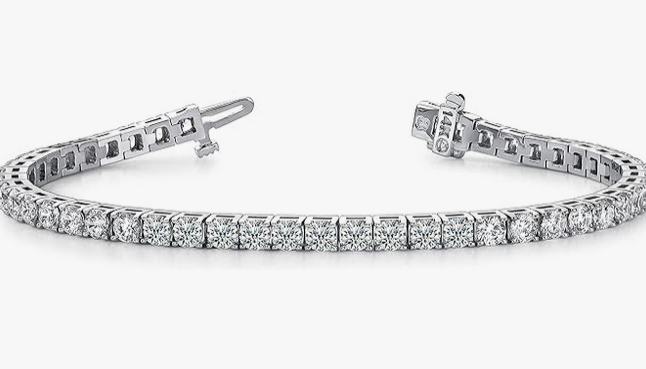
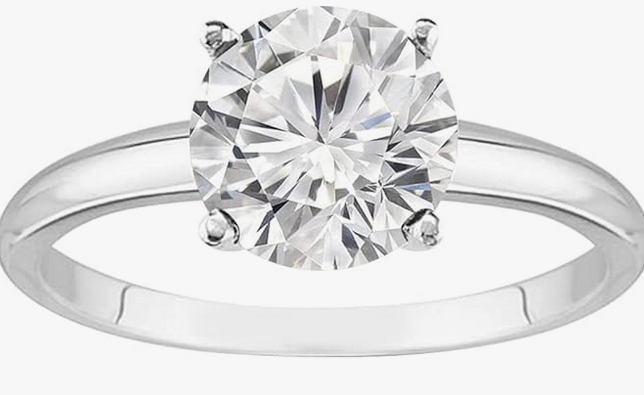
Houston Diamond District 1 to 10 Carat 14K White Gold IGI Certified Lab Grown Diamond Engagement Ring, Round Cut Solitaire, 4-Prong Setting (E–F Color VS2–SI1 Clarity)
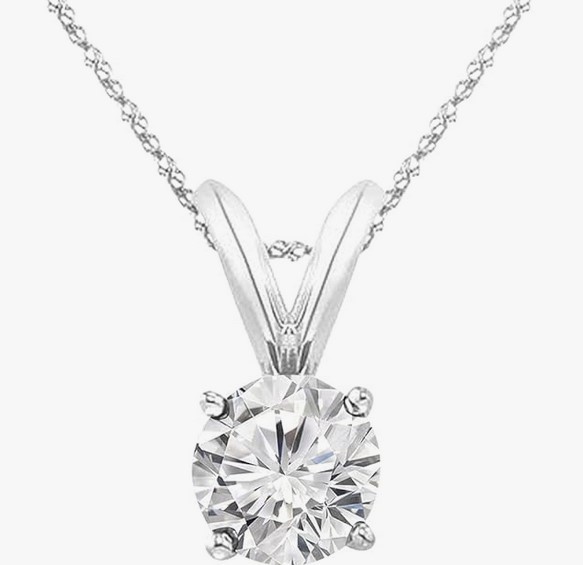
0.5-10 Carat Lab Grown Diamond Solitaire Pendant Necklace, Round Cut Solitaire, 4-Prong Setting, Jewelry for Women (E-F, VS)
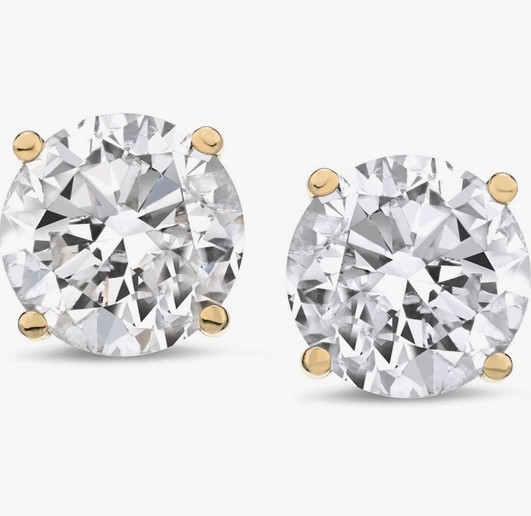
1 to 6 Carat LAB GROWN Solitaire Diamond Stud Earrings Round Cut 4 Prong Screw Back (F-G Color, VS1-VS2 Eye Clean Clarity)
A 6 carat diamond ring represents a remarkable milestone in fine jewelry — a stone large enough to be genuinely extraordinary in any social setting, yet still within the realm of serious buyers who are not necessarily operating at the ultra-luxury tier of eight, nine, or ten carat stones. At six carats, a round brilliant diamond measures approximately 11.6–11.8mm in diameter — over half an inch across the finger — creating a visual presence that is impossible to ignore and immediately identifiable as something exceptional. A 6 carat diamond ring is not everyday fine jewelry. It is a statement of extraordinary personal significance, serious financial commitment, and genuine appreciation for the rarest objects in the gemological world.
This comprehensive guide covers everything a serious buyer needs to know about a 6 carat diamond ring — the Four Cs at this exceptional weight, the natural versus lab-grown decision and its dramatically different financial implications, realistic price expectations across quality tiers, the setting styles and metals appropriate for this scale, shape options with their visual dimensions, ownership responsibilities, and the unique experience of wearing a stone at six carats.
What Does a 6 Carat Diamond Ring Look Like?
A round brilliant at six carats measures approximately 11.6–11.8mm in diameter — comparable to the width of a standard aspirin tablet, or slightly smaller than a US penny (19.05mm). On an average ring size (6–7), a 6 carat diamond ring creates a dominant, commanding presence that spans more than a third of the finger’s width from edge to edge.
For comparison: the average engagement ring in the United States weighs approximately 1 carat. A 6 carat diamond ring is six times that size. Relative to a five-carat stone, a six-carat ring adds approximately 0.6mm of additional diameter — a meaningful difference visible to careful observers. Relative to a four-carat stone, a six-carat ring is dramatically more visually dominant — approximately 1.4mm more in diameter and roughly 30% more surface area face-up.
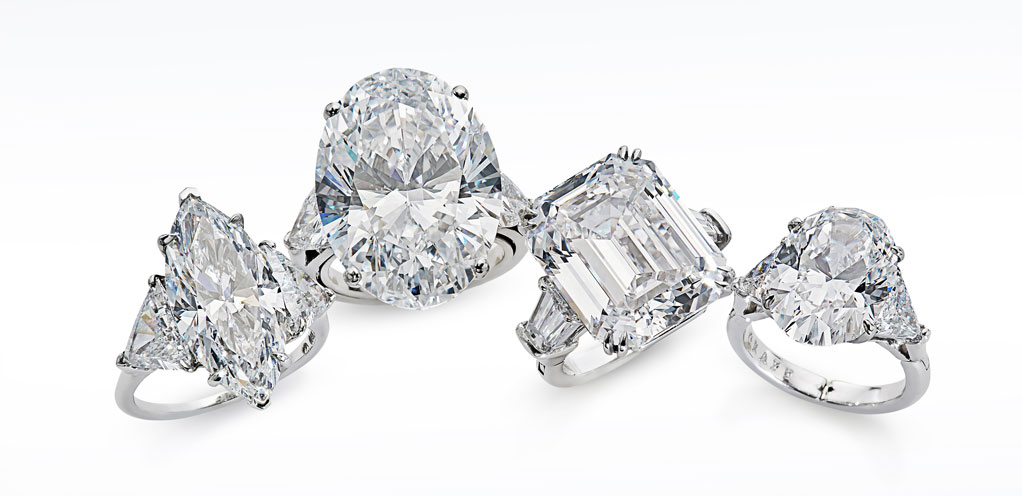
Elongated shapes at six carats create even more striking visual effects. An oval 6 carat diamond ring measures approximately 15.5 x 10.5mm — stretching more than half an inch across the finger in length. A pear cut at six carats at approximately 17.0 x 10.0mm creates an extraordinary elongated silhouette. A marquise spans approximately 20.0 x 10.0mm — nearly an inch from tip to tip. An emerald cut at approximately 13.5 x 10.0mm delivers a breathtaking hall-of-mirrors rectangular presence.
The Four Cs at Six Carats
At six carats, every quality decision is amplified by the stone’s extraordinary size, and the penalties for poor choices are both visually dramatic and financially significant.
Cut Quality: Transformative at Six Carats
For a 6 carat diamond ring, cut quality is the difference between a stone that fulfills its extraordinary potential and one that represents a deeply disappointing result at an enormous price. A beautifully cut six-carat diamond produces a breathtaking explosion of light. A poorly cut stone appears dark, heavy, and lifeless despite its significant weight.
For a round brilliant 6 carat diamond ring, Excellent cut from GIA or Triple Excellent from IGI is the only acceptable standard — Excellent for cut, symmetry, and polish simultaneously. Very Good cut should be avoided at this weight. The price premium for Excellent over Very Good cut at six carats is typically $5,000–$15,000 for a natural stone — significant in absolute terms but modest as a percentage of the total investment, while the visual improvement is transformative.
For fancy shapes — oval, cushion, pear, radiant, emerald, marquise — cut precision is even more critical than at smaller weights. The bowtie effect in ovals and pears becomes severely apparent at six carats if proportions are not ideal. The girdle should be uniform, neither too thin nor too thick. High-resolution video reviewed by an independent gemologist before any purchase is non-negotiable at this price level.
Color: The Finest Grades Required
At six carats, color visibility is extreme. For a 6 carat diamond ring in platinum or white gold, D through F color grades — the colorless tier — are strongly recommended. G color can be considered with extremely careful evaluation, but even G color can show perceptible warmth in certain lighting at this size. H color and below are not appropriate in white metal settings — the warmth becomes clearly visible and meaningfully detracts from the stone’s magnificent presence.
For a ring set in yellow gold or rose gold, H through J color grades provide more latitude. However, for a stone of this size and financial significance, most serious buyers prefer D–F color regardless of setting metal, because the aesthetic impact of superior color at six carats is genuinely significant.
Clarity: VVS or Better for Enduring Perfection
The recommended clarity range for a 6 carat diamond ring is VVS1 through VS1. VVS1 and VVS2 stones are virtually flawless under all conditions and represent the appropriate standard for a ring of this significance. VS1 offers a reliably eye-clean result at a meaningful price savings versus VVS grades. VS2 requires careful per-stone evaluation — the clarity plot should show inclusions positioned toward the edges of the stone. SI1 and below should not be considered — at this size, SI1 inclusions are frequently visible to casual observers without any magnification.
For step-cut shapes — emerald and Asscher — VVS1 or VVS2 clarity is essentially required. The broad open table and parallel facets reveal inclusions in a way that brilliant cuts do not. An emerald cut 6 carat diamond ring with VS2 or SI1 clarity will frequently show visible inclusions that undermine the stone’s elegant character.
Natural vs. Lab-Grown 6 Carat Diamond Ring
Natural 6 Carat Diamond Ring
A natural 6 carat diamond ring features one of the rarest finished gemstones in commercial fine jewelry. Natural rough diamonds that yield polished six-carat stones represent an extraordinarily small fraction of global mining output — absolute rarity, not merely relative. In excellent quality — D–F color, VVS1–VS1 clarity, Excellent cut, GIA certified — a natural 6 carat diamond ring typically costs between $120,000 and $400,000 depending on specific grades, shape, and setting. Round brilliants at the upper quality end — D color, VVS1 clarity — command prices at the higher end and beyond. The very finest natural 6 carat diamond rings — D color, internally flawless, GIA certified — can reach $500,000 or more.
Natural 6 carat diamonds of excellent quality are genuine investment-grade assets sought by serious collectors, with historical value retention and strong auction results at Christie’s, Sotheby’s, Bonhams, and Phillips.
Lab-Grown 6 Carat Diamond Ring
A lab-grown 6 carat diamond ring offers a stone that is chemically, physically, and optically identical to a natural diamond at dramatically lower cost. Produced via CVD or HPHT processes and certified by IGI and GIA using identical grading standards, lab-grown stones at this weight are indistinguishable from natural diamonds without specialized equipment.
In excellent quality — D–F color, VVS1–VS1 clarity, Excellent cut, IGI certified — a lab-grown 6 carat diamond ring typically costs between $15,000 and $45,000. This represents a price reduction of 85–90% compared to an equivalent natural ring — an extraordinary difference that makes the visual experience of a genuine six-carat diamond accessible to a far broader range of serious buyers. For buyers whose primary interest is the visual magnificence and commanding presence of a six-carat stone rather than geological rarity, the lab-grown option delivers that experience fully at a fraction of the natural cost.
Best Settings for a 6 Carat Diamond Ring
Solitaire Setting
The solitaire is the most powerful and appropriate setting for a 6 carat diamond ring. Nothing distracts from the stone. A clean four or six prong platinum solitaire — custom engineered for the stone’s specific diameter and depth — allows the diamond’s size and light performance to dominate absolutely. At six carats, a well-designed solitaire is more impressive than any elaborate alternative because the stone itself provides all the visual drama the ring requires. Standard catalog settings are not appropriate at this size; custom engineering is essential.
Halo Setting
A halo is optional rather than necessary at this scale. The center stone is so visually dominant that a halo adds relatively little perceived size and can risk creating a cluttered appearance. If used, a single refined micro-halo of very small stones in a restrained design can be beautiful. Elaborate double halos are generally not appropriate for a six-carat center.
Three-Stone Setting
A three-stone design with substantial matching side stones — 2–3 carats each — creates one of the most spectacular jewelry pieces that exists. The combined diamond weight might reach 10–12 carats, firmly in the realm of serious collector jewelry. Appropriate for the most significant occasions and the most committed fine jewelry buyers.
East-West Setting
An east-west mounted oval or pear 6 carat diamond ring — oriented horizontally in a clean platinum bezel or architectural prong design — creates an extraordinary contemporary statement. A six-carat oval mounted east-west, spanning more than half an inch across the finger, is among the most visually dramatic wearable jewelry designs possible.
Metal: Platinum Only
At six carats, platinum is the only appropriate metal choice. Its exceptional structural strength, natural white color that never requires replating, and proven long-term durability for prong settings holding significant stones make it the clear choice. Custom platinum work for a 6 carat diamond ring requires more metal than standard designs — the head must be substantial enough to provide genuine security for a stone of this diameter, while the shank must be heavy enough to balance the head visually. A well-designed platinum setting for six carats typically weighs 8–15 grams, creating a total ring weight of 9–16 grams — noticeably substantial and physically present in a way that reflects the ring’s extraordinary nature.
Shape Guide at Six Carats
- Round brilliant: ~11.6–11.8mm diameter. Maximum brilliance, universal elegance, the most requested shape for a 6 carat diamond ring.
- Oval: ~15.5 x 10.5mm. Magnificent elongated presence stretching more than half an inch across the finger — extraordinary visual impact.
- Emerald cut: ~13.5 x 10.0mm. Hall-of-mirrors step-cut effect at breathtaking scale — demands VVS1+ clarity for a 6 carat diamond ring.
- Pear: ~17.0 x 10.0mm. The most elongating brilliant-cut shape — distinctive pointed silhouette stretching nearly two thirds of an inch.
- Cushion: ~11.0 x 11.0mm. Intensely brilliant with romantic soft edges — powerful square or rectangular presence.
- Marquise: ~20.0 x 10.0mm. Nearly an inch from point to point — the most dramatic elongated shape, uniquely regal and striking in a 6 carat diamond ring.
- Radiant: ~11.5 x 9.5mm. Brilliant-cut sparkle in a rectangular form combining fire with architectural lines.
Price Guide
Natural 6 carat diamond ring prices:
- D color, IF/VVS1, Excellent cut, GIA: $400,000–$600,000+
- D–F color, VVS1–VVS2, Excellent cut, GIA: $200,000–$400,000 — recommended tier
- D–G color, VS1, Excellent cut, GIA: $120,000–$220,000
- H–I color, VS2–SI1: $60,000–$120,000 with very careful per-stone selection
Lab-grown 6 carat diamond ring prices:
- D–F color, VVS1–VVS2, Excellent cut, IGI: $25,000–$45,000
- D–G color, VS1, Excellent cut, IGI: $15,000–$28,000 — optimal sweet spot
- H–I color, VS2: $8,000–$15,000 with careful evaluation
Custom setting costs add $3,000–$20,000+ depending on platinum weight and design complexity.
Cultural Context: Auctions and Celebrity Rings
Natural six-carat diamonds of exceptional quality regularly appear at major auction houses — Christie’s, Sotheby’s, Bonhams, and Phillips all offer large diamonds as significant lot items in their annual jewelry sale programs. Results for well-certified natural six-carat stones of D–F color and VVS clarity regularly achieve $200,000–$400,000+ per stone, reflecting both rarity and international collector demand. The transparency of auction results provides some of the most reliable price discovery available in the natural diamond market for large stones.
For buyers of lab-grown stones at six carats, this represents one of the most dramatic developments in the democratization of luxury goods in recent memory. A stone that would have been accessible only to the wealthiest buyers a decade ago is now available to serious buyers with a budget of $20,000–$45,000 — still a meaningful investment, but one that a much broader segment of the market can realistically consider.
How to Evaluate Before Purchase
High-resolution video is the most important evaluation tool — properly shot video under diffused lighting reveals cut quality, the presence or absence of bowtie effect, inclusion visibility, and the overall character of light performance. Any retailer who cannot provide high-resolution video of the specific stone should be avoided. In-person viewing is strongly advisable before committing to any natural stone purchase above $100,000.
Review the GIA or IGI certificate in detail: cut grade (Excellent only for rounds); symmetry and polish (both Excellent or Very Good only); color grade; clarity grade and clarity plot; fluorescence; and specific measurements confirming dimensions match the stated carat weight and shape. Compare at least three specific stones from at least two reputable dealers — price variation for equivalent certified quality at six carats can be $10,000–$30,000 or more for natural stones, making comparison shopping genuinely valuable.
Resale and Long-Term Value
Natural 6 carat diamonds of excellent quality have historically held meaningful resale value and performed well at auction relative to most luxury goods. GIA-certified natural round brilliants with D–F color and VVS1–VS1 clarity can typically be resold for 60–80% of current retail replacement cost. The finest examples may command stronger ratios due to extreme rarity. A natural six-carat diamond is genuinely a portfolio asset for buyers who prioritize long-term value alongside immediate visual beauty.
Lab-grown six-carat diamonds currently have limited and declining secondary market value, consistent with the broader trend across all lab-grown diamond sizes. The financial case for a lab-grown stone at this size is access and visual experience — not investment. For buyers for whom long-term asset value is significant, natural stones at six carats provide meaningfully better ownership economics despite much higher initial acquisition cost.
Acquisition and Ownership
Independent gemological verification before any purchase is essential — a GIA-certified gemologist not affiliated with the selling dealer, assessing the certificate, reviewing video, and ideally examining the stone in person. Cost: $500–$2,000, trivial relative to the investment.
Insurance is non-optional upon purchase. Specialized fine jewelry coverage for the full replacement value — loss, theft, accidental damage, mysterious disappearance — at annual premiums of 1–2% of insured value. For a natural stone valued at $200,000, this means $2,000–$4,000 per year.
Storage when not being worn: bank safe deposit box or professionally monitored fine jewelry vault. A home safe is insufficient at this value level. When transporting for any purpose — appraisal, cleaning, resizing — use an insured and bonded courier or personal transport with appropriate security.
Professional maintenance every six months: ultrasonic and steam cleaning, detailed prong inspection under magnification, tightening as needed, and a written condition report. Major prong refurbishment should be evaluated every three to five years of regular daily wear.
Documentation and Estate Planning
The core documentation file should include the original GIA or IGI certificate, purchase receipt, initial independent appraisal, all subsequent appraisal updates, professional inspection reports from each biannual service visit, insurance documentation, and for natural stones, all available provenance documentation. Store physical copies in a secure location separate from the ring itself and maintain digital copies in secure cloud storage.
For estate planning purposes, a 6 carat diamond ring should be specifically addressed in formal documentation — whether as a specific bequest, part of the general estate, or an asset transferred to a trust. Heirs and beneficiaries should be made aware of the ring’s existence, significance, current value, and its accompanying documentation so that its extraordinary nature is properly recognized when the time comes. Annual appraisal updates are recommended for natural stones given market volatility at this weight level.
Frequently Asked Questions
How much does a 6 carat diamond ring cost?
A natural 6 carat diamond ring in excellent quality (D–F color, VVS1–VVS2 clarity, Excellent cut, GIA certified) typically costs $200,000–$400,000+. A lab-grown 6 carat diamond ring of identical specifications typically costs $15,000–$45,000. Both require custom settings adding $3,000–$20,000+.
How big is a 6 carat diamond ring?
A round brilliant 6 carat diamond ring features a center stone measuring approximately 11.6–11.8mm in diameter — over half an inch across, comparable to a standard aspirin tablet. Elongated shapes like oval, pear, and marquise appear significantly larger. On an average ring size, a 6 carat diamond ring creates an extraordinary and unmistakably commanding presence.
What clarity grade does a 6 carat diamond ring require?
VVS1 through VS1 is strongly recommended. At six carats, inclusions are dramatically more visible than at smaller weights. SI1 and below should be avoided entirely. For emerald and Asscher cuts in a 6 carat diamond ring, VVS1 or VVS2 clarity is essentially required.
Is a lab-grown 6 carat diamond ring a real diamond?
Yes — completely and unambiguously. A lab-grown stone is chemically and physically identical to a mined natural diamond. A lab-grown 6 carat diamond ring is certified by GIA or IGI using the same grading standards. The only difference is geological origin.
What color grade should I choose for a 6 carat diamond ring?
D through F color is strongly recommended for a 6 carat diamond ring in platinum or white gold. At this carat weight, color is extremely visible, and the colorless tier ensures the stone performs at its absolute visual maximum. G color can be considered with careful evaluation. H and below are generally not appropriate in white metal settings at this weight.
Final Thoughts
A 6 carat diamond ring is an object of genuine rarity, extraordinary beauty, and profound personal significance. Whether natural or lab-grown, whether set in a pure platinum solitaire or an elaborate multi-stone design, a six-carat diamond ring represents one of the most remarkable fine jewelry acquisitions a person can make. The natural option provides access to a genuinely rare gemological asset with investment characteristics and provenance value. The lab-grown option provides the same breathtaking visual experience at a fraction of the cost, making the extraordinary accessible to a much broader community of serious buyers.
Whatever path you choose — insist on the finest available cut quality, require D–F color and VVS1–VS1 clarity, demand GIA or IGI certification, engage independent gemological verification before purchase, commission a custom platinum setting from a qualified specialist, insure the ring immediately, and approach the ownership of this extraordinary stone with the care and attention it deserves.
For more expert guidance on diamond carat weights and the full spectrum of fine diamond jewelry, visit the Carat Diamond homepage.