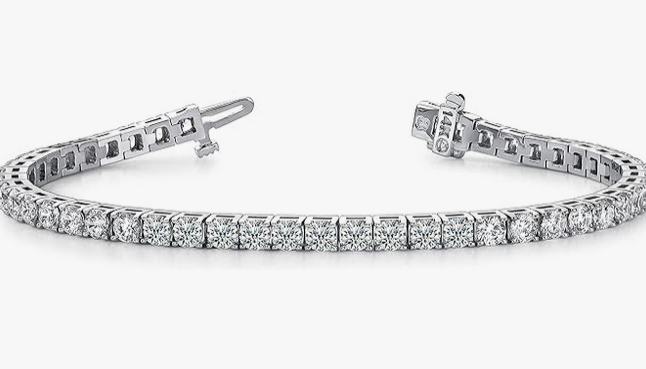
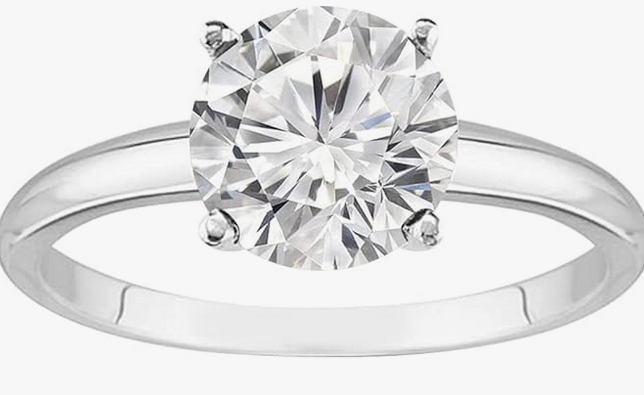
Houston Diamond District 1 to 10 Carat 14K White Gold IGI Certified Lab Grown Diamond Engagement Ring, Round Cut Solitaire, 4-Prong Setting (E–F Color VS2–SI1 Clarity)
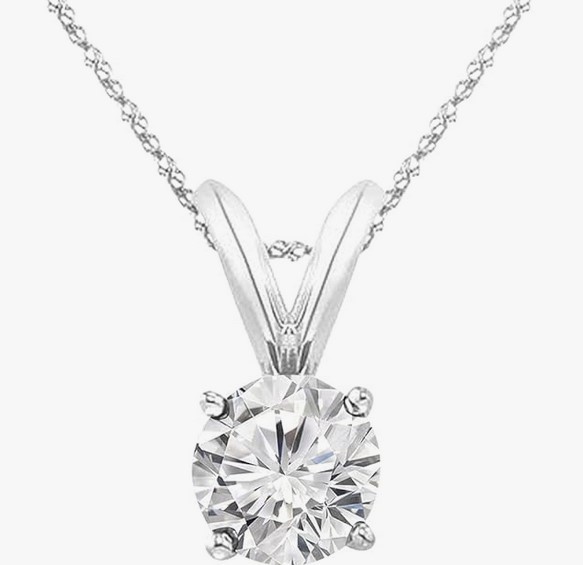
0.5-10 Carat Lab Grown Diamond Solitaire Pendant Necklace, Round Cut Solitaire, 4-Prong Setting, Jewelry for Women (E-F, VS)
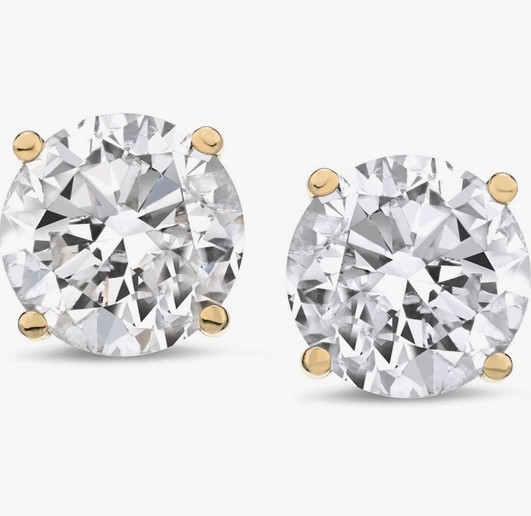
1 to 6 Carat LAB GROWN Solitaire Diamond Stud Earrings Round Cut 4 Prong Screw Back (F-G Color, VS1-VS2 Eye Clean Clarity)
A 4 carat diamond ring represents one of the most compelling intersections of luxury and wearability in fine jewelry. Large enough to be genuinely extraordinary, yet still proportionate and elegant on most fingers, a 4 carat diamond ring occupies a unique position — beyond the reach of everyday jewelry, but short of the rarefied territory of five-carat stones where practicality begins to yield entirely to spectacle. At four carats, a round brilliant diamond measures approximately 10.2–10.4mm in diameter, creating a presence that is unmistakably impressive while remaining refined enough for daily wear.
This comprehensive guide covers everything you need to know before purchasing a 4 carat diamond ring — the Four Cs at this specific weight, natural versus lab-grown considerations, price expectations across quality tiers, setting and metal choices, shape comparisons, and long-term care. Whether you are purchasing for an engagement, a significant anniversary, or as a personal milestone piece, this guide will give you the knowledge to make the right decision.
What Does a 4 Carat Diamond Ring Look Like?
Visualizing a 4 carat diamond ring on the hand is the first step for most buyers. A round brilliant at four carats measures approximately 10.2–10.4mm in diameter — roughly the size of a small blueberry, or slightly larger than a standard pencil eraser. On an average ring size (6–7), this creates a dramatically striking presence that is bold, beautiful, and unmistakably luxurious.
The average engagement ring in the United States weighs approximately 1 carat. A 4 carat diamond ring is four times that size, placing it well into the realm of statement jewelry. Unlike a 5 carat stone, however, a four-carat ring retains a degree of everyday elegance — it is grand without being theatrical, exceptional without being unwearable.
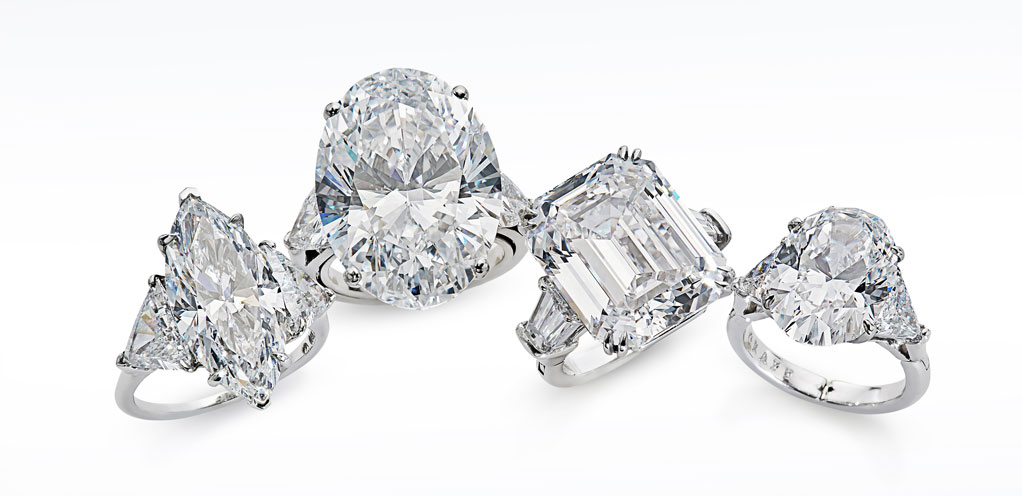
Shape plays a major role in how a 4 carat diamond ring reads on the finger. An oval at four carats typically measures approximately 13.5 x 9.0mm at a 1.50 ratio, creating a magnificent elongating effect. A cushion cut offers romantic, soft-edged brilliance in a more compact footprint. An emerald cut at four carats — approximately 11.0 x 8.0mm — delivers architectural grandeur at truly impressive scale. Pear and marquise shapes create some of the most dramatic elongated looks in fine jewelry at this weight.
The Four Cs: Navigating Quality at Four Carats
At four carats, every quality factor carries greater weight than at smaller sizes. A 4 carat diamond ring magnifies both the beauty of excellent quality and the deficiencies of poor quality. Understanding how each of the Four Cs applies at this weight is essential to making a confident purchase.
Cut Quality: Non-Negotiable at This Weight
Cut quality is the single most important factor for any 4 carat diamond ring, and it is more consequential here than at smaller weights. A superbly cut four-carat stone produces extraordinary brilliance and fire — a spectacle of light that makes the ring look alive from every angle. A poorly cut stone, regardless of color or clarity grade, will appear flat, dark, and lifeless — a deeply disappointing result at this price level.
For a round brilliant 4 carat diamond ring, Excellent cut grade from GIA or Triple Excellent from IGI is the only acceptable standard. Symmetry and polish should both be Excellent. Very Good cut grades should be avoided at four carats — the visual difference between Excellent and Very Good cut is clearly perceptible at this size, and the price premium for Excellent is modest relative to the overall investment.
For fancy shapes — oval, cushion, pear, radiant, emerald, marquise, princess — cut grading is not universally standardized. Evaluate proportions carefully: depth percentage, table percentage, and length-to-width ratio. For ovals and pears, assess for bowtie effect. Always request high-resolution video before purchasing any fancy shape in a 4 carat diamond ring.
Color Grade: Recommended Ranges
At four carats, color visibility is significantly higher than at smaller stone sizes. The increased surface area makes any warmth or tint more readily apparent under everyday lighting. Color grade is therefore one of the most impactful decisions when purchasing a 4 carat diamond ring.
For a ring set in platinum or white gold, D through G color grades are strongly recommended. The colorless tier — D, E, and F — ensures the stone appears absolutely brilliant white under all conditions. G color, at the top of the near-colorless tier, appears colorless in isolation and represents excellent value in a 4 carat diamond ring for buyers seeking to optimize their budget. H color can work in specific circumstances but requires careful evaluation at this size.
For a ring set in yellow gold or rose gold, I and J color grades are entirely appropriate. The warm tone of the metal absorbs any slight warmth in the diamond, making colorless grades unnecessary and allowing budget to be directed toward cut quality and clarity.
Clarity: Eye-Clean Quality at Four Carats
At four carats, inclusions are more visible than at smaller weights, and the clarity grade required to achieve a reliably eye-clean stone is higher. The recommended clarity range for a 4 carat diamond ring is VVS2 through VS2. VVS1 and VVS2 stones are virtually flawless to the naked eye. VS1 and VS2 are excellent practical choices — reliably eye-clean in most cases and offering meaningful price savings versus VVS grades. SI1 is possible but requires careful review of the specific stone’s imagery and an independent gemologist’s assessment. SI2 and lower should be avoided — inclusions at this weight are frequently visible to the naked eye.
Natural vs. Lab-Grown 4 Carat Diamond Ring
The choice between natural and lab-grown is one of the most consequential decisions when purchasing a 4 carat diamond ring, particularly because the price difference at this weight is very significant.
Natural 4 Carat Diamond Ring
A natural 4 carat diamond ring features a stone formed within the Earth over billions of years. Natural four-carat polished diamonds are rare, and this rarity drives significant pricing. In excellent quality (D–G color, VS1–VVS2 clarity, Excellent cut, GIA certified), a natural 4 carat diamond ring typically costs between $50,000 and $200,000 depending on specific grades, shape, and setting.
Natural diamonds carry cultural prestige and are associated with rarity, permanence, and investment-grade value. For buyers who place high importance on geological origin and long-term value retention, a natural 4 carat diamond ring remains the prestigious choice.
Lab-Grown 4 Carat Diamond Ring
A lab-grown 4 carat diamond ring offers an identical stone — chemically, physically, and optically — at dramatically reduced cost. Produced via HPHT or CVD processes, lab-grown diamonds are real diamonds certified by GIA and IGI using the same grading standards as natural stones, and completely indistinguishable from mined diamonds without specialized equipment.
In excellent quality (D–G color, VS1–VVS2 clarity, Excellent cut, IGI certified), a lab-grown 4 carat diamond ring typically costs between $4,000 and $12,000 — a reduction of 90% or more versus a natural equivalent. This extraordinary price difference makes a premium-quality ring at this weight accessible to buyers for whom a natural stone would be financially out of reach. For buyers who prioritize the beauty and presence of the ring above all else, the lab-grown option is an exceptional choice.
The Investment Perspective
Natural four-carat diamonds are genuinely rare objects. High-quality examples — particularly those with D–F color, VVS clarity, and Excellent cut — are sought after by collectors worldwide. Natural diamonds of this caliber have historically retained value over long periods and can be sold, traded, or auctioned. Purchasing a natural 4 carat diamond ring is not purely a luxury expenditure — a portion of the investment has intrinsic resale value.
Lab-grown diamonds, by contrast, do not currently hold resale value in the same way. Prices for lab-grown stones have declined as production technology has improved and supply has expanded. The financial case for a lab-grown stone is not investment — it is access. The ability to own a visually identical experience for $5,000–$10,000 rather than $50,000–$200,000 is the value proposition, not future resale.
Neither position is inherently better — they simply reflect different priorities. Buyers who value the jewelry primarily as a wearable luxury experience will find the lab-grown option more rational. Buyers who weight rarity, provenance, or future financial value should seriously consider the natural option despite its higher initial cost.
Best Settings for a 4 Carat Diamond Ring
Solitaire Setting
The solitaire is the most classic and powerful statement for a 4 carat diamond ring. A clean, unadorned band in platinum or 18k white gold allows the center stone to dominate completely. At four carats, the stone itself is the entirety of the statement. A four-prong design maximizes light exposure; a six-prong design adds security and a more traditional aesthetic.
Halo Setting
A halo surrounds the center with a ring of smaller pavé-set diamonds, adding sparkle and visually enlarging the center. For a 4 carat diamond ring, a halo is not strictly necessary for visual impact — but it adds brilliance and luxury that many buyers find appealing. A double halo creates an even more elaborate and dazzling result.
Three-Stone Setting
A three-stone design places the center between two flanking side diamonds. For a 4 carat diamond ring, well-proportioned side stones of 0.75–1.5 carats each create a ring of exceptional combined diamond weight — one of the most popular choices for significant anniversary pieces.
Pavé Band Setting
A pavé or micropavé band adds continuous sparkle along the full shank. The accent diamonds complement the center stone of a 4 carat diamond ring without competing with it, resulting in a design of extraordinary visual richness.
East-West Setting
The east-west setting rotates the center stone 90 degrees, orienting elongated fancy shapes horizontally. An oval or pear mounted east-west in a 4 carat diamond ring creates one of the most dramatic and contemporary looks available — stretching the full breadth of the finger with a single magnificent stone.
Metal Choices
Platinum is the premier metal for a 4 carat diamond ring. Its hardness, naturally white color, and resistance to tarnish make it ideal for a stone of this significance. Platinum prongs do not wear down the way gold prongs do — an important practical consideration for a center stone at this value level. 18k white gold is an excellent alternative at lower cost and requires periodic rhodium replating to maintain its bright finish. For warm metal aesthetics, 18k yellow or rose gold pairs beautifully with oval, cushion, and pear shapes, creating a luxurious and editorial look.
Price Guide
Natural 4 carat diamond ring prices:
- D–F color, VVS1–VVS2, Excellent cut, GIA: $120,000–$200,000+
- D–G color, VS1–VS2, Excellent cut, GIA: $50,000–$120,000 — recommended sweet spot
- H–I color, SI1: $25,000–$50,000 with careful per-stone evaluation
Lab-grown 4 carat diamond ring prices:
- D–F color, VVS1–VVS2, Excellent cut, IGI: $8,000–$12,000
- D–G color, VS1–VS2, Excellent cut, IGI: $4,000–$8,000 — optimal sweet spot
Setting costs add $800–$6,000+ depending on design and metal.
Shape Guide at Four Carats
- Round brilliant: ~10.2–10.4mm. Maximum brilliance, the most popular shape for a 4 carat diamond ring.
- Oval: ~13.5 x 9.0mm. Magnificent elongating effect, appears larger than an equal-weight round.
- Cushion: ~9.5 x 9.5mm. Romantic, intensely sparkling, with soft-edged grandeur. A fan favorite.
- Emerald cut: ~11.0 x 8.0mm. Step-cut architecture showcasing clarity and color at impressive scale.
- Pear: ~14.5 x 8.5mm. The most elongating shape — extraordinary fashion-forward visual statement.
- Marquise: ~16.5 x 8.5mm. The longest shape, with regal historical character.
- Radiant: ~9.5 x 8.0mm. Brilliant-cut sparkle in a versatile rectangular form.
- Princess: ~8.5 x 8.5mm. Modern, geometric, intensely brilliant contemporary character.
Who Is a 4 Carat Diamond Ring Right For?
This weight is ideal for buyers who want maximum visual presence without stepping into the most rarefied tier of five-carat stones. It is particularly compelling for serious engagement ring buyers, milestone anniversary upgrades, and for buyers celebrating life achievements with jewelry that reflects the magnitude of the occasion.
Lab-grown buyers find four carats particularly appealing. A lab-grown 4 carat diamond ring at $5,000–$8,000 delivers the same visual experience as a natural four-carat ring costing ten to twenty times more — one of the most remarkable value propositions in contemporary luxury retail. Self-purchasers increasingly select this size as a personal milestone piece that combines genuine visual impact with meaningful personal significance.
Certification: GIA and IGI Only
At four carats, certification from a reputable grading laboratory is entirely non-negotiable. The two laboratories whose certifications are universally accepted are GIA (Gemological Institute of America) and IGI (International Gemological Institute). GIA is widely regarded as the most conservative and consistent grading authority in the world. IGI is the leading certifying body for lab-grown diamonds globally and is considered fully reliable for both categories.
Avoid diamonds certified by other laboratories — EGL or lesser-known bodies — for a purchase at this level. Grading standards vary significantly across laboratories, and a stone certified as VS1 color G by a less rigorous lab may be graded VS2 or lower, color H or lower, by GIA or IGI. This discrepancy can represent a price difference of tens of thousands of dollars, making the certification choice genuinely consequential.
Ring Insurance
For any ring purchased at four carats, dedicated jewelry insurance deserves serious attention from the moment of purchase. Standard homeowners or renters insurance policies typically cover jewelry only up to a low dollar limit — often $1,000–$2,000 — which is wholly inadequate at this price level. Specialized jewelry insurance covers the full replacement value, including loss, theft, accidental damage, and mysterious disappearance. Premiums are typically 1–2% of the appraised value annually — a very modest expense for complete peace of mind.
Annual Ring Maintenance
Beyond daily care habits, a ring at this weight benefits from a structured maintenance approach. Monthly, perform a visual inspection yourself — check that the stone has not shifted and that prongs appear intact. Every six months, have the ring professionally cleaned and inspected: ultrasonic cleaning, steam cleaning, prong tightening, and rhodium replating for white gold settings if needed. Annually, conduct a comprehensive assessment including a full prong replacement evaluation after several years of daily wear, and update the insurance valuation if market prices have changed significantly. This level of care ensures the ring remains in perfect condition for decades.
Caring for a 4 Carat Diamond Ring
Clean the ring weekly using warm water, mild dish soap, and a soft-bristled toothbrush. Gently clean around prongs and beneath the stone where oils accumulate. Rinse thoroughly and pat dry with a lint-free cloth. Remove the ring before swimming, exercising, and applying cosmetics. Store separately from other jewelry to prevent scratches. Schedule professional inspections every six months rather than annually for a ring of this value.
Frequently Asked Questions
How much does a 4 carat diamond ring cost?
A natural 4 carat diamond ring in excellent quality typically costs $50,000–$200,000+. A lab-grown 4 carat diamond ring of identical specifications typically costs $4,000–$12,000. Price depends on cut, color, clarity, certification, setting, and metal.
How big is a 4 carat diamond ring?
A round brilliant 4 carat diamond ring features a center stone measuring approximately 10.2–10.4mm in diameter — about the size of a small blueberry. Elongated shapes like oval and pear appear even larger. On an average ring size, it creates a dramatically striking and unmistakably luxurious presence.
What clarity grade should I choose for a 4 carat diamond ring?
VS1–VVS2 clarity is recommended. At four carats, inclusions are more visible than in smaller stones. VS1 and VS2 are reliably eye-clean choices that offer excellent value. SI1 requires careful per-stone evaluation and SI2 should be avoided.
Is a lab-grown 4 carat diamond ring a real diamond?
Yes. A lab-grown stone is chemically and physically identical to any mined natural diamond. A lab-grown 4 carat diamond ring is certified by GIA or IGI using the same standards. The only difference is geological origin.
What color grade should I choose for a 4 carat diamond ring?
For platinum or white gold, D–G color is recommended. At four carats, color is significantly more visible than in smaller stones. For yellow gold or rose gold settings, H–J color grades are entirely appropriate.
Final Thoughts
A 4 carat diamond ring is one of the most extraordinary expressions of luxury and personal significance available in fine jewelry. Whether you choose natural or lab-grown, solitaire or three-stone, platinum or yellow gold — the most important decision remains cut quality. An Excellent-cut 4 carat diamond ring will produce breathtaking light performance that no other quality investment can replicate.
Take time with this decision. Insist on GIA or IGI certification, review high-resolution video, compare multiple options, and select the setting and style that authentically captures the wearer’s personality and lifestyle. A truly exceptional 4 carat diamond ring will be worn, admired, and treasured for a lifetime and beyond.
For more expert guidance on diamond carat weights, engagement ring styles, and the full spectrum of fine diamond jewelry, visit the Carat Diamond homepage.