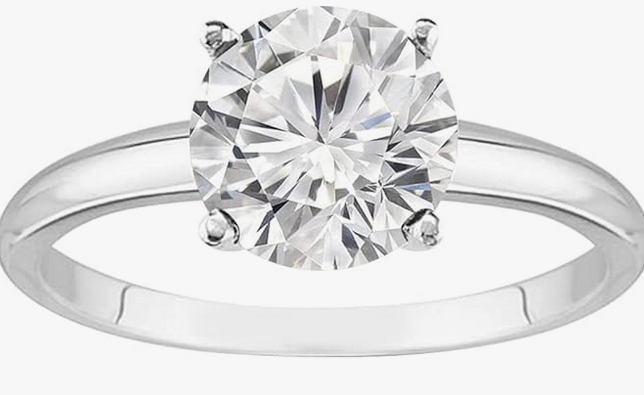
Houston Diamond District 1 to 10 Carat 14K White Gold IGI Certified Lab Grown Diamond Engagement Ring, Round Cut Solitaire, 4-Prong Setting (E–F Color VS2–SI1 Clarity)
0.5-10 Carat Lab Grown Diamond Solitaire Pendant Necklace, Round Cut Solitaire, 4-Prong Setting, Jewelry for Women (E-F, VS)
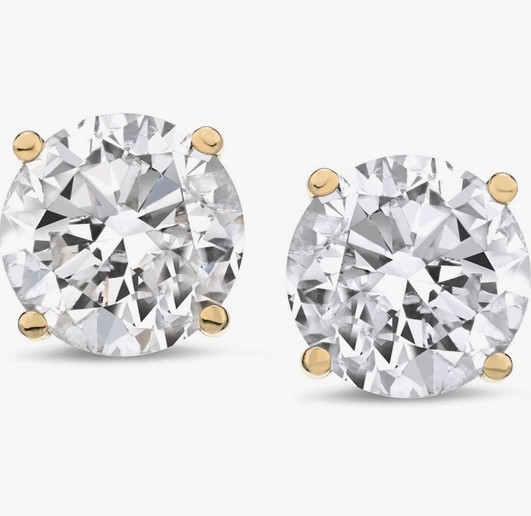
1 to 6 Carat LAB GROWN Solitaire Diamond Stud Earrings Round Cut 4 Prong Screw Back (F-G Color, VS1-VS2 Eye Clean Clarity)
A 3 carat oval diamond ring is one of the most striking and sought-after configurations in contemporary fine jewelry. The oval cut’s elongated form, combined with the impressive weight of three carats, creates a ring that is simultaneously dramatic and elegant — larger in visual presence than a round brilliant of equal weight, beautifully flattering on virtually any finger, and currently among the most fashionable shapes in the engagement ring market. At three carats, an oval diamond typically measures approximately 12.0 x 8.0mm, stretching nearly half an inch across the finger and creating a presence that commands attention from any distance.
This comprehensive guide covers everything you need to know before purchasing a 3 carat oval diamond ring — from the specific quality considerations that apply to oval diamonds at this weight, to comparing natural and lab-grown options, navigating price expectations, choosing the right setting and metal, and understanding what makes an excellent oval distinct from a merely adequate one.
What Makes a 3 Carat Oval Diamond Ring Special?
The appeal of a 3 carat oval diamond ring begins with the unique visual properties of the oval cut. Unlike round brilliants, which concentrate their visual impact in a circular footprint, oval diamonds distribute their weight across an elongated surface area. A 3 carat oval diamond ring typically measures approximately 12.0 x 8.0mm at a 1.50 length-to-width ratio — creating a stone that appears significantly larger than a round brilliant of equal weight, which measures approximately 9.3–9.5mm in diameter.
This size differential is meaningful. A 3 carat oval diamond ring creates the visual impression of a considerably larger stone because its elongated form stretches across a greater portion of the finger. Many buyers find that it appears as impressive as a round brilliant of 4 or even 4.5 carats, making it one of the best value-for-visual-impact choices in the entire fine jewelry market.
Beyond size perception, the oval cut creates an elongating effect on the finger itself — visually stretching it to appear longer and more slender. This is one of the primary reasons oval diamonds have become the fastest-growing shape in the engagement ring market over the past decade, and why the 3 carat oval diamond ring specifically has become one of the most requested configurations among serious buyers.
The Oval Diamond’s Rise to Prominence
The oval cut has been produced since at least the 1960s, when noted diamond cutter Lazare Kaplan is credited with developing the modern oval brilliant. For several decades, the oval remained a secondary choice behind the round brilliant and princess cut. The significant acceleration in oval diamond popularity reflects several converging trends: the influence of celebrity engagement ring designs featuring large oval stones, the rise of social media platforms where elongated stones photograph particularly dramatically, and the growing awareness that the oval’s size-perception advantage makes it one of the most visually impactful choices per dollar of investment.
The specific appeal of the oval at three carats is closely linked to this size-perception advantage. At one carat, the difference between a round brilliant (approximately 6.4mm) and an oval (approximately 8.0 x 5.5mm) is meaningful but not dramatic. At three carats, the difference is significantly more pronounced — a round brilliant at 9.4mm versus an oval at 12.0 x 8.0mm — where the oval appears dramatically larger, particularly when viewed on the finger where the elongated form stretches across a much greater portion of the visible hand.
Evaluating Cut Quality in a 3 Carat Oval Diamond Ring
Cut quality is the most critical decision when purchasing any diamond, and for a 3 carat oval diamond ring, cut evaluation requires particular attention because formal cut grades do not exist for oval diamonds the way they do for round brilliants. GIA and IGI do not issue Excellent cut grades for ovals — buyers must evaluate oval diamonds by examining their specific proportions and light performance directly.
Length-to-Width Ratio
The length-to-width ratio is one of the most fundamental characteristics of any 3 carat oval diamond ring. A ratio of 1.50 means the stone is 50% longer than it is wide — a classically elegant proportion producing the signature elongated oval look without appearing too narrow or too bulbous. The most popular ratios for a 3 carat oval diamond ring range from 1.35 to 1.60. Ratios below 1.35 produce a fuller, more rounded oval. Ratios above 1.60 produce a very elongated, narrow oval with maximum finger-elongating effect. Most buyers find the 1.45–1.55 range most universally appealing.
Bowtie Effect: The Most Important Quality Assessment
The bowtie effect is the defining quality consideration for any 3 carat oval diamond ring. The bowtie is a dark shadow across the center of oval diamonds — and all elongated brilliant-cut shapes — when light is not reflected back toward the viewer from the stone’s central facets. Nearly all oval diamonds exhibit some degree of bowtie; the critical question is whether it is minimal and subtle or severe and distracting.
A 3 carat oval diamond ring with a severe bowtie shows a dark, clearly visible bow-tie shaped shadow under normal lighting. A minimal bowtie shows little to no visible shadow — the center appears bright and brilliant. The bowtie effect cannot be assessed from a grading certificate. It is a characteristic of the stone’s proportional geometry that only becomes apparent when viewing the stone under actual lighting conditions. High-resolution 360-degree video of the specific stone under consideration is non-negotiable before any purchase. No amount of certificate review can substitute for seeing the stone rotate under natural and incandescent light.
Depth and Table Percentage
For a 3 carat oval diamond ring, the ideal depth percentage range is approximately 58–64%. Stones below 58% may lack depth for excellent light return; stones above 65% appear smaller than their carat weight suggests because too much mass is hidden beneath the surface. The 60–63% range is widely considered ideal. Table percentage should ideally fall in the 53–63% range — very large tables above 68% distribute light less efficiently and reduce overall brilliance.
Symmetry and Polish
While formal cut grades are not available for oval diamonds, GIA and IGI grading reports do include symmetry and polish grades. Both should be Excellent or Very Good for any 3 carat oval diamond ring at this price level. Good grades in either category indicate less precise facet placement and surface quality that will affect light performance.
Color Grade Recommendations
Color selection is particularly important for a 3 carat oval diamond ring because oval diamonds tend to show color more prominently than round brilliants of equivalent grades. The elongated shape and the way light reflects within ovals can make any warmth more perceptible. For a platinum or white gold setting, D through H color grades are recommended. G and H are near-colorless and appear white in virtually all conditions, though at three carats H should be evaluated carefully via video to confirm it appears white in your intended setting.
For yellow gold or rose gold settings, I and J color grades are entirely appropriate and offer meaningful price savings. The warm metal absorbs any slight warmth in the stone, making colorless grades unnecessary.
One consideration specific to oval diamonds: the tips of the stone tend to concentrate color more than the center. This phenomenon means that an H color stone may appear to have slightly warmer tips than center when viewed face-up. For buyers who find this distracting, targeting G color or above for a 3 carat oval diamond ring in white metal provides additional assurance.
Clarity: Eye-Clean Quality at Three Carats
The recommended clarity range for a 3 carat oval diamond ring is VS1 through VVS2. VS1 and VS2 stones are eye-clean in virtually all cases at this weight. VVS1 and VVS2 provide additional peace of mind at higher prices. SI1 requires careful per-stone evaluation — the bright open face of an oval diamond at three carats can make inclusions more visible than in more compact shapes. SI2 and below should be avoided.
One clarity-specific consideration for ovals: inclusions positioned near the tips of the stone tend to be more visible than those in the center, because the tips have fewer overlapping facets to conceal them. When evaluating the clarity plot on the grading certificate, pay particular attention to inclusion position — inclusions at the tips are more concerning than equivalent inclusions in the body of the stone.
Natural vs. Lab-Grown 3 Carat Oval Diamond Ring
Natural 3 Carat Oval Diamond Ring
A natural 3 carat oval diamond ring features a stone formed in the Earth over billions of years. Natural oval diamonds at three carats are genuinely rare and carry the cultural associations of geological rarity and potential investment value. In excellent quality — G–H color, VS1–VS2 clarity, minimal bowtie, GIA or IGI certified — a natural 3 carat oval diamond ring typically costs between $18,000 and $45,000 total. The oval shape’s 10–20% price discount versus an equivalent round brilliant makes the 3 carat oval diamond ring somewhat more accessible than a round at the same quality level.
Lab-Grown 3 Carat Oval Diamond Ring
A lab-grown 3 carat oval diamond ring offers an identical stone — same chemical composition, same optical properties, same physical structure — at dramatically lower cost. In excellent quality — G–H color, VS1–VS2 clarity, minimal bowtie, IGI certified — a lab-grown 3 carat oval diamond ring typically costs between $3,000 and $6,500 total. The visual size advantage of the oval cut is particularly impactful at lab-grown price points. For a buyer with a $5,000 budget, a lab-grown 3 carat oval diamond ring creates a visual impression that would cost $30,000–$40,000+ in natural diamond form.
Best Settings for a 3 Carat Oval Diamond Ring
Classic Solitaire Setting
A clean four-prong mount in platinum or 18k white gold allows the stone’s elongated form and brilliant light performance to dominate without distraction. Four-prong solitaires for ovals typically feature two prongs at each tip and two along the sides — securing the stone while exposing maximum surface area to light. The solitaire is the most timeless and enduringly beautiful choice for a 3 carat oval diamond ring.
Petal Prong Setting
Curved, petal-shaped prongs fold over the girdle of the oval diamond rather than using traditional pointed prongs — creating a softer, more romantic aesthetic that echoes the rounded form of the stone. Petal prong settings have become increasingly popular for oval engagement rings in recent years.
Halo Setting
A halo surrounds the center stone with smaller pavé accent diamonds, visually enlarging the perceived size further and adding significant overall brilliance. For an oval center, the halo follows the elongated contour of the stone rather than creating a circular frame — amplifying the elongating effect and creating one of the most visually impressive ring configurations available. A double halo adds even greater visual impact and luxury.
East-West Solitaire Setting
An east-west orientation rotates the oval center stone 90 degrees, positioning it horizontally across the finger. A three-carat oval mounted east-west spans approximately 12.0mm across the finger — nearly half an inch — creating one of the most striking contemporary ring designs available at any price level. This has become one of the defining trends in fine jewelry, and the 3 carat oval diamond ring is one of the most spectacular expressions of this aesthetic.
Hidden Halo Setting
A hidden halo places the accent diamond ring beneath the bezel of the center stone rather than surrounding it visibly from the top. Viewed face-on, the 3 carat oval diamond ring appears as a clean solitaire; viewed from the side or at an angle, the halo becomes visible and adds significant sparkle and perceived weight. This appeals to buyers who want understated elegance from the front with a surprise of brilliance at different angles.
Pavé Band
A full pavé or micropavé band adds continuous sparkle along the full shank, complementing the center stone’s brilliance without competing with it — creating a ring of extraordinary overall visual richness that catches light from every angle.
Metal Choices
Platinum is the premier choice for a 3 carat oval diamond ring. Its naturally white color enhances colorless and near-colorless stones, its durability is unmatched, and it does not require rhodium plating. For the tips of an oval diamond — the most vulnerable points — platinum prongs provide superior protection because the metal’s hardness and density resist the bending and wear that can loosen or break prong tips over years of daily wear.
18k white gold is an excellent alternative at lower cost with periodic rhodium maintenance. For warm metal aesthetics, 18k yellow gold and rose gold create a stunning contrast with the elongated oval form — the combination of a 3 carat oval diamond ring in yellow gold has become one of the defining aesthetic choices of contemporary fine jewelry, particularly with I or J color stones where the warm color of the stone complements the warm metal beautifully.
Comparing the 3 Carat Oval to Other Fancy Shapes
Oval versus cushion at three carats: A cushion cut measures approximately 8.8 x 8.8mm — creating a compact, bold presence with intense chunky brilliance rather than the oval’s flowing, elongated sparkle. No bowtie risk. For buyers preferring a more compact look, the cushion is an excellent alternative.
Oval versus pear at three carats: The pear measures approximately 13.0 x 7.8mm — even more elongating than the oval, with the distinctive pointed tip. The tip requires more protective prong placement and is more vulnerable to chipping. For buyers who want maximum elongation and accept additional care requirements, the pear is compelling.
Oval versus emerald cut at three carats: The emerald cut measures approximately 10.5 x 7.5mm and produces a sophisticated hall-of-mirrors effect rather than brilliant-cut sparkle. Typically prices 15–25% below an equivalent oval. Requires D–G color and VS1+ clarity for optimal appearance. For buyers who prefer sophisticated elegance over sparkle, the emerald is an excellent alternative.
Practical Considerations for Daily Wear
The oval’s length — approximately 12mm — means it extends noticeably beyond the finger’s width on both sides, which occasionally catches on fitted sleeves or fine fabrics. A lower-profile setting positions the stone closer to the finger and reduces this tendency; a higher cathedral mount exacerbates it. For physically active wearers, a bezel setting — where a metal rim fully encircles the girdle — provides maximum protection for the tips. The bezel eliminates prong tips that can catch on surfaces and reduces the risk of tip chipping from impact.
The prong placement at the tips is the most critical aspect of the setting to inspect. Well-placed, substantial prongs at each tip secure the most delicate points securely. Inspect the prong placement at the tips carefully in high-resolution photographs before purchasing any 3 carat oval diamond ring, and confirm with the jeweler that the tips are fully and properly secured.
Many buyers who choose a 3 carat oval diamond ring for their engagement ring also custom order a curved or contoured wedding band specifically designed to nestle against the sides of the oval center stone, ensuring the two pieces fit together perfectly from the beginning. Shadow bands — thin metal bands that frame rather than touch the center ring — are another popular complementary option.
Price Guide
Natural 3 carat oval diamond ring prices:
- D–F color, VVS1–VVS2, minimal bowtie, GIA or IGI: $28,000–$55,000+ total
- G–H color, VS1–VS2, minimal bowtie, GIA or IGI: $18,000–$35,000 total — recommended sweet spot
- I–J color, SI1, careful selection: $8,000–$18,000 total
Lab-grown 3 carat oval diamond ring prices:
- D–F color, VVS1–VVS2, minimal bowtie, IGI: $4,500–$9,000 total
- G–H color, VS1–VS2, minimal bowtie, IGI: $3,000–$6,500 total — optimal value tier
- I–J color, VS2–SI1: $1,500–$3,500 total with careful per-stone selection
Setting costs vary: simple platinum solitaires add $900–$2,000; halo designs add $1,500–$4,000.
Care and Maintenance
Clean the ring weekly using warm water, mild dish soap, and a soft-bristled toothbrush. Pay particular attention to beneath the stone and around the prongs, especially at the tips where residue accumulates. Remove before swimming, exercising, applying cosmetics, and before any manual activity — the tips are the most vulnerable points of the oval stone. Have the ring professionally inspected every six months, asking the jeweler to pay particular attention to prong integrity at both tips. Prong retipping when needed is inexpensive prevention against the far more costly alternative of a loose or lost stone.
Frequently Asked Questions
How big is a 3 carat oval diamond ring?
A 3 carat oval diamond ring typically features a center stone measuring approximately 12.0 x 8.0mm at a 1.50 length-to-width ratio. A longer oval at 1.60 ratio measures approximately 12.5 x 7.8mm; a fuller oval at 1.40 ratio measures approximately 11.5 x 8.2mm. On an average ring size, a 3 carat oval diamond ring appears significantly larger than a round brilliant of equal weight.
How much does a 3 carat oval diamond ring cost?
A natural 3 carat oval diamond ring in excellent quality (G–H color, VS1–VS2 clarity, minimal bowtie, GIA or IGI certified) typically costs $18,000–$35,000 total. A lab-grown 3 carat oval diamond ring of equivalent specifications typically costs $3,000–$6,500 total. Oval diamonds typically cost 10–20% less than equivalent round brilliants at the same quality tier.
What length-to-width ratio is best for a 3 carat oval diamond ring?
The 1.45–1.55 range is most widely considered optimal — distinctly elongated and elegant without being too narrow. Buyers who want maximum finger-elongating effect may prefer 1.55–1.65; those who prefer a fuller oval may find 1.35–1.45 more appealing. Personal preference plays a meaningful role.
How do I assess the bowtie effect in a 3 carat oval diamond ring?
The bowtie can only be assessed by viewing the specific stone via high-resolution 360-degree video under natural and incandescent lighting. Certificate data cannot reveal the bowtie. Request video of the specific stone and rotate it under different lighting — a minimal bowtie will be barely perceptible, while a severe bowtie will show a clearly visible dark shadow across the center.
Is a lab-grown 3 carat oval diamond ring a real diamond?
Yes — completely. A lab-grown oval diamond is chemically and physically identical to a natural oval diamond. A lab-grown 3 carat oval diamond ring is certified by GIA or IGI using the same grading standards. The only difference is geological origin.
Final Thoughts
A 3 carat oval diamond ring is one of the most beautiful and visually impressive fine jewelry configurations available. The oval cut’s combination of elongated elegance, flattering finger effect, superior size-to-weight perception, and excellent brilliance makes it a genuinely exceptional choice at this carat weight — and the 10–20% price advantage versus equivalent round brilliants makes it even more compelling. Whether you choose a natural stone for its rarity and cultural significance, or a lab-grown stone for its extraordinary value, the principles of a wise purchase are the same: assess the bowtie carefully through video, evaluate proportions precisely, target VS1 or better clarity, choose G–H color for white metal settings, and insist on GIA or IGI certification.
For more expert guidance on diamond shapes, carat weights, and the full spectrum of fine diamond jewelry, visit the Carat Diamond homepage.