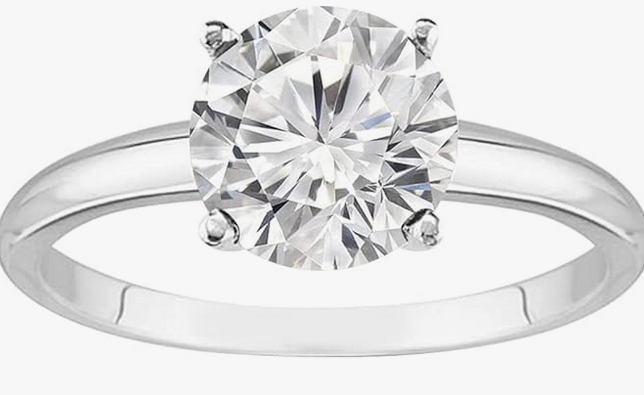
Houston Diamond District 1 to 10 Carat 14K White Gold IGI Certified Lab Grown Diamond Engagement Ring, Round Cut Solitaire, 4-Prong Setting (E–F Color VS2–SI1 Clarity)
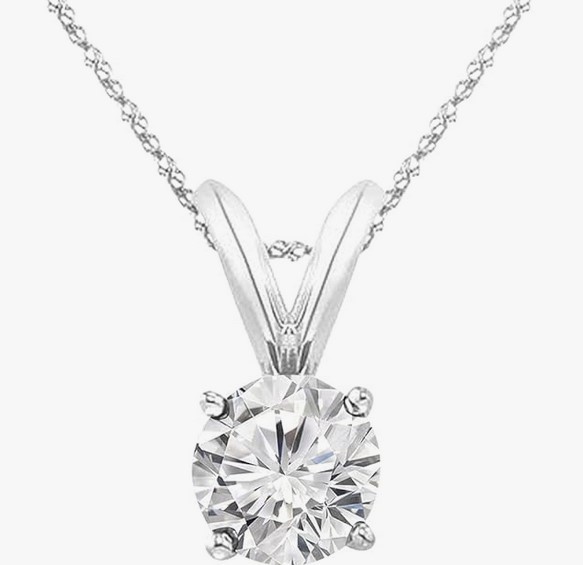
0.5-10 Carat Lab Grown Diamond Solitaire Pendant Necklace, Round Cut Solitaire, 4-Prong Setting, Jewelry for Women (E-F, VS)
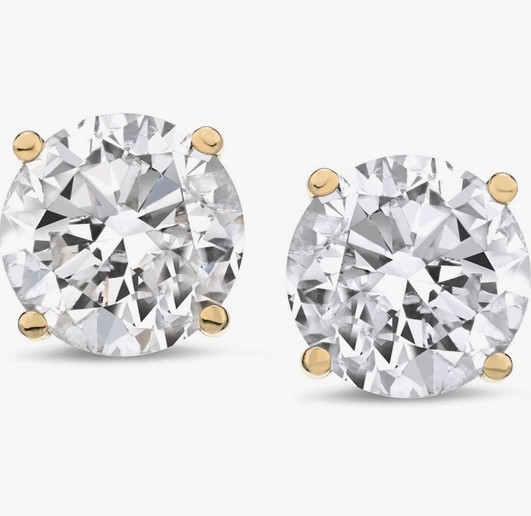
1 to 6 Carat LAB GROWN Solitaire Diamond Stud Earrings Round Cut 4 Prong Screw Back (F-G Color, VS1-VS2 Eye Clean Clarity)
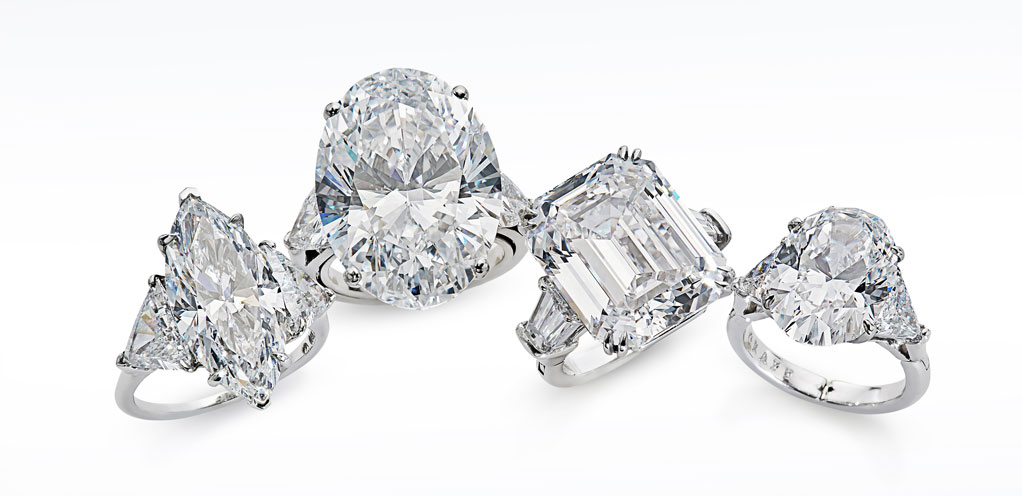
A 3 carat emerald cut diamond ring is among the most striking and sophisticated fine jewelry configurations possible — a stone that combines genuine scale with the understated, architectural elegance that only the step-cut faceting style can deliver. At three carats, an emerald cut diamond measures approximately 10.5 x 7.5mm, creating a broad, rectangular presence on the finger that is immediately impressive without the ostentatious brilliance of a round brilliant or oval. The emerald cut’s famous hall-of-mirrors effect is at its most dramatic and beautiful at three carats, where the stone has enough surface area to fully express the depth and transparency that make this cut so compelling.
This comprehensive guide covers everything you need to know before purchasing a 3 carat emerald cut diamond ring — from the specific quality standards that step-cut diamonds demand at this weight, to evaluating proportions, comparing natural and lab-grown options, price expectations across quality tiers, the best settings and metals, and how the emerald cut compares to other shapes at three carats.
What Makes a 3 Carat Emerald Cut Diamond Ring Distinctive?
The emerald cut is one of the oldest diamond cutting styles, predating the brilliant cuts that dominate the modern market by centuries. Where round brilliants, ovals, and cushions are designed to maximize the return of white light and spectral fire, the emerald cut showcases the diamond’s inherent clarity, depth, and color through long, parallel step-cut facets arranged in concentric rows parallel to the girdle.
The result is the emerald cut’s defining characteristic: the hall-of-mirrors effect. Rather than the intense white sparkle and rainbow fire of a brilliant cut, the emerald cut produces long flashes of white and grey light that reflect back and forth between the stone’s broad, parallel facets — creating a sophisticated, meditative optical character that is completely unlike anything brilliant cuts produce. Under good lighting, a 3 carat emerald cut diamond ring produces a breathtaking interplay of reflections that draws the eye deep into the stone.
At three carats, the stone’s dimensions — approximately 10.5 x 7.5mm at a 1.40 length-to-width ratio — create a broad rectangular presence across the finger that reads as genuinely substantial with the geometric precision that suits minimalist, contemporary, and architecturally minded aesthetics perfectly. The 3 carat emerald cut diamond ring has become strongly associated with the most sophisticated tier of engagement ring buyers — those who prefer understatement to spectacle and appreciate the technical precision that the emerald cut demands and rewards.
The Hall-of-Mirrors Effect at Three Carats
Understanding the optical character of the emerald cut is essential for any buyer of a 3 carat emerald cut diamond ring, because it differs so fundamentally from what most people expect of a diamond.
Rather than scattering light in thousands of small, rapidly changing directions — the effect that creates the intense sparkle of round brilliants — the emerald cut’s long, broad facets reflect and transmit light in large, slow-moving flashes. The effect is simultaneously more dramatic in individual flashes and more restrained overall than brilliant cuts. Under direct, intense lighting, the emerald cut produces stunning flashes of white light through its broad table. Under diffused or indirect lighting, it produces the characteristic hall-of-mirrors effect — deep, reflective, and utterly unlike anything a brilliant cut produces.
Many buyers who see a well-cut 3 carat emerald cut diamond ring for the first time are surprised by how different it looks from what they expected. The key insight: the emerald cut does not compete with brilliant cuts on their terms. It occupies a completely different aesthetic register — depth, clarity, and architectural elegance versus sparkle and fire. Buyers who love emerald cuts tend to love them precisely for what brilliant cuts lack: stillness, depth, and geometric authority.
Cut Quality Evaluation
Cut quality evaluation for a 3 carat emerald cut diamond ring differs fundamentally from round brilliant evaluation. GIA does not issue Excellent cut grades for emerald cut diamonds — there is no standardized cut grading system for step-cut shapes. Buyers must evaluate proportions directly through certificate data and assess light performance through high-resolution imagery.
Length-to-Width Ratio
The length-to-width ratio is the most visible proportion of any 3 carat emerald cut diamond ring. A ratio of 1.40 — the most commonly preferred for emerald cuts — produces a stone that is 40% longer than wide, creating the classic elongated rectangular form at approximately 10.5 x 7.5mm at three carats. Ratios below 1.30 produce a nearly square form; ratios above 1.60 produce a very elongated, narrow rectangle.
The most widely preferred range for a 3 carat emerald cut diamond ring is 1.35–1.55. The classic 1.40–1.50 range represents the most universally appealing proportions — clearly and elegantly rectangular without being so elongated as to look narrow. Personal preference matters significantly within this range.
Depth and Table Percentage
Ideal depth percentage is approximately 60–68%. Below 58%, the stone can appear flat and lacks the characteristic depth of the hall-of-mirrors effect. Above 72%, the stone appears significantly smaller than its carat weight suggests. Table percentage should ideally fall in the 60–70% range — the emerald cut’s broad, open table is one of its most defining features.
Symmetry and Polish
Both should be Excellent or Very Good. Good symmetry in an emerald cut is particularly problematic because the step-cut’s geometric precision makes any asymmetry in the parallel facet pattern immediately and obviously visible — the rows of rectangular facets must be perfectly aligned and evenly spaced to produce the clean optical effect that defines this cut.
The Critical Role of Clarity
Clarity is more consequential for a 3 carat emerald cut diamond ring than for virtually any other shape-weight combination — the single most important purchasing principle any buyer must fully understand.
The step-cut faceting acts as a clarity amplifier. The large, open table and long, parallel facets function as windows into the stone’s interior, making inclusions dramatically more visible than in a brilliant-cut diamond of identical clarity grade. An inclusion invisible in a round brilliant or oval of SI1 clarity can be clearly and distractingly visible in an emerald cut of the same grade.
At three carats, this clarity amplification effect is more pronounced than at two carats due to the larger face-up area. The recommended clarity standard for a 3 carat emerald cut diamond ring is VS1 or better — with VVS2 and VVS1 being the preferred grades for serious buyers. VS1 produces reliably eye-clean results in the vast majority of cases and represents the minimum appropriate standard. VS2 requires very careful per-stone evaluation. SI1 clarity should be avoided entirely — at this weight and cut, SI1 inclusions are frequently visible to the casual naked eye, sometimes dramatically so. SI2 and below are entirely inappropriate.
Inclusion positioning is also significant: inclusions directly under the table — in the center of the face — are the most visible and most damaging. Inclusions toward the corners or sides, where corner prongs can partially conceal them, are significantly less problematic.
Color: High Standards Required
Like clarity, color is more visible in a 3 carat emerald cut diamond ring than in equivalent brilliant-cut shapes. The step-cut’s faceting does not scatter light the way brilliant cuts do — it transmits light more directly, making any warmth more detectable. At three carats, the large surface area further amplifies any color characteristics.
For a 3 carat emerald cut diamond ring in platinum or white gold, D through G color grades are strongly recommended. The colorless tier — D, E, and F — ensures absolute whiteness under all conditions. G color can appear beautifully white in isolation but should be evaluated carefully in a white metal setting. H color requires careful per-stone evaluation and can show detectable warmth in direct sunlight at this weight and cut.
For yellow gold settings, I and J color grades are appropriate — the warm metal absorbs the stone’s warmth in a complementary way, and many of the most beautiful yellow gold emerald cut designs feature I or J color stones for their cohesive warm aesthetic.
Natural vs. Lab-Grown 3 Carat Emerald Cut Diamond Ring
Natural 3 Carat Emerald Cut Diamond Ring
A natural 3 carat emerald cut diamond ring in excellent quality — D–G color, VS1–VVS2 clarity, excellent proportions, GIA or IGI certified — typically costs between $15,000 and $45,000 depending on specific grades and setting design. The emerald cut’s 20–30% price discount versus equivalent natural round brilliants at three carats makes this meaningfully more accessible than a natural round brilliant of the same quality tier. Natural emerald cuts carry the cultural prestige of one of the oldest and most storied cutting traditions in jewelry history, with roots in the art deco period and associations with Hollywood’s golden age.
Lab-Grown 3 Carat Emerald Cut Diamond Ring
A lab-grown 3 carat emerald cut diamond ring is particularly compelling because the higher clarity standards required for the emerald cut make the absolute dollar savings from choosing lab-grown even more significant than for brilliant cuts. A natural VS1 clarity three-carat emerald cut might cost $18,000–$35,000 for the diamond alone; an equivalent IGI-certified lab-grown VS1 at three carats typically costs $1,500–$5,000.
In excellent quality — D–G color, VS1–VVS2 clarity, excellent proportions, IGI certified — a complete lab-grown 3 carat emerald cut diamond ring typically costs $3,000–$8,000 including a quality setting. This dramatic price difference makes the VS1 or better clarity that the emerald cut demands genuinely accessible to buyers who might find those grades financially prohibitive in natural stones at this weight.
Best Settings for a 3 Carat Emerald Cut Diamond Ring
Classic Platinum Solitaire
The clean platinum solitaire is the most classically appropriate setting — a four-prong or eight-prong mount with prongs positioned at the four corners and at the midpoints of the long sides, specifically designed for the rectangular form with cropped corners. The most important setting detail is prong placement at the four corners — well-designed corner prongs for a 3 carat emerald cut diamond ring are angled to fit the 45-degree cropped corner precisely, securing the corner facets without obscuring them.
Step-Cut Baguette Three-Stone Setting
Flanking the center stone with step-cut tapered baguette side stones creates one of the most cohesive and architecturally beautiful three-stone designs in all of jewelry. The step-cut faceting of the baguette side stones matches the visual character of the emerald cut center, creating a unified optical effect where the long reflections are echoed and extended by the sides. This setting style has roots in the art deco period and continues to be the most sought-after design among buyers with sophisticated aesthetic sensibilities. Tapered baguettes — wider at the top — are the more classical choice; straight baguettes create a more modern, geometric aesthetic.
Three-Stone with Brilliant Cut Side Stones
Round brilliant or oval side stones add sparkle and fire that contrasts beautifully with the emerald cut’s cooler, more reflective character. The contrast between the long, flowing reflections of the emerald cut center and the intense scintillation of brilliant-cut sides creates a visually rich and sophisticated ring that is more widely available from retail jewelers than baguette designs.
Rectangular Halo Setting
A halo of smaller pavé-set diamonds following the rectangular contour — covering all four sides and the four cropped corners — adds brilliant-cut sparkle contrast to the center stone’s hall-of-mirrors effect and visually enlarges the center significantly. The combination of a brilliant-cut pavé halo around the step-cut center creates one of the most visually rich and technically interesting ring designs available at any price level.
East-West Orientation
An emerald cut mounted horizontally across the finger — east-west — presents its 10.5mm length across the width of the finger, creating an architectural, almost industrial aesthetic that is completely unique and has become one of the most coveted and distinctive fine jewelry designs of the current era.
Metal Choices
Platinum is the premier choice. Its superior hardness is particularly important for protecting the four cropped corners — the thinnest and most vulnerable points where chipping is most likely from a sharp impact. 18k white gold is an excellent alternative. For yellow gold lovers, 18k yellow gold creates a strikingly beautiful aesthetic — the stone’s cool, clear hall-of-mirrors effect combined with warm yellow gold is one of the most distinctive and sophisticated looks in contemporary fine jewelry.
Shape Comparisons at Three Carats
Round brilliant: ~9.3–9.5mm diameter, intense concentrated sparkle. Conceals inclusions far more effectively. Costs 20–30% more. The round brilliant suits maximum brilliance; the emerald cut suits architectural elegance.
Oval: ~12.0 x 8.0mm, appears larger face-up. Brilliant-cut sparkle in elongated form. More forgiving of clarity. Prices similarly to the emerald cut within 10–15%. The oval suits visual size; the emerald cut suits geometric precision.
Cushion: ~8.8 x 8.8mm, intense brilliant-cut fire in soft-edged form. Conceals inclusions better. Prices similarly. The cushion is warm and approachable; the emerald cut is cool and precise.
Radiant: ~8.8 x 7.5mm, rectangular form with brilliant-cut sparkle rather than the hall-of-mirrors effect. Conceals inclusions far better. Prices similarly. For buyers who want a rectangular ring with sparkle rather than step-cut depth, the radiant is the closest alternative.
Price Guide
Natural 3 carat emerald cut diamond ring prices:
- D–F color, VVS1–VVS2, excellent proportions, GIA or IGI: $30,000–$60,000+ total
- G color, VS1, excellent proportions, GIA or IGI: $15,000–$35,000 total — recommended sweet spot
- H color, VS1–VS2, careful per-stone evaluation: $9,000–$18,000 total
Lab-grown 3 carat emerald cut diamond ring prices:
- D–F color, VVS1–VVS2, excellent proportions, IGI: $5,000–$11,000 total
- G color, VS1, excellent proportions, IGI: $3,000–$7,000 total — optimal value tier
- H color, VS1–VS2, careful evaluation: $1,500–$4,000 total
Setting costs: simple platinum solitaires add $900–$2,500; baguette three-stone designs add $2,500–$6,000; rectangular halo settings add $2,000–$5,000.
Care and Maintenance
The large open table reveals every fingerprint and cosmetic residue with unusual clarity — regular cleaning is more important for a 3 carat emerald cut diamond ring than for brilliant-cut rings. Clean weekly using warm water, mild dish soap, and a soft-bristled toothbrush, particularly beneath the stone and at the four corner prong positions. Have the ring professionally inspected every six months with specific attention to the integrity of the corner prongs at all four positions — the cropped corners are the most vulnerable points to chipping from sharp impacts.
Frequently Asked Questions
How big is a 3 carat emerald cut diamond ring?
A 3 carat emerald cut diamond ring typically features a center stone measuring approximately 10.5 x 7.5mm at a 1.40 length-to-width ratio. A longer 1.50 ratio produces approximately 11.0 x 7.3mm; a fuller 1.35 ratio produces approximately 10.0 x 7.5mm. The emerald cut appears slightly smaller face-up than an oval of equal weight due to its more compact surface area distribution.
How much does a 3 carat emerald cut diamond ring cost?
A natural 3 carat emerald cut diamond ring in excellent quality (G color, VS1 clarity, excellent proportions, GIA certified) typically costs $15,000–$35,000 total. A lab-grown 3 carat emerald cut diamond ring of equivalent specifications typically costs $3,000–$7,000 total. Emerald cuts typically cost 20–30% less than equivalent round brilliants.
Why does a 3 carat emerald cut diamond ring require VS1 or better clarity?
The step-cut faceting makes inclusions dramatically more visible than in brilliant cuts. The large open table and long parallel facets transmit light directly into the stone rather than scattering it, acting as windows that reveal inclusions visible at grades where they would be invisible in a round brilliant. VS1 is the minimum clarity standard for reliable eye-clean appearance at this weight and cut.
Is a lab-grown 3 carat emerald cut diamond ring a real diamond?
Yes — completely. A lab-grown emerald cut diamond is chemically and physically identical to a natural emerald cut diamond. Both are certified by GIA or IGI using the same grading standards. The only difference is geological origin.
What length-to-width ratio is best for a 3 carat emerald cut diamond ring?
The 1.35–1.50 range is most widely preferred — clearly and elegantly rectangular without being so elongated as to appear narrow or fragile. The classic 1.40 ratio is the single most popular choice and produces the proportions most widely associated with the emerald cut aesthetic.
Final Thoughts
A 3 carat emerald cut diamond ring is one of the most distinguished and architecturally beautiful fine jewelry configurations available — a choice that communicates a sophisticated aesthetic sensibility, a preference for depth and clarity over sparkle, and a deep appreciation for the precision and transparency that the step-cut demands and rewards. The emerald cut is unforgiving of quality compromises but extraordinarily beautiful when those standards are met.
Whether you choose a natural stone for its geological heritage and the patina of one of jewelry’s oldest cutting traditions, or a lab-grown stone for its exceptional value at the clarity grades the emerald cut requires — insist on VS1 or better clarity as a non-negotiable standard, target D–G color for white metal settings, evaluate the specific stone’s proportions carefully, and insist on GIA or IGI certification.
For more expert guidance on diamond shapes, carat weights, and the full spectrum of fine diamond jewelry, visit the Carat Diamond homepage.