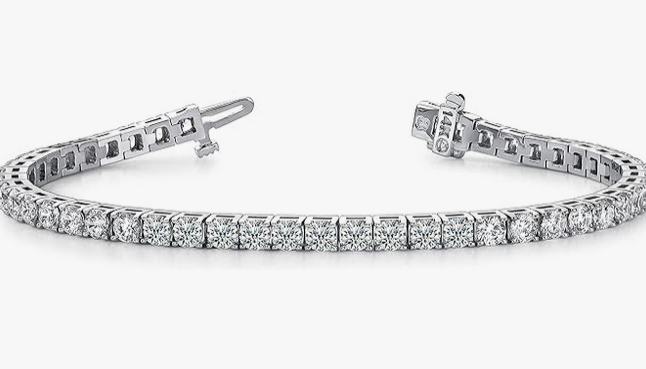
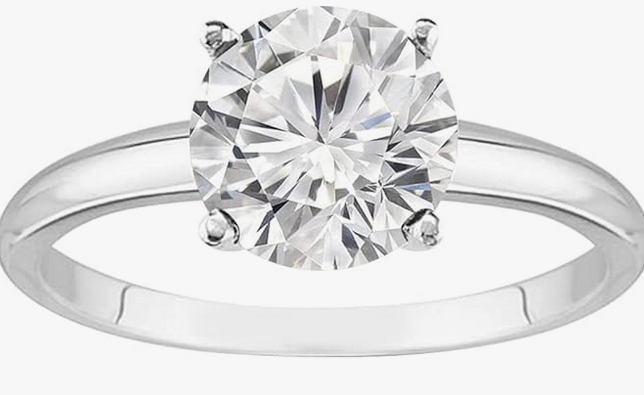
Houston Diamond District 1 to 10 Carat 14K White Gold IGI Certified Lab Grown Diamond Engagement Ring, Round Cut Solitaire, 4-Prong Setting (E–F Color VS2–SI1 Clarity)
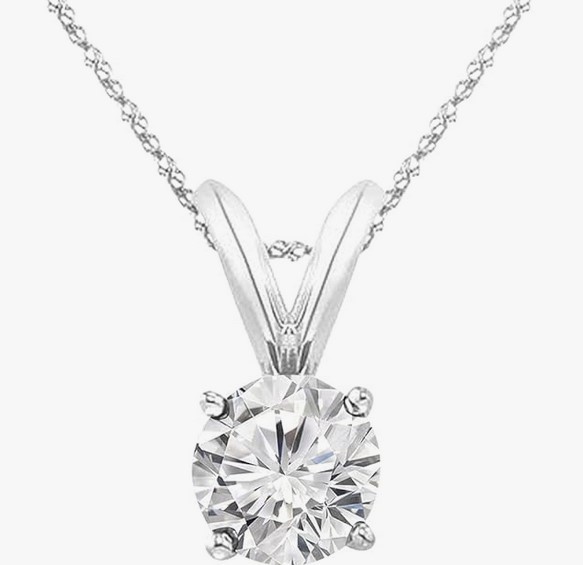
0.5-10 Carat Lab Grown Diamond Solitaire Pendant Necklace, Round Cut Solitaire, 4-Prong Setting, Jewelry for Women (E-F, VS)
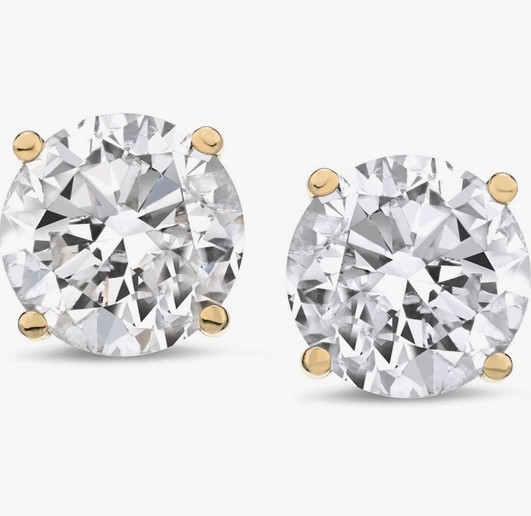
1 to 6 Carat LAB GROWN Solitaire Diamond Stud Earrings Round Cut 4 Prong Screw Back (F-G Color, VS1-VS2 Eye Clean Clarity)
A 3 carat diamond is one of the most coveted stones in the world of fine jewelry and gemology. Whether set into an engagement ring, a pendant, a pair of earrings, or acquired as a loose investment stone, a 3 carat diamond commands attention, respect, and genuine admiration. At three carats, a round brilliant measures approximately 9.3–9.5mm in diameter — a size that is immediately impressive on any piece of jewelry and unmistakably substantial to any observer.
This comprehensive guide covers everything you need to know about a 3 carat diamond — from understanding how the Four Cs apply at this specific weight, to comparing natural and lab-grown options, navigating price expectations, understanding how it measures across different shapes, and making the smartest possible purchase decision at this investment level.
What Exactly Is a 3 Carat Diamond?
A 3 carat diamond weighs 0.6 grams — exactly 600 milligrams. The carat weight system is standardized globally: one carat equals 200 milligrams, so a stone at three carats weighs precisely that amount regardless of shape or cut. This weight applies identically to every shape — a round brilliant, an oval, and an emerald cut all weigh exactly the same at three carats, though they appear different sizes due to how mass is distributed across their geometry.
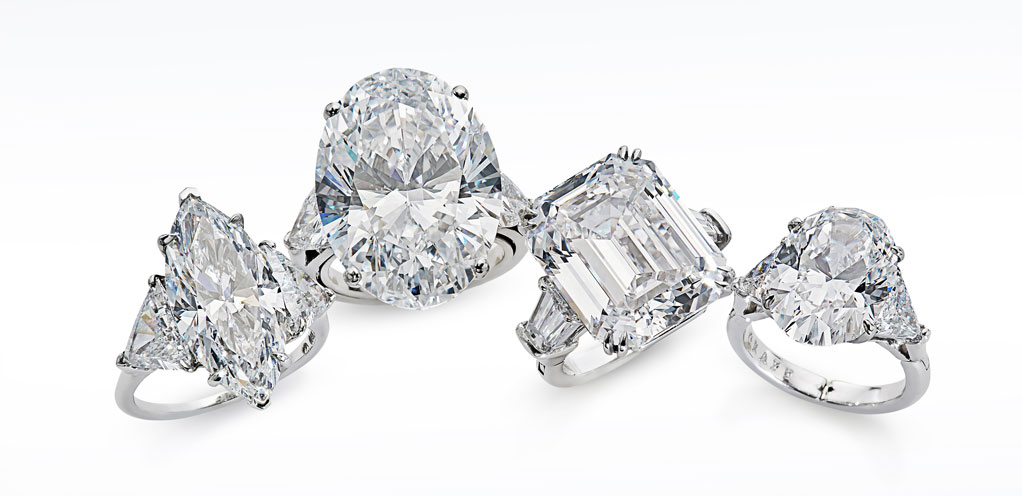
What a 3 carat diamond looks like in terms of physical size depends significantly on the shape chosen. A round brilliant measures approximately 9.3–9.5mm in diameter. An oval measures approximately 12.0 x 8.0mm. An emerald cut measures approximately 10.5 x 7.5mm. A cushion cut measures approximately 8.8 x 8.8mm. These dimensions vary because each shape distributes weight differently across depth and surface area.
A 3 carat diamond is dramatically larger than the average stone purchased in the United States, which weighs approximately 1–1.2 carats. At three times the average weight, it is a genuine statement stone — large enough to be unmistakably significant in any setting, yet not so large that it sacrifices elegance for spectacle.
The Four Cs: How They Apply to a 3 Carat Diamond
The Four Cs — cut, color, clarity, and carat weight — are the universal framework for evaluating diamond quality. At three carats, each factor carries greater visual consequence than at smaller weights. Understanding how they interact specifically for a 3 carat diamond is essential for making a wise purchasing decision.
Cut: The Most Critical Factor
Cut quality is the single most important decision when purchasing a 3 carat diamond. A beautifully cut stone will produce extraordinary brilliance, fire, and scintillation — the three optical properties that make it sparkle with breathtaking intensity. A poorly cut 3 carat diamond will appear dark, flat, and lifeless despite its impressive weight and high price — one of the most disappointing possible outcomes in fine jewelry.
For a round brilliant, the Excellent cut grade from GIA or Triple Excellent from IGI is the only acceptable standard at this carat weight. The additional cost of Excellent versus Very Good cut is modest relative to the total investment, while the visual difference in light performance is dramatic and immediately apparent.
For fancy shapes — oval, cushion, pear, radiant, emerald, marquise, princess — formal cut grades are not standardized. Evaluate the stone’s proportions carefully: depth percentage, table percentage, and length-to-width ratio. For oval and pear shapes, assess for bowtie effect — a dark shadow across the center that reduces brilliance. High-resolution video of the specific stone is essential before purchasing any fancy shaped 3 carat diamond.
Color: Recommended Grades
Color becomes increasingly visible as diamond size increases. In a 3 carat diamond, the larger surface area makes any warmth or yellowish cast more apparent than in smaller stones — both to trained gemologists and to casual observers in everyday lighting.
For a stone intended for a platinum or white gold setting, D through H color grades are recommended. The colorless tier — D, E, and F — ensures the stone appears brilliantly white under all lighting conditions. G and H grades are near-colorless and appear white to the naked eye in virtually all conditions, offering meaningful price savings versus the colorless tier.
For a 3 carat diamond intended for a yellow gold or rose gold setting, I and J color grades are entirely appropriate. The warm metal tone naturally complements any slight warmth in the stone, making colorless grades unnecessary and freeing significant budget for improvements to cut and clarity.
Clarity: Finding Eye-Clean Quality
Finding an eye-clean 3 carat diamond — one where no inclusions are visible without magnification — is the primary clarity goal. At three carats, inclusions are more visible than at smaller sizes, so the clarity grade required to achieve a reliably eye-clean result is higher.
The ideal clarity range for a 3 carat diamond is VS1 through VVS2. VS1 and VS2 stones are eye-clean in virtually all cases and represent outstanding value. VVS1 and VVS2 offer additional peace of mind at a higher price. SI1 clarity requires careful per-stone review using high-resolution imagery — some SI1 stones at this weight are eye-clean, but many are not. SI2 and lower grades should generally be avoided, as inclusions become significantly more visible at this size.
Never purchase a 3 carat diamond based on a clarity grade alone. Always examine specific imagery or video of the stone and ideally an independent gemologist’s assessment before committing.
Natural vs. Lab-Grown 3 Carat Diamond
One of the most significant decisions when purchasing a 3 carat diamond is choosing between a natural mined stone and a lab-grown stone. Both categories are real diamonds — chemically, physically, and optically identical under any analytical test. The only genuine difference is origin: geological versus laboratory.
Natural 3 Carat Diamond
A natural 3 carat diamond was formed deep within the Earth’s mantle under extreme heat and pressure over billions of years. Natural rough crystals that yield polished stones at this weight represent a very small fraction of global mining output, making them genuinely rare. A natural 3 carat diamond in excellent quality — D–H color, VS1–VVS2 clarity, Excellent cut, GIA certified — typically costs between $20,000 and $60,000 depending on specific grades and shape. Natural diamonds carry long-standing cultural associations with permanence, rarity, and investment value, and high-quality examples have historically retained or appreciated in value over time.
Lab-Grown 3 Carat Diamond
A lab-grown 3 carat diamond offers an identical stone — same carbon atomic structure, same optical properties, same hardness, same brilliance — at dramatically reduced cost. Lab-grown stones are produced using HPHT or CVD processes and are certified by GIA and IGI using identical grading standards. They cannot be distinguished from natural stones without specialized laboratory equipment.
A lab-grown 3 carat diamond in excellent quality — D–H color, VS1–VVS2 clarity, Excellent cut, IGI certified — typically costs between $2,000 and $7,000. This represents a price reduction of approximately 85–90% compared to an equivalent natural stone, making the visual experience of a genuinely impressive three-carat diamond accessible at a price point that was previously impossible. For buyers whose primary consideration is the visual experience — the sparkle, the presence, the elegance — lab-grown delivers fully and completely at a fraction of the natural cost.
How Size Compares Across Shapes
One of the most practically useful aspects of understanding a 3 carat diamond is knowing how its dimensions compare across different shapes. Since carat is a unit of weight rather than size, different shapes distribute mass differently and therefore appear different sizes for the same weight.
- Round brilliant: ~9.3–9.5mm diameter. Maximum brilliance and universal elegance — the most popular choice at this weight.
- Oval: ~12.0 x 8.0mm. Appears larger than a round of equal weight and creates a beautiful elongating effect.
- Cushion: ~8.8 x 8.8mm (square) or 10.0 x 8.0mm (rectangular). Romantic, soft-edged brilliance in a vintage-influenced aesthetic.
- Emerald cut: ~10.5 x 7.5mm. Step-cut faceting creates a breathtaking hall-of-mirrors effect, uniquely sophisticated at three carats.
- Pear: ~13.0 x 7.8mm. The most elongating choice — dramatic and fashion-forward with extraordinary visual length.
- Marquise: ~15.5 x 7.8mm. Distributes weight across the largest surface area, appearing biggest per carat with a regal silhouette.
- Princess: ~8.0 x 8.0mm. Intense brilliance in a modern geometric square form.
- Radiant: ~9.0 x 7.5mm. Combines round brilliance with rectangular clean lines — intense sparkle in an elegant form.
Where to Use a 3 Carat Diamond
Engagement Rings and Wedding Rings
The most common use for a 3 carat diamond is as the center stone of an engagement ring or wedding ring. At this weight, the stone creates a piece that is immediately striking, clearly significant, and timelessly beautiful. Solitaire settings allow the full beauty of the stone to dominate. Halo settings add additional sparkle. Three-stone designs create extraordinary total diamond weight. All of these ring styles work beautifully with a 3 carat diamond as the center stone.
Pendants and Necklaces
A pendant featuring a 3 carat diamond is one of the most elegant and wearable uses of a stone at this weight. Set in a simple bezel or prong mounting suspended from a fine platinum or gold chain, it creates a striking focal point at the neckline. Pear and marquise shapes work particularly well in pendant settings, where the elongated form hangs naturally and catches light beautifully.
Stud Earrings
A pair of stud earrings featuring two 3 carat diamonds — a combined total of 6 carats — represents one of the most impressive fine jewelry purchases possible. Diamond stud earrings at this combined weight are classic, versatile, and appropriate for any occasion from casual daywear to the most formal events.
Loose Investment Stone
Some buyers purchase a 3 carat diamond as a loose stone — either as a financial investment, as a stone to be set at a later date, or as part of an estate or collection. A GIA-certified natural three-carat stone in excellent quality grades represents a tangible asset that can be stored, appraised, and sold independently of any specific piece of jewelry.
Pricing: What to Expect
Natural 3 carat diamond prices:
- D–F color, VVS1–VVS2, Excellent cut, GIA: $40,000–$60,000+
- G–H color, VS1–VS2, Excellent cut, GIA: $20,000–$40,000 — most popular tier for serious buyers
- I–J color, SI1, Excellent cut: $10,000–$20,000 with careful per-stone selection
Lab-grown 3 carat diamond prices:
- D–F color, VVS1–VVS2, Excellent cut, IGI: $4,000–$7,000
- G–H color, VS1–VS2, Excellent cut, IGI: $2,000–$4,000 — optimal value tier
Setting costs vary: simple solitaire pendants or earring mountings add $300–$1,500; ring settings add $800–$5,000+ depending on complexity.
Fluorescence: An Often Overlooked Factor
Fluorescence — the tendency of a diamond to emit a blue glow when exposed to ultraviolet light — is an aspect many buyers overlook. It is graded from None to Faint, Medium, Strong, and Very Strong. For most buyers, None or Faint fluorescence is the safest choice at this price level. Strong or Very Strong blue fluorescence can, in certain stones, create a slight haziness in direct sunlight — an effect known as overblue — that reduces brilliance in those conditions. However, in G or lower color grade stones, Medium blue fluorescence can actually improve the apparent whiteness in daylight, since the blue emission partially cancels slight yellow tint.
When evaluating fluorescence, request high-resolution photographs in both standard and UV lighting conditions. The GIA and IGI grading reports both note fluorescence grade, making it straightforward to identify when reviewing certificates.
The Impact of Depth and Table Percentage
Two of the most important proportional measurements — depth percentage and table percentage — determine how efficiently a round brilliant collects, reflects, and returns light. For a round brilliant, the ideal depth percentage range is approximately 59–63%. Stones over 65% depth tend to appear smaller face-up than their carat weight would suggest and may show a dark center. The ideal table percentage range is approximately 53–58%. Stones with very large tables (above 65%) distribute light less efficiently and tend to look glassy rather than brilliant. Verifying that these two metrics fall within ideal ranges — information available on the GIA or IGI grading certificate — is a simple step that can meaningfully affect the stone’s ultimate beauty.
Storage and Security
A stone of this value deserves proper storage and security consideration. For loose stones, a dedicated gemstone storage pouch or parcel prevents scratches during handling. For long-term storage, a fabric-lined jewelry case with individual compartments prevents contact between pieces. High-value set pieces should ideally be stored in a fireproof safe when not being worn. Many serious jewelry owners choose to store their most valuable pieces in a bank safe deposit box during extended travel periods. Keep current photographic documentation from multiple angles, maintain updated appraisals every two to three years, and ensure insurance coverage reflects current market values.
The Buying Timeline
A thoughtful purchase at this weight appropriately takes four to six weeks from start to finish. Research phase (one to two weeks): educate yourself on the Four Cs, understand current pricing, and identify reputable retailers. Shortlisting phase (one to two weeks): identify two to five specific stones meeting your criteria, request high-resolution video, and compare side by side. Decision and purchase phase (a few days): confirm certificate details independently via the grading laboratory’s website, review the return policy, and complete the purchase. Setting phase (if applicable, two to four weeks): allow production time for custom or semi-custom ring settings. Rushing this process significantly increases the risk of a decision you later regret.
Certification: Non-Negotiable
GIA and IGI certification is non-negotiable for any purchase of a 3 carat diamond at this price level. A GIA grading report provides the globally recognized gold standard for natural stones, covering cut, color, clarity, carat weight, and fluorescence. IGI is the leading standard for lab-grown stones and fully reliable for both categories. Both certificates include a unique laser inscription on the diamond’s girdle, allowing the stone to be matched to its certificate at any time.
Frequently Asked Questions
How much does a 3 carat diamond cost?
A natural 3 carat diamond in excellent quality typically costs $20,000–$60,000+. A lab-grown 3 carat diamond of identical specifications typically costs $2,000–$7,000. Price depends on cut, color, clarity, shape, and certification.
How big is a 3 carat diamond?
A round brilliant 3 carat diamond measures approximately 9.3–9.5mm in diameter. Other shapes vary: oval approximately 12.0 x 8.0mm, emerald cut approximately 10.5 x 7.5mm, cushion approximately 8.8 x 8.8mm. Carat weight measures mass, not size — shape determines how that mass is distributed visually.
What is the difference between a 3 carat diamond and a 3 carat diamond ring?
A 3 carat diamond refers to the loose stone or center stone of a piece. A 3 carat diamond ring refers to the complete piece of jewelry with the stone mounted in a ring setting. When evaluating a ring, the total price includes both the stone and the setting. When purchasing loose, you are buying the stone alone and will arrange a setting separately.
Is a lab-grown 3 carat diamond a real diamond?
Yes — absolutely. A lab-grown 3 carat diamond is chemically, physically, and optically identical to a mined natural stone of the same weight. Both are certified by GIA or IGI using identical grading standards. The only difference is geological origin.
What cut is best for a 3 carat diamond?
For a round brilliant, Excellent cut from GIA or Triple Excellent from IGI is the only standard to target. Cut quality determines the light performance of a 3 carat diamond more than any other single factor. For fancy shapes, evaluate individual stone proportions carefully and always request high-resolution video.
What color grade should I choose for a 3 carat diamond?
For white metal settings, D–H color is recommended. For yellow gold or rose gold settings, I–J color is entirely appropriate and offers meaningful price savings. At three carats, color is more visible than in smaller stones, making color grade selection meaningfully impactful.
Final Thoughts
A 3 carat diamond is one of the most extraordinary objects in the world of fine jewelry — genuinely rare in natural form, breathtakingly beautiful in either natural or lab-grown form, and capable of transforming any piece of jewelry into something truly remarkable. Whether you are purchasing for an engagement ring, a pendant, earrings, or as a loose investment stone, the principles are the same: prioritize cut quality above all else, insist on GIA or IGI certification, target eye-clean clarity grades, and choose a color grade appropriate for your intended metal setting.
A beautifully cut, well-graded 3 carat diamond will produce brilliance and visual presence that endures for generations. Take your time, do your research, and trust the process — an exceptional stone at this weight is one of the most rewarding purchases in all of fine jewelry.
For more expert guidance on diamond carat weights and fine diamond jewelry, visit the Carat Diamond homepage.