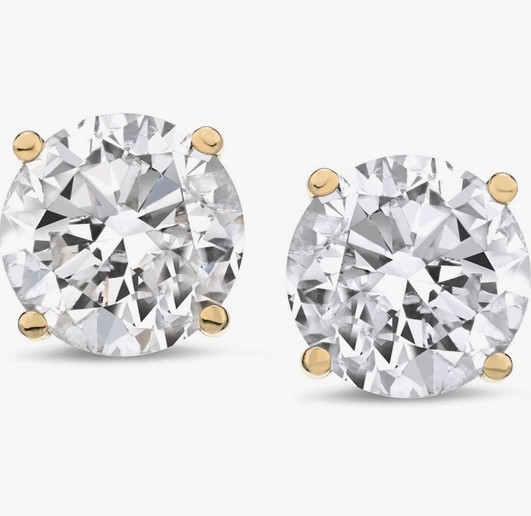
0.25 to 4 Carat 14K White Gold Natural Round Brilliant Solitaire Diamond Stud Earrings for Women 3 Prong Martini Cocktail Push Back (I-J Color I1 Clarity)
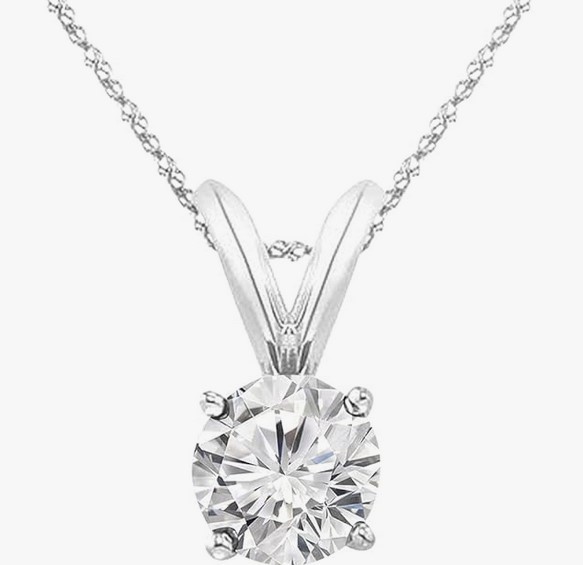
0.5-10 Carat Lab Grown Diamond Solitaire Pendant Necklace, Round Cut Solitaire, 4-Prong Setting, Jewelry for Women (E-F, VS)
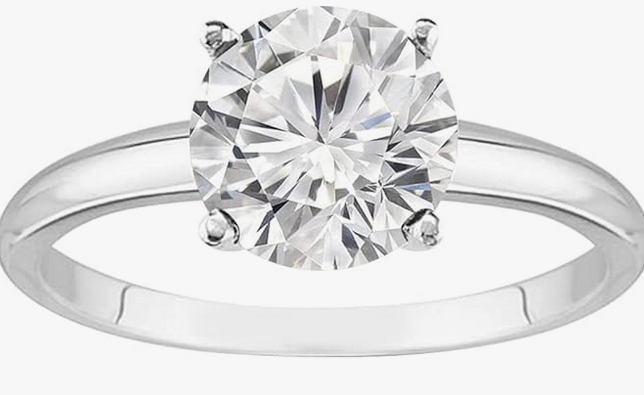
1 to 10 Carat 14K White Gold IGI Certified Lab Grown Diamond Engagement Ring, Round Cut Solitaire, 4-Prong Setting (E–F Color VS2–SI1 Clarity)
The .25 Carat Diamond Solitaire Stud Earring: A Complete Buyer’s Guide to Size, Quality, and Long-Term Value
There is a reason that diamond stud earrings remain one of the most purchased pieces of fine jewelry in America year after year. They are versatile in a way that almost no other category of jewelry can match — equally at home with a weekend outfit as with a formal evening look, appropriate for first jewelry gifts and milestone anniversaries alike, and flattering across every age group and personal style. Within the stud earring category, the .25 carat diamond occupies a particularly interesting position: small enough to remain genuinely wearable every single day, large enough to produce the fire and brilliance that make natural diamonds worth owning in the first place.
This guide focuses on one specific product that demonstrates exactly what thoughtful design at this carat weight looks like: the 0.25 to 4 Carat 14K White Gold Natural Round Brilliant Solitaire Diamond Stud Earrings for Women, 3 Prong Martini Cocktail Push Back in I-J Color and I1 Clarity. Understanding this piece — its specifications, its setting design, its strengths, and the trade-offs inherent in its quality grades — provides a complete framework for evaluating any .25 carat diamond stud earring on the market. Whether you buy this specific set or use it as a benchmark for comparison, the knowledge carries over.
Why the .25 Carat Weight Is Specifically Right for Everyday Stud Earrings
Before diving into the details of the product itself, it’s worth understanding why the .25 carat diamond — one quarter of a full carat, weighing exactly 50 milligrams — occupies such a comfortable space in the earring category specifically.
In ring settings, the .25 carat diamond sometimes prompts buyers to consider whether they should stretch to a larger stone. Ring center stones are viewed up close, often examined with intent, and carry symbolic weight that can make carat size feel loaded. Earrings operate under an entirely different set of visual rules. They are viewed from a distance, in motion, and as part of an overall look rather than as isolated focal points. At approximately 4.1 millimeters in diameter — the standard measurement for a round brilliant cut at this weight — a .25 carat diamond produces a stud that is clearly visible and definitively sparkling from across a room, without creating the kind of bold statement that starts to feel costume-like in casual contexts.
This is the carat weight that a woman can wear to a job interview, a parent-teacher conference, a backyard barbecue, and a black-tie event without once feeling overdressed or underdressed. That range of appropriateness is genuinely rare in fine jewelry, and it’s one of the primary reasons that .25 carat diamond studs consistently rank among the top-selling earring choices across all major jewelry retailers.
The Product in Detail: What You’re Actually Getting
The 0.25 to 4 Carat 14K White Gold Natural Round Brilliant Solitaire Diamond Stud Earrings deliver several features that deserve careful attention, because each design decision reflects a clear philosophy about what everyday diamond earrings should do.
Natural Diamonds, Not Lab-Grown
This is a meaningful distinction that affects both the price and the long-term narrative of the piece. These earrings feature natural round brilliant diamonds — stones formed over billions of years in the earth’s mantle and recovered through traditional mining. At the .25 carat diamond weight, natural stones remain accessibly priced while carrying the full weight of what the word “diamond” means culturally and sentimentally. For buyers who want to give or receive a piece described accurately as a natural diamond earring, this specification matters considerably.
Lab-grown alternatives exist at this size and are often priced lower, but they occupy a different market position. This product is for buyers who prioritize natural origin.
14K White Gold: The Right Metal for This Application
The 14K white gold setting is one of the better metal choices available for a .25 carat diamond stud earring intended for regular use. Here’s why it works so well at this specific price and quality tier.
Pure white gold doesn’t exist in nature — white gold is yellow gold alloyed with metals such as palladium or silver and then rhodium-plated to achieve its bright, silver-like appearance. At 14 karats, the alloy is 58.3% pure gold, which provides a balance of durability and precious metal content that outperforms both 10K (more durable but less gold) and 18K (more gold but softer and more prone to wear). For earrings specifically — pieces that experience consistent contact with hair, clothing, and skin — 14K white gold hits the ideal durability-quality intersection.
The white gold color choice also serves a specific optical purpose. White metal settings do not cast any color into the diamond they hold, which means the stone reads as close to colorless as its intrinsic grade allows. This matters particularly for the I-J color diamonds featured in this product, which we’ll address in detail below.
Round Brilliant Cut: Maximum Light Performance at Minimum Size
The round brilliant cut is not simply the most popular diamond shape — it is the most optically efficient cut ever developed for diamonds. The 57 or 58 facets arranged in the round brilliant configuration are mathematically optimized to reflect the maximum amount of light back to the viewer’s eye. At a .25 carat diamond size, where the stone’s physical presence is inherently limited, this optical efficiency becomes critically important.
A poorly cut stone at this weight looks small and dull. A well-cut round brilliant at .25 carats sparkles visibly from several feet away, catching light in daylight, candlelight, and overhead office lighting alike. The round brilliant cut is what makes a .25 carat diamond stud earring look like fine jewelry rather than a fashion accessory, and this product delivers it correctly.
The 3-Prong Martini Setting: Elegant, Practical, and Visually Distinctive
The 3-prong martini cocktail setting is one of the more interesting design choices in this product and worth understanding in detail, because it differs meaningfully from the more common 4-prong and 6-prong alternatives.
The martini setting gets its name from its resemblance to a cocktail glass when viewed in profile — three prongs arranged in a triangular configuration that cup the girdle of the diamond and lift it upward, creating a distinctive low-profile look that sits cleanly against the earlobe. Several practical and aesthetic advantages follow from this design.
Light entry is maximized. With only three prongs securing the stone rather than four or six, more of the diamond’s surface is exposed to incoming light. More light in means more brilliance out, which is a meaningful benefit when working with a .25 carat diamond where every increment of visual impact counts.
The silhouette is clean and contemporary. The triangular prong arrangement creates a geometric simplicity that photographs well, reads as modern rather than dated, and doesn’t compete with the diamond for visual attention. This is a stud earring where the stone is unmistakably the focal point.
The profile sits close to the ear. The martini setting’s cup-like shape keeps the stone low and secure against the earlobe, which is both comfortable for extended wear and practical for active lifestyles where protruding settings can snag on clothing or hair.
The push-back closure completes the design with a classic, secure mechanism that most women are already comfortable using. Push backs are easy to handle, hold the earring securely during normal activity, and don’t require special tools or techniques to operate. For everyday earrings at the .25 carat diamond weight — pieces that go on in the morning and come off at night — the push back is exactly the right hardware choice.
I-J Color: Understanding the Trade-Off
The I-J color grade is where this product makes its most deliberate quality trade-off, and understanding that trade-off accurately is essential to evaluating whether these earrings are right for a given buyer.
Diamond color is graded on a scale from D (colorless) through Z (light yellow). The range from D through F is considered colorless; G through J is near-colorless. An I or J grade diamond sits at the bottom of the near-colorless range, meaning it contains a faint warmth or tint that is detectable when the stone is compared side-by-side with a higher-grade diamond, but is significantly harder to perceive in isolation, particularly when mounted in jewelry.
In 14K white gold settings, I-J color diamonds perform well in everyday contexts. The white metal does not amplify the warm tint the way yellow gold can, and the round brilliant cut’s strong light return masks color to a degree that step cuts and other flat-facet shapes cannot. Most people viewing these earrings on the ear in normal lighting will perceive them as white and sparkling rather than tinted. The color becomes more noticeable in direct comparison with D-F stones, in bright overhead lighting, or to those trained to evaluate diamonds.
For buyers whose primary concern is that the earrings look beautiful in daily wear — rather than that they achieve a specific certification grade — the I-J color is a reasonable and honest trade-off that contributes to the product’s accessible price at the .25 carat diamond weight. For buyers who prioritize colorlessness above other factors and are willing to pay for it, higher color grades are available at corresponding premium prices.
I1 Clarity: What It Means in Practice for a .25 Carat Diamond
The I1 clarity grade (Included 1) means that the diamonds contain inclusions that may be visible under 10x magnification and, depending on the specific characteristics, potentially visible to the naked eye under careful inspection. This is the most important quality specification to understand clearly before purchasing.
At the .25 carat diamond size, inclusions behave differently than they do in larger stones. The smaller surface area and shallower depth mean that inclusions occupy a proportionally smaller field of view, and the round brilliant cut’s active light reflection helps disguise internal characteristics through scintillation. Many I1 clarity .25 carat diamonds appear essentially eye-clean to casual observers in normal viewing conditions, even though their grade technically falls in the included range.
However, this is not universally true. I1 clarity is a range, not a single specification, and some I1 stones have inclusions that are clearly visible to the naked eye while others look clean in all practical contexts. This variability is why certification, photography, and reputable sourcing matter significantly when purchasing I1 clarity diamonds. Buyers who want guaranteed eye-clean appearance at this carat weight should look for SI1 or VS2 clarity grades, which provide greater consistency, though at higher price points.
For buyers comfortable with the nature of I1 clarity and focused on the overall value proposition — natural round brilliant diamonds in 14K white gold with an elegant martini setting at an accessible price — this product delivers genuine fine jewelry at a price point that reflects honest trade-offs rather than hidden deficiencies.
Who These Earrings Are Designed For
The 0.25 to 4 Carat 14K White Gold Natural Round Brilliant Solitaire Diamond Stud Earrings serve several buyer profiles particularly well, and being clear about those profiles helps potential buyers assess fit accurately.
First-time diamond earring buyers will find this product an excellent introduction to natural diamond jewelry. The price is accessible enough to feel like a reasonable first investment in fine jewelry, and the .25 carat diamond size delivers visible sparkle and genuine diamond character without the commitment of a larger purchase. The 14K white gold setting and secure push-back closure are durable enough to handle the learning curve of regular fine jewelry wear.
Gift buyers looking for a classic fine jewelry piece that a woman will actually wear regularly will find the .25 carat diamond stud in a martini setting a reliable and appreciated choice. It doesn’t read as trying too hard or playing it too safe — it occupies the comfortable middle ground of a genuinely thoughtful gift that demonstrates care and taste without requiring the giver to have deep expertise in diamond quality.
Women building a layered jewelry wardrobe will find .25 carat diamond studs invaluable as the foundational earring around which other pieces rotate. They pair effortlessly with ear cuffs, hoops, and climbers in multi-earring looks that have become standard in contemporary styling. The understated scale allows them to share earlobe real estate without competing for attention.
Buyers seeking a practical everyday pair to wear while keeping more precious or delicate earrings in the jewelry box will find the combination of .25 carat diamond size, 14K white gold durability, and martini setting security ideal for this purpose. These earrings are designed to go to work, run errands, travel, and live a full daily life without requiring special handling.
Caring for Your .25 Carat Diamond Stud Earrings
Natural round brilliant diamond studs in 14K white gold are among the lower-maintenance pieces in a fine jewelry wardrobe, but a few consistent practices extend their beauty and longevity significantly.
Cleaning should happen every two to four weeks under normal wear conditions. A soft toothbrush, warm water, and a small amount of mild dish soap cleans diamond earrings effectively without risk of damage. Scrub gently around the prongs and the back surface of the stone where body oils and product residue accumulate, then rinse thoroughly and dry with a lint-free cloth. Ultrasonic cleaners are generally safe for natural diamonds in gold settings but should be used with awareness that loose prongs can lose stones during the cleaning cycle — inspect settings for security before each ultrasonic cleaning session.
Rhodium replating becomes necessary every one to three years for white gold pieces, as the rhodium coating that gives white gold its bright silver appearance gradually wears away with regular use, revealing the warmer yellowish tone of the underlying alloy. This is a standard and inexpensive service offered by most jewelers, and it restores the white gold to its original appearance in a matter of minutes. Earrings that are worn daily will need replating more frequently than those worn occasionally.
Prong inspection is particularly important for the 3-prong martini setting, where three contact points rather than four or six bear the full responsibility for stone security. Have prongs inspected by a jeweler annually, or any time the earrings have been exposed to impact. Slightly bent or worn prongs should be tightened immediately rather than left until the next scheduled inspection.
Storage in a fabric-lined jewelry box or individual pouch prevents the diamonds from contacting harder surfaces that could create small abrasions in the metal, and keeps the earrings from tangling with other pieces. Store them with the push backs attached to prevent loss of the small hardware components.
The Broader Context: .25 Carat Diamond Earrings in a Complete Jewelry Strategy
Understanding where .25 carat diamond studs fit within a complete jewelry wardrobe helps buyers think about this purchase as part of a longer-term strategy rather than an isolated transaction.
The .25 carat diamond stud is most valuable as a foundation piece — the earring you reach for when nothing else feels right, the one that always looks appropriate and always works. From that foundation, a jewelry wardrobe grows in multiple directions. Larger studs for more formal occasions. Hoops and drops for variety. Statement pieces for specific contexts.
The decision to invest in a .25 carat diamond stud first, before larger or more elaborate pieces, reflects an understanding that daily wearability and versatility generate more actual enjoyment from fine jewelry than occasional-use statement pieces. A .25 carat diamond stud worn 300 days a year delivers more lived value than a 1-carat piece worn twelve times. This is the calculation that makes the .25 carat diamond stud earring one of the most defensible fine jewelry purchases available at any budget level.
The 0.25 to 4 Carat 14K White Gold Natural Round Brilliant Solitaire Diamond Stud Earrings represent this philosophy honestly. They are built to be worn, built to last, and built to look genuinely beautiful in the contexts where fine jewelry actually lives — in the mirror on an ordinary Tuesday morning, catching light at a dinner table, visible in a video call, noticed in passing by someone across a room. That is the measure of a successful .25 carat diamond earring, and by that measure, this product delivers exactly what it promises.
A .25 carat diamond measures approximately 4.1mm in diameter when cut in a round brilliant shape, offering a delicate yet noticeable presence that appeals to those seeking refined elegance. This carat weight represents one-quarter of a full carat and typically weighs 50 milligrams, making it an excellent choice for accent stones, side diamonds, or centerpieces in vintage-inspired designs. With prices ranging from $200 to $1,500 depending on cut, color, clarity, and certification, a .25 carat diamond provides an accessible entry point into diamond ownership while maintaining the fire and brilliance that makes diamonds so coveted. The compact size allows for versatile setting options, from classic solitaires to intricate halo designs that can enhance the stone’s apparent size and visual impact.
What Is a .25 carat diamond?
The term “carat” refers to the standardized unit of measurement for diamond weight, with one carat equaling exactly 200 milligrams or 0.007 ounces. A .25 carat diamond therefore weighs precisely 50 milligrams, making it one of the smaller carat weights commonly used in fine jewelry. Despite its modest weight, this size maintains all the optical properties that create diamond brilliance, including the ability to refract light through its facets and produce the characteristic sparkle that diamonds are known for.
When properly cut, a .25 carat diamond exhibits the same fire and scintillation as larger stones, though on a more intimate scale. The round brilliant cut, which is the most popular choice for this carat weight, features 57 or 58 facets that maximize light return and create optimal brilliance. These facets are proportioned to work together in reflecting light back to the viewer’s eye, ensuring that even at this smaller size, the diamond maintains its captivating visual appeal.
Professional gemologists and jewelers often recommend .25 carat diamonds for specific applications where size constraints or budget considerations make larger stones impractical. This carat weight works exceptionally well in three-stone settings, cluster designs, and vintage-style rings where multiple smaller diamonds create a cohesive and elegant appearance. The proportions also make this size ideal for those with smaller hands or fingers, as the stone maintains proper scale without overwhelming the wearer’s natural proportions.
Understanding the precise specifications helps buyers make informed decisions about their purchase. A .25 carat diamond represents a significant investment in quality and beauty, and knowing exactly what to expect in terms of physical dimensions and visual impact ensures satisfaction with the final selection. The weight consistency across all properly certified diamonds of this size means buyers can reliably compare options from different suppliers and settings.
.25 carat diamond Price Guide
Diamond pricing depends on the complex interaction of the Four Cs—cut, color, clarity, and carat weight—along with market factors, certification, and retailer markup. For a .25 carat diamond, prices can vary dramatically based on these quality factors, ranging from budget-friendly options around $200 to premium stones exceeding $1,500. Understanding these price ranges helps buyers set realistic expectations and identify the best value for their specific needs and preferences.
The following price ranges reflect current market conditions for loose, certified .25 carat diamonds from reputable dealers:
- A .25 carat diamond in D-F color, VVS1-VVS2 clarity, Excellent cut: $800-$1,500
- G-H color, VS1-VS2 clarity, Very Good to Excellent cut: $400-$800
- A .25 carat diamond in I-J color, SI1-SI2 clarity, Good to Very Good cut: $250-$500
- K-M color, SI2-I1 clarity, Good cut: $150-$350
- A .25 carat diamond in fancy shapes typically costs 10-30% less than equivalent round brilliants
Complete engagement ring prices incorporating a .25 carat diamond vary significantly based on setting complexity, metal type, and additional accent stones. Simple solitaire settings in 14k gold typically add $300-$800 to the total cost, while elaborate halo or vintage-inspired settings in platinum can increase the total investment by $1,000-$2,500. These complete ring price ranges help buyers budget for the entire piece rather than just the center stone.
Market fluctuations, seasonal demand, and inventory levels can affect pricing by 10-20% throughout the year. Buyers often find the best values during slower retail periods, particularly in late winter and early fall when engagement ring demand traditionally decreases. However, the relatively modest price point of most .25 carat diamonds means these seasonal variations represent smaller absolute dollar amounts compared to larger carat weights.
The Four Cs for a .25 carat diamond
Cut quality remains the most critical factor affecting a diamond’s beauty and brilliance, regardless of carat weight. For a .25 carat diamond, the precision of the cut becomes even more important because the smaller size means less margin for error in achieving optimal light performance. An Excellent or Ideal cut grade ensures maximum fire and scintillation, while Very Good cuts can offer excellent value with minimal compromise in visual appeal. Poor cut quality significantly diminishes the stone’s beauty and should be avoided even when budget constraints are a consideration.
Color grading for smaller diamonds like .25 carat stones presents unique considerations because the reduced size makes color differences less apparent to the naked eye. G and H color grades typically provide the best value proposition, appearing colorless when mounted in most settings while commanding lower prices than D, E, and F grades. For buyers prioritizing maximum size within budget constraints, I and J color grades can work well in yellow gold settings where the metal’s warmth masks any faint yellow tinge in the diamond.
Clarity requirements for a .25 carat diamond are generally more forgiving than for larger stones because inclusions become less visible as size decreases. Most SI1 and SI2 grade diamonds in this carat weight appear eye-clean, meaning inclusions aren’t visible without magnification. VS1 and VS2 grades guarantee eye-clean appearance and provide additional assurance for buyers who prioritize clarity. VVS and FL/IF grades, while beautiful, often represent diminishing returns for practical purposes since the clarity improvements aren’t visible in normal viewing conditions.
The interaction between these factors creates numerous combinations that can meet different buyer priorities and budgets. A .25 carat diamond with strategic compromises in color or clarity while maintaining excellent cut quality often provides superior beauty compared to stones with higher grades in less visually impactful areas. Professional consultation can help identify these optimal combinations based on individual preferences, intended setting, and budget parameters.
Wearing a .25 carat diamond: Size and Presence
The visual impact of a .25 carat diamond varies significantly depending on the wearer’s hand size, finger width, and personal style preferences. On petite hands with slender fingers, this carat weight can appear substantial and elegant, providing a sophisticated presence without overwhelming the natural proportions. For those with larger hands or wider fingers, a .25 carat diamond offers understated elegance and works particularly well in designs that emphasize classic sophistication over bold statement pieces.
When set in a traditional solitaire mounting, the stone’s 4.1mm diameter creates a refined focal point that draws attention through brilliance rather than size. This approach appeals to individuals who prefer subtle luxury and appreciate fine craftsmanship over ostentatious display. The proportions work especially well for those in professional environments where understated elegance is preferred, or for individuals whose lifestyle requires practical considerations in jewelry choices.
Halo settings dramatically enhance the apparent size of a .25 carat diamond by surrounding it with smaller accent diamonds that create the illusion of a much larger center stone. A well-designed halo can make the center diamond appear to be 0.40 to 0.50 carats, effectively doubling the visual impact while maintaining the budget advantages of the smaller center stone. This setting style particularly benefits round, princess, and cushion cuts, where the halo complements the center stone’s outline and enhances overall brilliance.
The compact size offers practical advantages for active lifestyles, as the lower profile reduces the likelihood of snags on clothing or accidental impacts that could damage the stone or setting. Many professionals in hands-on careers find this carat weight ideal because it allows them to wear beautiful diamond jewelry daily without practical concerns. The reduced weight also makes it comfortable for extended wear, an important consideration for engagement rings and daily jewelry pieces.
Shape Options and Trade-Offs
Round brilliant diamonds remain the most popular choice for .25 carat stones due to their superior light performance and classic appeal. The 57-facet design maximizes fire and scintillation, ensuring optimal beauty even at this smaller size. Round diamonds also offer the greatest flexibility in settings, working equally well in solitaires, halos, three-stone designs, and vintage-inspired mountings. However, round diamonds typically command premium prices compared to fancy shapes of equivalent quality.
Princess cut diamonds provide a contemporary alternative with excellent brilliance and a distinctive square outline that appeals to modern tastes. At .25 carats, a princess cut measures approximately 3.5mm x 3.5mm, offering good visual presence while maintaining sharp, clean lines. The geometric shape works particularly well in solitaire and halo settings, though buyers should ensure proper corner protection to prevent chipping. Princess cuts typically cost 15-25% less than equivalent round brilliants.
Cushion cut diamonds combine vintage charm with modern cutting techniques, creating a romantic appearance that suits .25 carat weights beautifully. The rounded corners and larger facets create distinctive light patterns that differ from round brilliants, offering unique character and charm. A .25 carat diamond in cushion cut typically measures 3.8mm x 3.8mm for square proportions or 4.2mm x 3.5mm for rectangular ratios, providing excellent options for different aesthetic preferences.
Emerald and Asscher cuts represent step-cut alternatives that emphasize clarity and create distinctive hall-of-mirrors effects rather than traditional brilliance. These shapes require higher clarity grades to look their best, as the large, open facets make inclusions more visible. However, they offer sophisticated elegance and unique character that appeals to buyers seeking distinctive alternatives to brilliant-cut diamonds. The linear facets create striking light patterns that complement Art Deco and modern settings beautifully.
Setting Recommendations
Solitaire settings showcase a .25 carat diamond’s natural beauty without distraction, allowing the stone’s cut quality and brilliance to take center stage. Four-prong and six-prong settings offer excellent security while maximizing light entry from all angles. The prong height can be customized to create different profiles, with higher settings providing more dramatic presence and lower settings offering practical advantages for active lifestyles. Platinum and white gold prongs complement colorless and near-colorless diamonds beautifully.
Halo settings transform the visual impact of smaller diamonds by surrounding them with carefully selected accent stones. For .25 carat centers, 0.01 to 0.02 carat melee diamonds create proportionate halos that enhance rather than overwhelm the center stone. The total diamond weight often reaches 0.40 to 0.60 carats when including halo stones, creating substantial visual presence while maintaining budget efficiency. Double halos can further enhance the effect but require careful proportion management to avoid overwhelming the center diamond.
Three-stone settings utilize .25 carat diamonds effectively as either center stones with smaller side stones or as perfectly matched triplets of equal size. When used as a center stone, the side diamonds typically range from 0.10 to 0.15 carats each, creating balanced proportions and symbolic meaning. Equal-weight three-stone designs using three .25 carat diamonds create distinctive linear arrangements that work particularly well with emerald, princess, and round cuts.
Vintage-inspired settings complement .25 carat diamonds beautifully because the smaller size matches the proportions common in antique jewelry. Milgrain detailing, filigree work, and engraved patterns create intricate beauty that doesn’t compete with the center stone for attention. These settings often incorporate small accent diamonds and colored gemstones that enhance the overall design while maintaining focus on the center diamond. The craftsmanship details become particularly important in these designs, as the intricate work should complement rather than overshadow the diamond’s natural beauty.
Certification: What a .25 carat diamond Certificate Should Show
Professional certification from recognized gemological laboratories provides essential verification of a diamond’s characteristics and quality. For a .25 carat diamond, certification becomes particularly important because the investment justifies professional authentication, and the smaller size requires expert evaluation to accurately assess clarity and cut quality. GIA (Gemological Institute of America) and AGS (American Gem Society) represent the gold standards for diamond certification, offering consistent grading and international recognition.
A comprehensive diamond certificate should include precise measurements, typically showing diameter ranges within 0.1mm for round diamonds and length-width-depth dimensions for fancy shapes. Weight verification ensures the diamond meets the specified 0.25 carat designation, while cut grading provides detailed analysis of proportions, symmetry, and polish quality. The certificate should also include fluorescence assessment, as medium to strong fluorescence can affect appearance and value, particularly in higher color grades.
Color and clarity plotting require particular attention in .25 carat diamonds because subtle gradations can significantly impact value and appearance. The certificate should specify the exact color grade and provide detailed clarity plotting that shows inclusion locations, types, and relative visibility. This information helps buyers understand whether specific clarity characteristics might be visible in the mounted stone and how they might affect durability or appearance over time.
Additional certificate features that add value include proportion diagrams, light performance analysis, and digital photography that documents the actual stone being purchased. Some laboratories now provide cut quality assessments that go beyond basic grading to analyze light return, fire, and scintillation performance. For buyers investing in .25 carat diamonds, these enhanced certification features provide additional assurance and documentation that supports both immediate purchase decisions and long-term value retention.
Comparing Nearby Carat Weights
Understanding how .25 carat diamonds compare to nearby weights helps buyers make informed decisions about size versus budget trade-offs. 0.20 carat diamonds measure approximately 3.8mm in diameter and typically cost 15-25% less than equivalent .25 carat stones, while 0.30 carat diamonds at 4.3mm diameter command premiums of 20-35% over .25 carat pricing. These differences reflect both the raw material costs and market demand patterns for popular carat weights.
Visual differences between these nearby weights are often subtle, particularly when diamonds are viewed unmounted or in similar settings. The 0.3mm diameter difference between 0.20 and .25 carat rounds represents approximately 8% linear increase but 56% more surface area, demonstrating how small measurement differences create significant visual impact. A .25 carat diamond provides noticeably more presence than 0.20 carat alternatives while remaining substantially more affordable than 0.30 carat options.
Market psychology plays a significant role in carat weight pricing, with quarter-carat increments often commanding premiums due to their psychological appeal and traditional significance. Buyers seeking maximum value sometimes find excellent opportunities just below these popular weights, such as 0.23 or 0.24 carat diamonds that offer similar visual impact at reduced cost. However, the modest price differences at these smaller weights often make the psychological satisfaction of round numbers worth the small premium.
Setting considerations can influence the optimal carat weight choice, as some designs work better with specific size ranges. Delicate vintage settings might be overwhelmed by 0.30 carat centers, while bold modern designs might make 0.20 carat stones appear insignificant. Professional jewelers can provide guidance on these proportion relationships and help buyers select the ideal balance of size, budget, and aesthetic preferences for their specific setting choice.
Where to Buy
Reputable online retailers specializing in certified diamonds offer extensive selections of .25 carat stones with detailed specifications, professional photography, and competitive pricing. These platforms typically provide advanced filtering tools that help buyers compare options based on the Four Cs, certification, and price ranges. The ability to view detailed images, certificates, and technical specifications makes online shopping particularly effective for smaller diamonds where individual stone selection matters less than overall quality standards.
Local jewelry stores provide hands-on examination opportunities that can be valuable when selecting a .25 carat diamond, particularly for buyers who want to see how different quality combinations appear in person. Experienced jewelers can provide personalized guidance on balancing the Four Cs based on individual priorities and intended settings. The ability to see diamonds under various lighting conditions helps buyers understand how their selection will appear in different environments.
Estate jewelry dealers and auction houses occasionally offer .25 carat diamonds in vintage settings at competitive prices, though buyers should ensure proper certification and condition assessment. These sources can provide unique design options and potential value opportunities, particularly for buyers interested in antique or vintage-inspired pieces. However, the selection is typically limited and unpredictable compared to traditional retail channels.
Wholesale diamond dealers and trade shows can offer pricing advantages for buyers comfortable with industry-level transactions, though these venues typically require more expertise and may have minimum purchase requirements. Professional relationships with certified gemologists or experienced jewelers can provide access to these markets while ensuring proper quality assessment and fair pricing. The savings potential can be substantial, but the complexity and risk factors make this approach suitable primarily for experienced buyers.
What makes a .25 carat diamond a good choice for engagement rings?
A .25 carat diamond offers an excellent balance of beauty, affordability, and practicality that makes it particularly suitable for certain engagement ring preferences and budgets. The size provides genuine diamond luxury and brilliance while maintaining accessibility for couples prioritizing other aspects of their relationship and future together. This carat weight works especially well for those who appreciate understated elegance, have professional considerations that favor more modest jewelry, or prefer to allocate more budget toward setting design and craftsmanship rather than maximum carat weight.
How much should I expect to pay for a quality stone in this size?
Quality .25 carat diamonds typically range from $400 to $1,200 depending on cut, color, and clarity grades, with excellent cut quality being essential regardless of other factors. Stones in the G-H color and VS1-SI1 clarity range often provide the best balance of beauty and value, appearing colorless and eye-clean while avoiding premiums for imperceptible improvements. Budget-conscious buyers can find beautiful options in the $300-$600 range by prioritizing cut excellence and accepting modest compromises in color or clarity that don’t affect visual appeal.
What are the actual dimensions of a .25 carat diamond?
.25 carat diamonds measure approximately 4.1mm in diameter for round cuts, with depth typically ranging from 2.4mm to 2.6mm depending on specific proportions and cutting style. Princess cuts measure roughly 3.5mm x 3.5mm, while cushion cuts range from 3.8mm x 3.8mm for square proportions to 4.2mm x 3.5mm for rectangular ratios. These dimensions provide helpful context for understanding how the stone will appear in different settings and on various hand sizes.
Can you see inclusions in smaller diamonds like this?
Inclusions become less visible as diamond size decreases, making clarity grades more forgiving in .25 carat stones compared to larger weights. Most SI1 and SI2 graded diamonds in this size appear eye-clean, meaning inclusions aren’t visible without magnification under normal viewing conditions. VS grades guarantee eye-clean appearance and provide additional confidence, while higher clarity grades often represent unnecessary expense since the improvements aren’t visible in practical wear situations.
How does cut quality affect appearance in this carat weight?
Cut quality becomes critically important in smaller diamonds because there’s less margin for error in achieving optimal light performance and brilliance. An Excellent or Ideal cut .25 carat diamond will significantly outperform a larger stone with poor proportions, making cut the most important factor when working with modest carat weights. The precision required for maximum fire and scintillation means buyers should prioritize cut excellence over minor improvements in color or clarity grades that have less visual impact.
What setting styles work best to maximize the appearance of a quarter-carat stone?
Halo settings provide the most dramatic enhancement of apparent size, surrounding the center stone with carefully proportioned melee diamonds that can make a .25 carat diamond appear twice as large. Solitaire settings with proper proportions showcase the stone’s natural beauty and cut quality, while three-stone designs create substantial overall presence when using additional diamonds of complementary sizes. The key is ensuring the setting proportions match the center stone size rather than overwhelming or diminishing its visual impact through poor scale relationships.
A .25 carat diamond represents an excellent entry point into diamond ownership, offering genuine luxury and beauty at accessible price points while maintaining the fire and brilliance that make diamonds so treasured. Whether chosen as a center stone for an engagement ring, incorporated into a three-stone design, or used as accent stones in elaborate settings, this carat weight provides versatility and elegance that suits a wide range of preferences and budgets. The key to satisfaction lies in understanding how the Four Cs interact at this size and prioritizing cut excellence while making strategic choices in color and clarity that maximize beauty within budget constraints.
For buyers considering a .25 carat diamond, the combination of professional certification, reputable sourcing, and expert guidance ensures a purchase that provides lasting satisfaction and value. The modest investment required makes this carat weight accessible to many buyers while still representing a meaningful symbol of commitment and appreciation for fine craftsmanship. To explore certified diamond options and expert guidance in selecting the perfect stone, visit the Carat Diamond homepage.