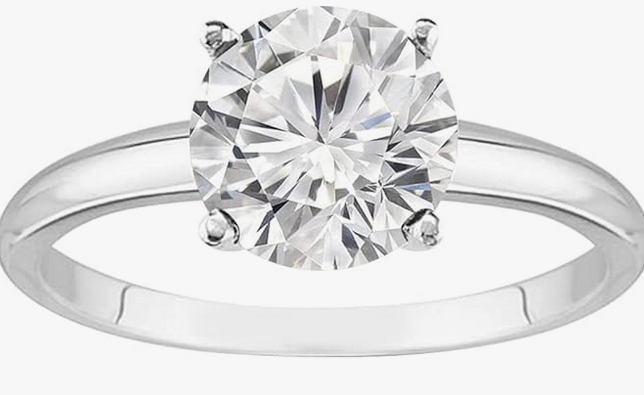
Houston Diamond District 1 to 10 Carat 14K White Gold IGI Certified Lab Grown Diamond Engagement Ring, Round Cut Solitaire, 4-Prong Setting (E–F Color VS2–SI1 Clarity)
0.5-10 Carat Lab Grown Diamond Solitaire Pendant Necklace, Round Cut Solitaire, 4-Prong Setting, Jewelry for Women (E-F, VS)
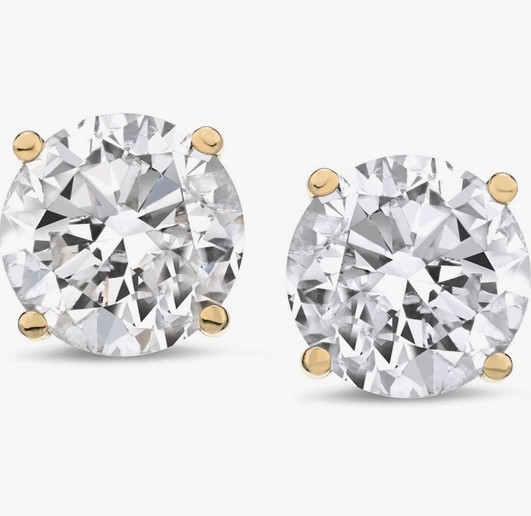
1 to 6 Carat LAB GROWN Solitaire Diamond Stud Earrings Round Cut 4 Prong Screw Back (F-G Color, VS1-VS2 Eye Clean Clarity)
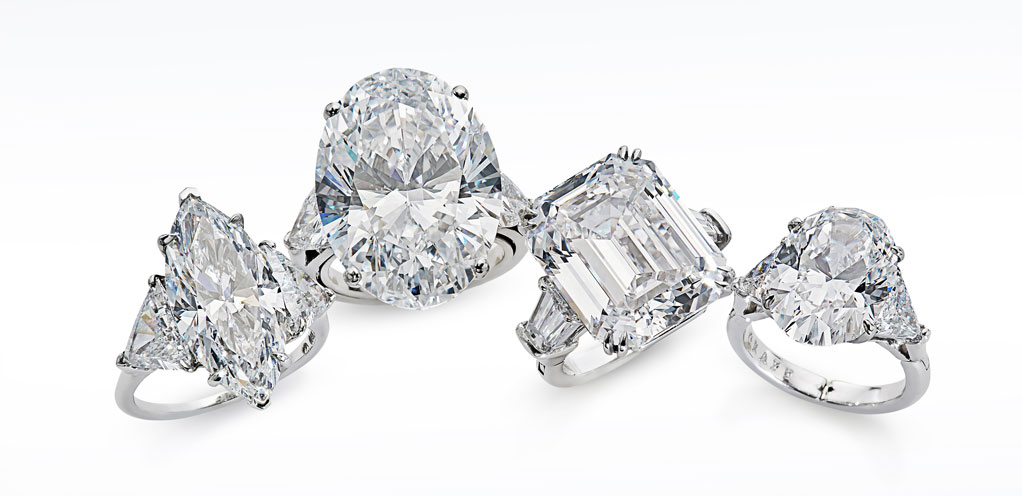
A 2 carat oval diamond ring is one of the most popular and visually compelling fine jewelry configurations available today. The oval cut’s elongated brilliance, combined with the impressive weight of two carats, creates a ring that is simultaneously larger in appearance than a round brilliant of equal weight, deeply flattering on virtually every finger shape, and positioned at a price point that represents exceptional value relative to the visual impact delivered. Whether worn as an engagement ring, an anniversary upgrade, or a significant self-purchase, a 2 carat oval diamond ring strikes a near-perfect balance between everyday elegance and genuinely impressive presence.
This comprehensive guide covers everything you need to know before purchasing a 2 carat oval diamond ring — from evaluating cut quality and the critical bowtie effect, to color and clarity standards specific to oval diamonds, natural versus lab-grown price comparisons, the best settings and metals, length-to-width ratio guidance, and how the oval compares to other popular shapes at two carats.
What Makes a 2 Carat Oval Diamond Ring Special?
The appeal of a 2 carat oval diamond ring begins with a simple and compelling fact: an oval diamond appears larger than a round brilliant of equal carat weight. A round brilliant 2 carat diamond measures approximately 8.1–8.2mm in diameter. A 2 carat oval diamond ring at a standard 1.50 length-to-width ratio measures approximately 10.5 x 7.0mm — creating a dramatically larger visual footprint on the finger despite weighing exactly the same amount. Many buyers find that a 2 carat oval diamond ring appears as impressive as a round brilliant of 2.5–3 carats, making it one of the best value-for-visual-impact choices in the entire fine jewelry market.
The oval cut also creates a distinctive elongating effect on the finger, visually extending it and making it appear longer and more slender — consistently flattering on virtually all hand shapes. This is one of the primary reasons the oval has become the fastest-growing shape in the engagement ring market over the past decade.
Finally, the oval is a brilliant-cut shape — its triangular and kite-shaped facets are designed to maximize light return, producing intense white brilliance, spectral fire, and the dynamic scintillation that makes brilliant-cut diamonds so captivating. A well-cut 2 carat oval diamond ring catches light beautifully with every movement of the hand.
Understanding Oval Cut Quality
Cut quality evaluation for a 2 carat oval diamond ring is more nuanced than for round brilliants because GIA and IGI do not issue Excellent cut grades for oval diamonds. Buyers must evaluate specific proportions and — most critically — view the stone in high-resolution video to assess the bowtie effect.
The Bowtie Effect: The Most Important Quality Consideration
The bowtie effect is the most important quality consideration for any 2 carat oval diamond ring, and it cannot be assessed from a grading certificate. The bowtie is a dark, bow-tie-shaped shadow that appears across the center of oval diamonds when light is not efficiently reflected back toward the viewer from the stone’s central facets. It is a function of the stone’s specific proportional geometry.
Nearly every oval diamond exhibits some degree of bowtie effect. The critical distinction is between a minimal bowtie — barely perceptible under any lighting condition — and a severe bowtie, which creates a prominent dark shadow across the center that significantly reduces the stone’s beauty. A 2 carat oval diamond ring with a severe bowtie will look dark and dull in the center, with brilliance concentrated only at the tips and sides rather than distributed evenly across the face.
The only way to assess the bowtie is to view the specific stone in high-resolution 360-degree video under both natural light and indoor artificial lighting. Request high-resolution video of the specific stone from any retailer before committing to any 2 carat oval diamond ring purchase. This is the single most important due diligence action for oval diamond buyers at any price level.
Length-to-Width Ratio: Defining the Oval’s Character
The length-to-width ratio defines the oval’s overall visual character. A 1.50 ratio — the most widely popular — produces the classic oval form at approximately 10.5 x 7.0mm at two carats. Ratios below 1.35 produce a fuller, more rounded oval. Ratios above 1.65 produce a slimmer, more elongated stone with maximum finger-elongating effect but a narrower appearance.
The most popular range for a 2 carat oval diamond ring is 1.40–1.55. This delivers a clearly and elegantly elongated stone without extremes in either direction. Within this range, personal preference is the deciding factor — some buyers strongly prefer the slightly fuller form of a 1.40–1.45 ratio while others find the sleeker elongation of a 1.50–1.55 ratio more beautiful.
Depth and Table Percentage
Ideal depth percentage for a 2 carat oval diamond ring is approximately 58–63%. Below 57%, the stone may appear slightly flat and can show a more pronounced bowtie. Above 65%, it appears smaller than its carat weight. Table percentage should ideally fall in the 53–63% range — excessively large tables above 65% reduce the visual interest of the oval’s brilliant facets.
Symmetry and Polish
Both should be Excellent or Very Good. Good symmetry in an oval creates an uneven outline — one side appears more rounded or more pointed than the other — which is immediately visible and significantly detracts from the stone’s beauty.
Color Considerations
Oval diamonds tend to show color more readily than round brilliants due to the way light interacts with their facets. For a 2 carat oval diamond ring in platinum or white gold, G through H color grades represent the practical sweet spot — near-colorless, appearing white in virtually all conditions. F color is also excellent for buyers wanting maximum assurance without the D or E premium.
One phenomenon specific to oval diamonds: color concentration at the tips. The pointed ends — where the stone is thinnest — can show slightly more color than the body of the stone. At H color in a two-carat oval, the tips may occasionally appear fractionally warmer than the center under certain lighting. For buyers particularly sensitive to color, targeting G or better provides the most consistently white appearance in white metal.
For yellow gold or rose gold settings, I and J color grades are entirely appropriate and offer meaningful price savings. The warm metal absorbs any slight warmth in a complementary way.
Clarity Standards
The recommended clarity range for a 2 carat oval diamond ring is VS2 through VS1. VS1 is reliably eye-clean in virtually all cases. VS2 is eye-clean in the majority of cases and represents outstanding value. SI1 requires careful per-stone evaluation — many SI1 ovals are eye-clean, but high-resolution imagery confirming this is essential. SI2 and below should be avoided.
One clarity consideration specific to ovals: inclusions near the tips are more visible than equivalent inclusions in the body of the stone, because the tips are thinner with fewer facets to conceal them. When evaluating the clarity plot on the grading certificate, pay close attention to the position of any inclusions noted.
Natural vs. Lab-Grown 2 Carat Oval Diamond Ring
Natural 2 Carat Oval Diamond Ring
A natural 2 carat oval diamond ring in excellent quality — G–H color, VS1–VS2 clarity, minimal bowtie, GIA or IGI certified — typically costs between $9,000 and $22,000 total including a quality setting. The oval shape’s 15–20% price discount versus round brilliants makes the natural oval one of the more accessible natural two-carat options.
Lab-Grown 2 Carat Oval Diamond Ring
A lab-grown 2 carat oval diamond ring in excellent quality — G–H color, VS1–VS2 clarity, minimal bowtie, IGI certified — typically costs between $1,500 and $4,500 total including a quality setting. Lab-grown oval diamonds are physically and chemically identical to natural oval diamonds and are certified by GIA and IGI using the same grading standards.
The combination of the oval shape’s visual size advantage and lab-grown pricing creates one of the most compelling value propositions in all of fine jewelry. A lab-grown 2 carat oval diamond ring at $2,500–$4,000 delivers a stone that appears as large or larger than a natural round brilliant costing $12,000–$22,000, with identical certified quality and completely indistinguishable visual appearance.
Best Settings for a 2 Carat Oval Diamond Ring
Classic Solitaire
A clean solitaire — four prongs positioned at the two tips and two sides in platinum or 18k white gold — is the most timeless choice for a 2 carat oval diamond ring. The solitaire allows the stone’s elongated form, brilliant light performance, and visual size advantage to express themselves fully without distraction. The four-prong oval solitaire has dominated fine jewelry aesthetics for the past decade and shows no signs of fading.
Petal Prong Setting
Softly curved, petal-shaped prongs create a more organic and romantic aesthetic for a 2 carat oval diamond ring. The curved prong tips echo the rounded form of the oval and create a delicate, feminine character that many buyers find more appealing than traditional angular prongs.
Halo Setting
A halo surrounding the oval center stone following its elongated contour dramatically amplifies apparent size — a two-carat oval with a well-designed halo can approach the visual impression of a plain three-carat oval. The halo also adds considerable overall brilliance, creating a ring that catches and scatters light from both the center stone and the surrounding accent diamonds simultaneously.
East-West Setting
An east-west setting orients the oval stone horizontally across the finger, creating a dramatically contemporary aesthetic for a 2 carat oval diamond ring. Mounted east-west, the 10.5mm length of a two-carat oval spans across the finger’s width, creating a bold, architectural statement completely unlike the traditional vertical orientation. East-west oval rings have become one of the defining fine jewelry trends of recent years.
Three-Stone Setting
The center stone flanked by two side stones — traditionally symbolizing the past, present, and future — creates a ring of significant total weight and visual impact. Matching oval side stones create harmonious unity; round brilliant or pear-shaped sides provide beautiful contrast. Well-proportioned side stones of 0.40–0.70 carats each are ideal in proportion for a two-carat oval center.
Hidden Halo Setting
A hidden halo positions small pavé accent diamonds directly beneath the girdle of the center stone — invisible from above but visible from the side and at angles. For a 2 carat oval diamond ring, this adds brilliance and perceived luxury without altering the clean lines of what appears from the top to be a solitaire.
Metal Choices
Platinum is the premier choice for a 2 carat oval diamond ring worn daily. Its superior hardness and density provide excellent protection for the two tips of the oval stone — the most delicate points susceptible to chipping — and platinum prongs at the tips wear significantly more slowly than white gold prongs.
18k white gold is an excellent alternative at lower cost with periodic rhodium replating. For warm metal aesthetics, 18k yellow gold and rose gold have both experienced enormous popularity growth. Yellow gold creates a fashionable warm aesthetic that suits I and J color oval stones particularly well. Rose gold’s pink warmth creates a distinctly romantic character that has made it one of the most popular metals for oval engagement rings.
Shape Comparisons at Two Carats
Round brilliant: ~8.1–8.2mm diameter — smaller face-up than the oval. Maximum concentrated brilliance. Typically costs 15–20% more than an equivalent oval.
Cushion: ~7.5 x 7.5mm — more compact. Intense romantic brilliance, no bowtie risk. Both shapes price similarly. The oval appears larger; the cushion reads as more vintage.
Pear: ~12.0 x 7.0mm — even more elongating, with a distinctive pointed tip requiring more protective prong placement. Pear and oval price similarly.
Emerald cut: ~9.0 x 6.5mm — step-cut hall-of-mirrors elegance rather than brilliant sparkle. Demands VS1+ clarity. Typically prices 15–25% below an equivalent oval.
Princess: ~7.0 x 7.0mm — significantly smaller face-up than the oval. The oval’s visual size advantage over the princess at equal carat weight is pronounced and significant.
Price Guide
Natural 2 carat oval diamond ring prices:
- D–F color, VVS1–VVS2, minimal bowtie, GIA or IGI: $18,000–$35,000+ total
- G–H color, VS1–VS2, minimal bowtie, GIA or IGI: $9,000–$22,000 total — recommended sweet spot
- I–J color, SI1, careful selection: $4,500–$9,500 total
Lab-grown 2 carat oval diamond ring prices:
- D–F color, VVS1–VVS2, minimal bowtie, IGI: $3,000–$6,500 total
- G–H color, VS1–VS2, minimal bowtie, IGI: $1,500–$4,500 total — optimal value tier
- I–J color, VS2–SI1: $800–$2,500 total with careful per-stone selection
Care and Maintenance
Clean the ring regularly using warm water, mild dish soap, and a soft-bristled toothbrush. Pay particular attention to the tips of the oval where prongs accumulate residue. Remove before swimming, exercising, and manual activity. Have the ring professionally inspected every six months, asking the jeweler to specifically assess prong integrity at both tips — the most common source of loose stone situations in oval rings. For stacking with a wedding band, a curved or contoured band specifically designed to nestle against the oval’s sides creates the cleanest and most comfortable fit.
Frequently Asked Questions
How big is a 2 carat oval diamond ring?
A 2 carat oval diamond ring typically features a center stone measuring approximately 10.5 x 7.0mm at a 1.50 L/W ratio — significantly larger in face-up appearance than a round brilliant of equal weight. A longer 1.60 ratio produces approximately 11.0 x 7.0mm; a fuller 1.40 ratio produces approximately 10.0 x 7.2mm.
How much does a 2 carat oval diamond ring cost?
A natural 2 carat oval diamond ring in excellent quality (G–H color, VS1–VS2 clarity, minimal bowtie, GIA or IGI certified) typically costs $9,000–$22,000 total. A lab-grown 2 carat oval diamond ring of equivalent specifications typically costs $1,500–$4,500 total. Oval diamonds typically cost 15–20% less than equivalent round brilliants.
How do I assess the bowtie in a 2 carat oval diamond ring?
The bowtie can only be assessed by viewing the specific stone via high-resolution 360-degree video under natural and incandescent lighting. A minimal bowtie will be barely perceptible as the stone rotates; a severe bowtie will show a clearly visible dark shadow across the center under multiple lighting conditions.
What length-to-width ratio is best for a 2 carat oval diamond ring?
The 1.45–1.55 range is most widely preferred — distinctly elongated and elegant without being too narrow. The 1.40–1.60 range encompasses most buyers’ preferences. Buyers wanting maximum finger elongation may prefer 1.55–1.65; those who prefer a fuller oval may find 1.35–1.45 more appealing.
Is a lab-grown 2 carat oval diamond ring a real diamond?
Yes — completely and unambiguously. A lab-grown oval diamond is chemically and physically identical to a natural oval diamond. A lab-grown 2 carat oval diamond ring is certified by GIA or IGI using the same grading standards. The only difference is geological origin.
Final Thoughts
A 2 carat oval diamond ring is one of the most beautiful and practically compelling choices in contemporary fine jewelry — combining superior apparent size, flattering finger elongation, excellent brilliant-cut sparkle, and a price advantage versus round brilliants at equivalent quality grades. Whether you choose a natural stone for its geological heritage or a lab-grown stone for its extraordinary value, the principles of a wise purchase are consistent: assess the bowtie carefully through high-resolution video, target the 1.45–1.55 length-to-width ratio range, choose VS1 or VS2 clarity, select G–H color for white metal settings, and insist on GIA or IGI certification.
For more expert guidance on diamond shapes, carat weights, and the full spectrum of fine diamond jewelry, visit the Carat Diamond homepage.