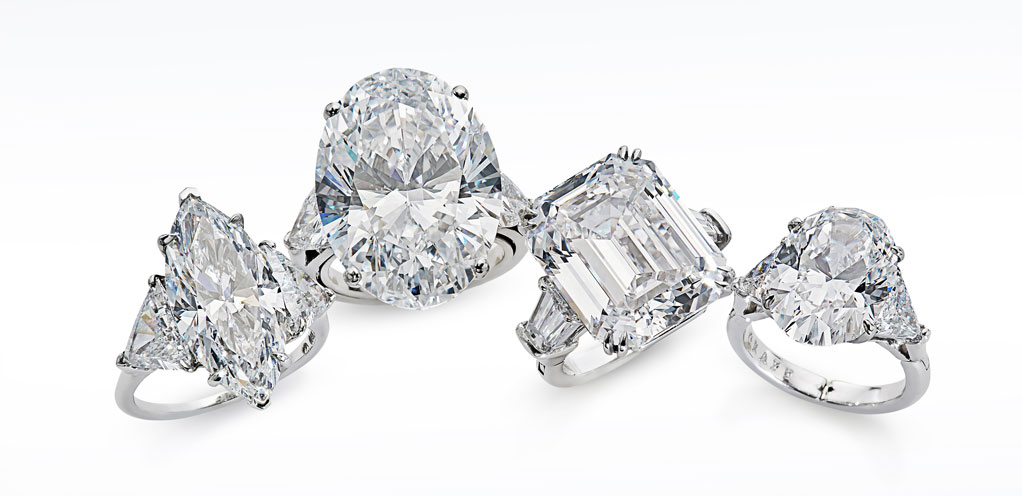
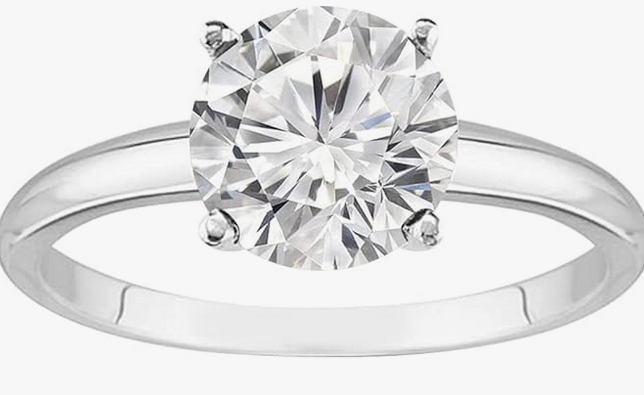
Houston Diamond District 1 to 10 Carat 14K White Gold IGI Certified Lab Grown Diamond Engagement Ring, Round Cut Solitaire, 4-Prong Setting (E–F Color VS2–SI1 Clarity)
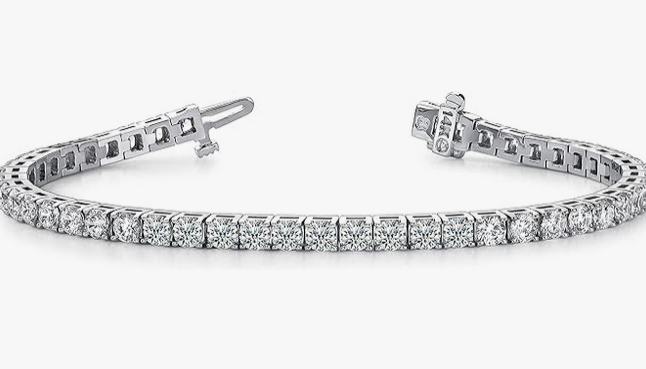
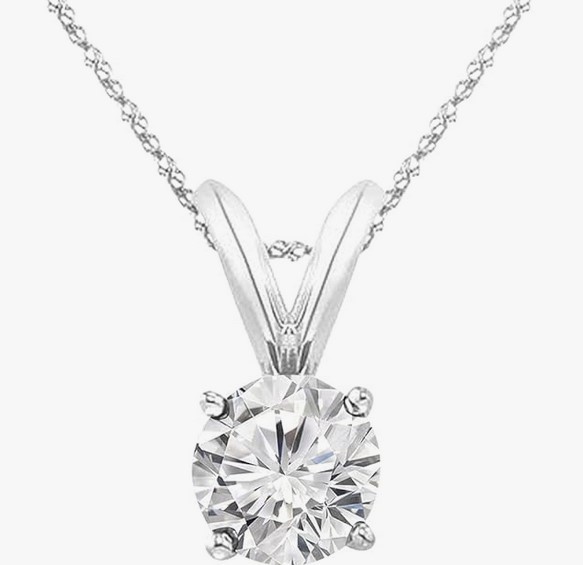
0.5-10 Carat Lab Grown Diamond Solitaire Pendant Necklace, Round Cut Solitaire, 4-Prong Setting, Jewelry for Women (E-F, VS)
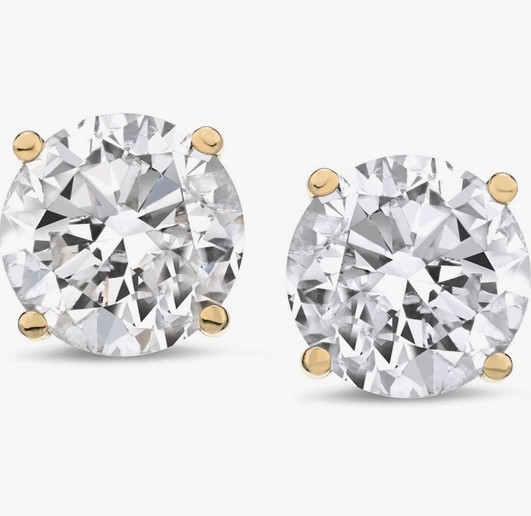
1 to 6 Carat LAB GROWN Solitaire Diamond Stud Earrings Round Cut 4 Prong Screw Back (F-G Color, VS1-VS2 Eye Clean Clarity)
A 1 carat diamond is the most iconic and widely purchased diamond weight in the world. Representing the perfect balance between size, beauty, and value, a 1 carat diamond has long been the benchmark against which all other diamond purchases are measured. It is the weight most commonly associated with engagement rings, the standard referenced in jewelry advertising, and the goal for millions of buyers worldwide. Yet despite its universal familiarity, purchasing one well requires genuine knowledge — because within this single weight category, quality varies enormously and prices range from under $1,000 to over $15,000 for the exact same carat weight.
This comprehensive guide covers everything you need to know about a 1 carat diamond — how it looks across different shapes, how the Four Cs determine its beauty and price, the natural versus lab-grown decision, what to expect at different price tiers, where to use it, and how to ensure you are making the best possible purchase decision.
What Is a 1 Carat Diamond?
A 1 carat diamond weighs exactly 200 milligrams — one fifth of a gram. The carat weight system is globally standardized: one carat equals 200 milligrams, subdivided into 100 points. A 0.50 carat stone is often called a 50-pointer; at one carat, a stone is a 100-pointer. This standardized system ensures that a 1 carat diamond weighs exactly the same regardless of where it is purchased, who certifies it, or what shape it takes.
What it looks like in terms of physical dimensions depends on its shape. A round brilliant 1 carat diamond measures approximately 6.3–6.5mm in diameter — roughly the size of a small pea or standard pencil eraser. An oval measures approximately 8.0 x 5.5mm. An emerald cut measures approximately 7.0 x 5.0mm. A cushion cut measures approximately 5.8 x 5.8mm. These dimensions vary because each shape distributes the same weight differently across depth and surface area.
The 1 carat diamond holds its iconic status for good reason. It is large enough to be clearly visible and beautiful in any jewelry setting, yet proportionate enough for comfortable everyday wear on virtually any hand size. It represents a meaningful purchase without requiring the extraordinary financial commitment of larger stones, and it is available across a broad enough quality range to suit buyers at many budget levels.
The Four Cs for a 1 Carat Diamond
The Four Cs — cut, color, clarity, and carat — remain the universal framework for evaluating any diamond. Understanding how each applies specifically at this weight helps buyers make confident decisions and avoid common mistakes.
Cut: The Single Most Important Factor
For a 1 carat diamond, cut quality is the most impactful decision a buyer can make. A well-cut stone will sparkle with remarkable intensity — producing brilliant flashes of white light, fire in spectral colors, and the dancing scintillation pattern that makes diamonds so captivating. A poorly cut stone of the same weight, color, and clarity will appear significantly smaller, darker, and less beautiful — often indistinguishable in appeal from a stone of half its price.
For a round brilliant 1 carat diamond, the target is an Excellent cut grade from GIA or a Triple Excellent from IGI — Excellent for cut, symmetry, and polish combined. This grade ensures proportions are optimized for maximum light performance. At one carat, the price difference between Excellent and Very Good cut is often just a few hundred dollars — a small premium for a dramatic improvement in beauty.
For fancy shapes — oval, cushion, pear, radiant, emerald, marquise, princess — standardized cut grades do not exist. Instead, evaluate key proportions directly from the grading certificate: depth percentage, table percentage, and length-to-width ratio. For ovals and pears, watch for bowtie effect. Request video of the specific stone where possible. Among all the fancy shapes, the oval has become particularly popular at one carat because it appears larger than a round of equal weight due to its elongated surface area.
Color: Recommended Grades
At one carat, color is somewhat less visually critical than at larger weights, but it remains an important consideration. The recommended color range for a 1 carat diamond in a platinum or white gold setting is G through J. G and H grades are near-colorless and appear white in virtually all conditions — excellent choices that provide real savings versus D–F grades without visible compromise. I and J color grades are also widely used at this weight in white settings — these carry a trace of warmth that is very difficult to detect to the naked eye, particularly once set in metal.
For buyers who want absolute color peace of mind, D, E, and F grades represent the finest color quality available. However, the price premium for colorless versus G–H in a 1 carat diamond is significant and rarely justified by a visible difference for most buyers. For a stone set in yellow gold or rose gold, I through K color grades work beautifully — the warm metal absorbs any warmth in the stone naturally, making colorless grades entirely unnecessary.
Clarity: What Grade Do You Need?
The clarity target is the same as at all sizes: find an eye-clean stone. The good news is that achieving an eye-clean result is somewhat easier at one carat than at two or three carats, because inclusions are less visible at smaller sizes.
The most practical clarity range for a 1 carat diamond is VS2 through SI1. VS2 stones are reliably eye-clean and offer excellent value versus VS1 and VVS grades. SI1 stones are often eye-clean at this weight — but require careful per-stone review of high-resolution imagery before purchase, as some have inclusions in visible positions. VS1, VVS1, and VVS2 are excellent choices and provide complete peace of mind, though they command higher prices for differences the naked eye typically cannot detect. Flawless grades are rarely justified — the premium pays for purity indistinguishable without magnification.
Carat: Threshold Pricing and the “Just Under” Strategy
One nuance that savvy buyers understand is threshold pricing. Diamonds at exactly 1.00 carats and above command a significant price premium compared to stones just below — typically 0.90–0.99 carats. A 0.95 carat stone of identical cut, color, and clarity will cost meaningfully less than a 1.00 carat example, and the visual difference is essentially imperceptible — less than 0.1mm in diameter for a round brilliant. This “just under one carat” strategy is one of the best value approaches in diamond purchasing and deserves serious consideration for any budget-conscious buyer.
Natural vs. Lab-Grown 1 Carat Diamond
The choice between a natural and a lab-grown 1 carat diamond is one of the most significant decisions modern buyers face, and particularly meaningful at this weight because the price difference is very substantial.
Natural 1 Carat Diamond
A natural 1 carat diamond was formed in the Earth’s mantle under extreme heat and pressure over billions of years. While not as rare as three or five carat natural stones, natural one-carat examples still require significant mining output to produce and carry the cultural cachet of a naturally formed gemstone. In excellent quality — G–H color, VS1–VS2 clarity, Excellent cut, GIA certified — a natural 1 carat diamond typically costs between $3,500 and $8,000. D–F color, VVS1–VVS2 examples with Excellent cut can reach $8,000–$15,000 or more.
Lab-Grown 1 Carat Diamond
A lab-grown 1 carat diamond offers a stone that is chemically, physically, and optically identical to a natural one at a dramatically lower price. Produced via HPHT or CVD processes, lab-grown stones are certified by GIA and IGI using identical grading standards. In excellent quality — G–H color, VS1–VS2 clarity, Excellent cut, IGI certified — a lab-grown 1 carat diamond typically costs between $400 and $1,200. This represents a price reduction of 80–90% compared to equivalent natural stones, making truly excellent quality accessible at price points that were previously impossible. For buyers whose priority is maximum diamond beauty per dollar, the lab-grown option delivers extraordinary value with visually identical results.
Size Across Different Shapes
Understanding how a 1 carat diamond appears across different shapes helps buyers choose the shape that maximizes visual impact for their setting and personal preference.
- Round brilliant: ~6.3–6.5mm diameter. The classic cut — maximum brilliance, universal flattery, and the most popular choice at this weight by a wide margin.
- Oval: ~8.0 x 5.5mm. Appears noticeably larger than a round of equal weight. The fastest-growing fancy shape at one carat due to its elongating effect on the finger.
- Cushion: ~5.8 x 5.8mm (square) or 6.5 x 5.5mm (rectangular). Romantic, soft-edged brilliance extremely popular for engagement rings. Available in chunky and crushed-ice optical styles.
- Emerald cut: ~7.0 x 5.0mm. Hall-of-mirrors step-cut elegance — VS1 or higher clarity recommended as the step facets make inclusions more visible in a 1 carat diamond of this shape.
- Pear: ~9.0 x 5.5mm. Appears significantly larger than a round of equal weight. Distinctive, fashion-forward, with strong recent popularity growth.
- Marquise: ~10.5 x 5.5mm. Distributes weight across more surface area than any other shape — appears largest per carat with a dramatic elongated, regal silhouette.
- Princess: ~5.5 x 5.5mm. Intense brilliance in a modern geometric square form — the most popular non-round shape.
- Radiant: ~6.0 x 5.0mm. Brilliant-cut sparkle in a versatile rectangular form.
- Asscher: ~5.8 x 5.8mm. Square step cut with a distinctive art deco aesthetic — VS1 or higher clarity strongly recommended.
Where to Use a 1 Carat Diamond
Engagement Rings
The most popular center stone weight for engagement rings worldwide. Set in a solitaire, halo, three-stone, or pavé band design, a 1 carat diamond creates an engagement ring that is beautiful, proportionate, and meaningful. The range of ring settings available at this size is greater than for any other weight — virtually every jeweler carries extensive inventory here, offering buyers maximum choice and price competition.
Stud Earrings
A pair of stud earrings featuring two one-carat stones — a total of 2 carats combined — represents one of the most classic fine jewelry purchases. Round brilliant or cushion cut studs are timeless, appropriate for any occasion, and among the most rewarding pieces a jewelry lover can own. Lab-grown options make 2 carat total weight stud earrings accessible at very reasonable price points.
Pendants and Necklaces
A solitaire pendant featuring a one-carat stone is an elegant and wearable choice for everyday fine jewelry. A bezel-set example is particularly durable and well-suited to daily wear. Round and oval shapes work especially well in pendant settings where the stone hangs naturally and catches light from multiple angles.
Pricing Guide
Natural 1 carat diamond prices:
- D–F color, VVS1–VVS2, Excellent cut, GIA: $8,000–$15,000+
- G–H color, VS1–VS2, Excellent cut, GIA: $3,500–$8,000 — recommended sweet spot
- I–J color, SI1, Excellent cut: $1,500–$3,500 with careful per-stone selection
Lab-grown 1 carat diamond prices:
- D–F color, VVS1–VVS2, Excellent cut, IGI: $600–$1,800
- G–H color, VS1–VS2, Excellent cut, IGI: $400–$1,200 — optimal value tier
- I–J color, SI1: $200–$500 with careful selection
Setting costs vary: simple solitaire settings add $300–$1,500; halo or three-stone settings add $600–$3,000+ depending on complexity and metal choice.
Fluorescence
Fluorescence is less controversial at one carat than at larger weights. At this size, the visual impact is generally minimal, and Strong blue fluorescence is less likely to cause hazy appearance. In G–J color grade stones, Strong blue fluorescence can actually improve apparent color in daylight by partially canceling yellow warmth — a recognized value strategy among knowledgeable buyers seeking to optimize budget. When evaluating, request images in both standard and UV lighting conditions if Strong fluorescence is noted on the certificate.
The “Just Under” Strategy in Practice
Practically speaking, the 0.90–0.99 carat range deserves serious consideration for any buyer with a defined budget. A 0.92 carat G/VS2/Excellent round brilliant certified by GIA will appear virtually identical face-up to a 1.02 carat stone of the same grades, yet it may cost $500–$1,500 less. When the visual difference is imperceptible and the quality difference is zero, the decision is purely financial. The money saved can fund a significantly better setting, a wedding cost, or simply remain in savings — a genuinely meaningful difference on a purchase of this significance.
The 1 Carat Diamond as a Starting Point
Many couples choose a beautiful one-carat engagement ring at a price point fitting their current budget, with the intention of upgrading to a larger center stone on a significant anniversary. The stone provides years of daily beauty and meaning, and its widespread availability in trade-in programs makes upgrading practical and straightforward.
For buyers who choose lab-grown at one carat, the economics are particularly compelling: an excellent quality lab-grown stone for $600–$1,200 allows significant budget to be invested in an exceptional setting, a honeymoon, a home down payment, or any other priority. The stone delivers the full visual and emotional impact of a beautiful one-carat diamond without financial strain.
Certification: Always GIA or IGI
GIA and IGI certification is non-negotiable for any purchase above a few hundred dollars. A GIA grading report for a natural 1 carat diamond covers cut grade, color grade, clarity grade, carat weight, fluorescence, and proportions — providing the globally recognized gold standard of quality verification. IGI grading reports are the leading certification standard for lab-grown stones and fully reliable for both categories. Both certificates include a unique laser inscription permanently linking the stone to its certificate — essential for insurance documentation, resale, and authentication. Always verify the certificate number independently on the GIA or IGI website before completing any transaction.
Care and Insurance
Clean the stone regularly using warm water, mild dish soap, and a soft-bristled toothbrush. Rinse thoroughly and pat dry with a lint-free cloth. Remove the piece before swimming, exercising, applying cosmetics, and before manual activities. Store separately from other jewelry to prevent scratches. Annual professional inspection is appropriate for a 1 carat diamond in regular daily wear. Any purchase of $1,000 or more deserves jewelry insurance consideration — specialized coverage protects the full replacement value for loss, theft, accidental damage, and mysterious disappearance at approximately 1–2% of insured value annually.
Frequently Asked Questions
How much does a 1 carat diamond cost?
A natural 1 carat diamond in excellent quality (G–H color, VS1–VS2, Excellent cut, GIA certified) typically costs $3,500–$8,000. A lab-grown 1 carat diamond of identical quality typically costs $400–$1,200. Price depends on cut, color, clarity, shape, certification, and whether natural or lab-grown.
How big is a 1 carat diamond?
A round brilliant 1 carat diamond measures approximately 6.3–6.5mm in diameter — roughly the size of a pencil eraser. Elongated shapes like oval and pear appear larger due to their expanded surface area. The exact dimensions vary by shape because carat measures weight, not physical size.
What is the best cut for a 1 carat diamond?
For a round brilliant, Excellent cut from GIA or Triple Excellent from IGI is the standard to target. Cut quality has greater impact on beauty than any other single factor at this weight. For fancy shapes, evaluate individual proportions from the grading certificate and request high-resolution video where possible.
Is a lab-grown 1 carat diamond a real diamond?
Yes — absolutely. A lab-grown 1 carat diamond is chemically and physically identical to a mined natural diamond. Both are certified by GIA or IGI using the same grading standards. The only difference is origin: geological versus laboratory.
What color grade is best for a 1 carat diamond?
For platinum or white gold settings, G–H color is the recommended sweet spot — near-colorless, appearing white in all conditions, and offering real savings versus D–F grades. I–J color works well in yellow gold or rose gold. D–F color is available for buyers wanting the absolute finest.
What clarity grade do I need for a 1 carat diamond?
VS2 is the practical minimum for a reliably eye-clean result at this weight. SI1 can also be eye-clean but requires careful per-stone evaluation. VS1 and VVS grades provide complete peace of mind at higher price. Flawless grades are rarely necessary.
Should I buy natural or lab-grown?
If geological origin, cultural significance, and potential resale value matter to you, the natural option is the right choice. If maximum beauty per dollar is your priority — the best possible cut, color, and clarity for your budget — the lab-grown option delivers extraordinary value. The visual result is identical.
Final Thoughts
A 1 carat diamond remains the most beloved and meaningful diamond weight in the world — the benchmark of fine jewelry, the heart of countless engagement rings, and a symbol of enduring beauty and commitment. Whether natural or lab-grown, round brilliant or oval, platinum solitaire or halo ring — the principles for purchasing well are consistent: prioritize cut quality above all other factors, insist on GIA or IGI certification, target eye-clean clarity, and choose color grades appropriate for your intended metal setting.
A beautifully cut, well-graded 1 carat diamond will deliver brilliant light performance and emotional resonance that lasts a lifetime. Take your time, use the knowledge in this guide, and choose with confidence.
For more expert guidance on diamond carat weights, engagement rings, and the full spectrum of fine diamond jewelry, visit the Carat Diamond homepage.