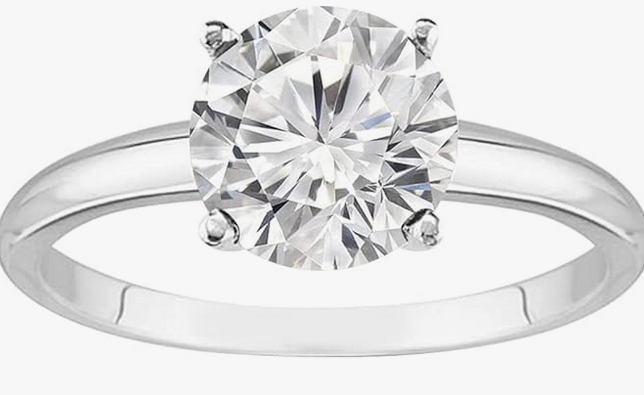
Houston Diamond District 1 to 10 Carat 14K White Gold IGI Certified Lab Grown Diamond Engagement Ring, Round Cut Solitaire, 4-Prong Setting (E–F Color VS2–SI1 Clarity)
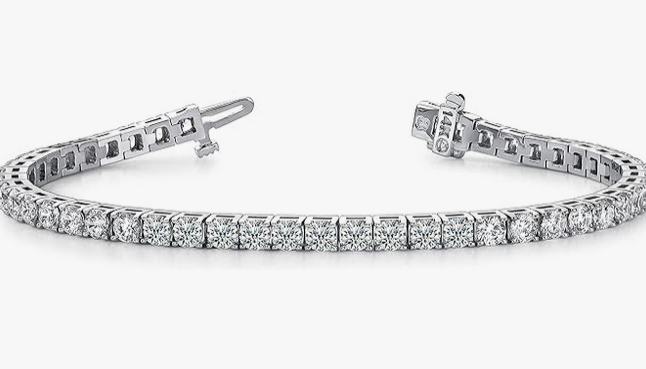
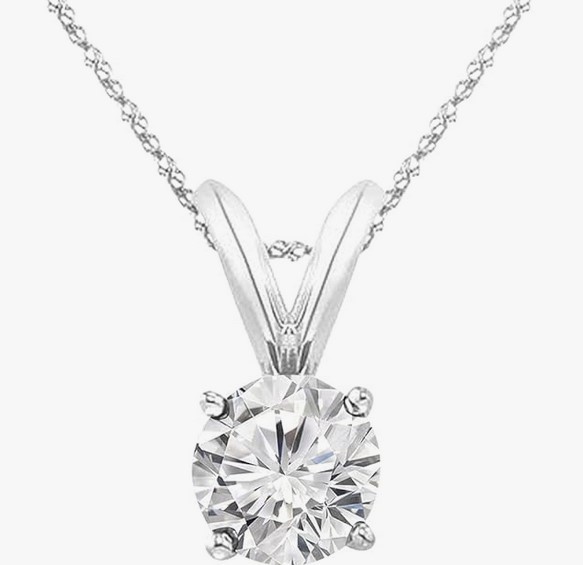
0.5-10 Carat Lab Grown Diamond Solitaire Pendant Necklace, Round Cut Solitaire, 4-Prong Setting, Jewelry for Women (E-F, VS)
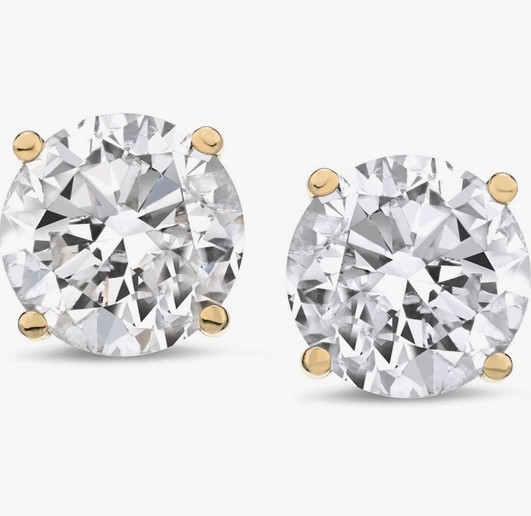
1 to 6 Carat LAB GROWN Solitaire Diamond Stud Earrings Round Cut 4 Prong Screw Back (F-G Color, VS1-VS2 Eye Clean Clarity)
A 1.5 carat diamond ring sits at one of the most appealing sweet spots in fine jewelry. Larger and more impressive than the average one-carat engagement ring, yet far more accessible in price than a two or three carat stone, a 1.5 carat diamond ring offers a compelling combination of genuine visual presence and practical value. At one and a half carats, a round brilliant diamond measures approximately 7.3–7.5mm in diameter — noticeably bigger than a standard one-carat stone and immediately striking on the finger without the significant premium that larger weights command.
This comprehensive guide covers everything a buyer needs to know about a 1.5 carat diamond ring — how the Four Cs apply at this weight, what to expect across different shapes, the natural versus lab-grown decision, price ranges at every quality tier, setting and metal choices, and how to make the most informed possible purchase.
What Does a 1.5 Carat Diamond Ring Look Like?
The first question most buyers have is straightforward: how does a 1.5 carat diamond ring actually appear on the hand? A round brilliant center stone at one and a half carats measures approximately 7.3–7.5mm in diameter. To put that in context, a standard one-carat round brilliant measures approximately 6.4mm — the jump to 1.5 carats adds nearly a millimeter across, which is visually significant and immediately noticeable.
On an average ring size (6–7), this creates a beautiful and clearly substantial presence that reads as notably larger than a one-carat stone without being overwhelming. It is proportionate to virtually any finger size and sits comfortably for daily wear in most settings. For buyers who want a ring that clearly exceeds the everyday one-carat norm without the price commitment of two carats, a 1.5 carat diamond ring is one of the most popular choices in fine jewelry retail.
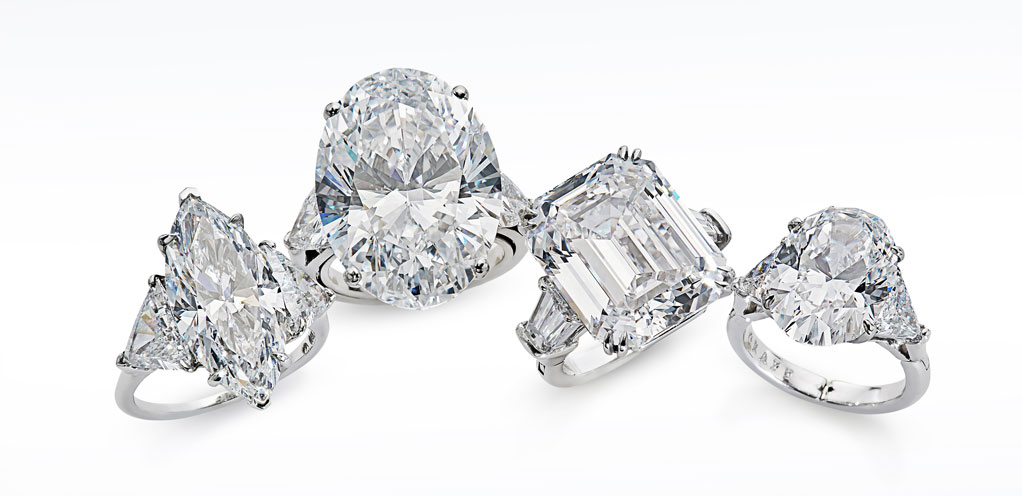
Shape significantly affects visual impression. An oval 1.5 carat diamond ring typically measures approximately 9.5 x 6.5mm — elongated, elegant, and appearing larger than a round of equal weight. An emerald cut at this weight measures approximately 8.0 x 6.0mm and creates a sophisticated, architectural look quite different from the sparkle of a brilliant cut. A cushion cut measures approximately 6.8 x 6.8mm, offering soft-edged romantic brilliance. A pear at approximately 10.0 x 6.0mm stretches beautifully across the finger with a distinctive dramatic silhouette.
The Four Cs at One and a Half Carats
At this weight, the Four Cs — cut, color, clarity, and carat — each play meaningful roles in determining beauty and price. Understanding their relative importance helps buyers allocate budget most effectively.
Cut Quality: The Foundation of Every 1.5 Carat Diamond Ring
Cut quality is the most critical quality decision for any 1.5 carat diamond ring. A beautifully cut stone at this weight produces extraordinary light performance — brilliant white flashes, spectral fire, and the captivating scintillation that makes diamonds irresistible. A poorly cut stone will look noticeably smaller, darker, and less impressive than a well-cut one of the same weight — a deeply disappointing result at this price level.
For a round brilliant 1.5 carat diamond ring, an Excellent cut grade from GIA or Triple Excellent from IGI is the standard to target. The price difference between Excellent and Very Good cut at this weight is typically a few hundred to a thousand dollars — a modest premium for a dramatically superior result. Never accept a Good or Fair cut grade at this weight.
For fancy shapes — oval, cushion, pear, radiant, emerald, marquise, princess — standardized cut grades are not available. Evaluate proportions directly: depth percentage, table percentage, and length-to-width ratio. For ovals and pears, assess for bowtie effect. Request high-resolution video of the specific stone before committing, as video reveals light performance in ways that photographs cannot.
Color: The Right Grades
At one and a half carats, color is moderately more visible than at one carat but somewhat less critical than at two or three carats. The recommended color range for a 1.5 carat diamond ring in a platinum or white gold setting is G through I. G and H color grades are near-colorless and appear bright white in virtually all lighting — excellent choices that provide meaningful savings versus D–F grades without visible compromise. I color is workable for budget-conscious buyers but should be evaluated carefully, as slight warmth can occasionally be detectable in white settings at this size.
For buyers who want complete color confidence, D through F grades are available and represent the finest color tier. The price premium for colorless versus G–H is significant — typically $800–$2,000 for a natural stone — and the visual difference in normal wear is minimal. For most buyers, G or H color represents the optimal balance. For yellow gold or rose gold settings, I through K color grades are entirely appropriate, as the warm metal absorbs any warmth in the stone naturally.
Clarity: Eye-Clean Standards
The optimal clarity range for a 1.5 carat diamond ring is VS2 through VS1. VS2 stones are reliably eye-clean in the vast majority of cases at this weight and offer excellent value. VS1 provides additional peace of mind at a modest premium. SI1 stones are frequently eye-clean at one and a half carats, making them worth considering for budget-conscious buyers — but careful per-stone review using high-resolution video is essential. SI2 and below should be avoided, as inclusions become more apparent at this size.
For step-cut shapes — emerald cut and Asscher cut — target VS1 or better. The step-cut faceting pattern is far less forgiving of inclusions than brilliant cuts. A VS1 emerald cut at this weight will look virtually flawless to the naked eye; an SI1 example may show inclusions clearly.
Natural vs. Lab-Grown 1.5 Carat Diamond Ring
The choice between natural and lab-grown is one of the most consequential decisions at this weight, and the price difference between equally graded options is very significant.
Natural 1.5 Carat Diamond Ring
A natural 1.5 carat diamond ring features a stone formed over billions of years in the Earth’s mantle. Natural one-and-a-half carat diamonds are meaningfully rarer than one-carat stones, contributing to a notable price premium. In excellent quality — G–H color, VS1–VS2 clarity, Excellent cut, GIA certified — the diamond alone typically costs between $6,000 and $15,000, with the total ring price including a quality setting ranging from approximately $7,000 to $18,000.
At the upper quality end — D–F color, VVS1–VVS2 clarity, Excellent cut — a natural 1.5 carat diamond ring can cost $15,000–$30,000 or more. At the value end — I–J color, SI1 clarity — total prices start around $3,500–$6,000 with careful per-stone selection. Natural diamonds carry the cultural weight of geological rarity and are associated with lasting value.
Lab-Grown 1.5 Carat Diamond Ring
A lab-grown 1.5 carat diamond ring offers a stone that is physically and optically identical to its natural counterpart at a dramatically lower price. Produced via HPHT or CVD processes and certified by GIA and IGI using identical grading standards, lab-grown stones are indistinguishable from natural diamonds without specialized equipment.
In excellent quality — G–H color, VS1–VS2 clarity, Excellent cut, IGI certified — the diamond alone typically costs between $600 and $2,000, with a complete ring including a quality setting ranging from approximately $1,200 to $4,000. This represents a price reduction of 80–90% versus a natural stone of equivalent grades. For buyers whose priority is maximizing diamond beauty within a specific budget, the lab-grown option allows access to excellent cut, high color, and VS2 or better clarity at a price that would buy a significantly lower-quality natural stone. The visual and physical experience is identical.
Best Settings for a 1.5 Carat Diamond Ring
Solitaire Setting
The solitaire is the most timeless choice for a 1.5 carat diamond ring. A single center stone on a clean band — platinum, 18k white gold, or yellow gold — allows the diamond to take full visual focus. At this weight, a well-cut solitaire needs no additional design elements to be beautiful and striking. A four-prong design maximizes light entering the stone; a six-prong provides additional security. Cathedral solitaires lift the center stone for additional presence; low-profile designs sit closer to the finger for everyday comfort.
Halo Setting
A halo setting surrounds the center stone with a ring of smaller pavé-set accent diamonds, amplifying the perceived size of the center and adding significant overall brilliance. This is particularly effective for a 1.5 carat diamond ring because a halo-set stone at this weight can appear as large as a plain 2 carat stone. A double halo creates even more visual mass and sparkle.
Three-Stone Setting
A three-stone design places the center between two flanking side diamonds, classically symbolizing past, present, and future. Well-proportioned side stones of 0.25–0.50 carats each create a ring of notable combined diamond weight and visual balance. A perennial favorite for anniversary pieces and relationship milestones in a 1.5 carat diamond ring.
Pavé Band Setting
A pavé or micropavé band adds continuous sparkle along the full shank, creating a design where the entire ring appears encrusted with light. One of the most popular settings for buyers who want maximum overall brilliance in a 1.5 carat diamond ring.
Vintage and Milgrain Settings
Vintage-inspired settings featuring milgrain edging, filigree metalwork, and art deco geometric patterns create a distinctive character for a 1.5 carat diamond ring that appeals strongly to buyers drawn to heritage aesthetics. Cushion and oval centers work particularly well in vintage settings, as do pear and marquise shapes.
Metal Choices
Platinum is the premier metal choice for a 1.5 carat diamond ring. Its naturally white color enhances colorless and near-colorless diamonds, requires no rhodium plating over time, and offers unmatched durability. 18k white gold is an excellent alternative at lower cost with periodic rhodium replating. For warm metal aesthetics, 18k yellow gold and rose gold create beautiful contrast with fancy shaped centers — yellow gold pairs exquisitely with oval, cushion, and pear cuts, particularly for stones in the G–I color range. Two-tone designs — platinum head with yellow gold band — are increasingly popular for buyers who want the best of both aesthetics.
Shape Guide at One and a Half Carats
- Round brilliant: ~7.3–7.5mm diameter. Maximum brilliance, universally flattering, widest selection of settings — the most popular choice for a 1.5 carat diamond ring.
- Oval: ~9.5 x 6.5mm. Appears larger than a round, creates an elongating finger effect — can look nearly as large as a plain 2 carat round stone.
- Cushion: ~6.8 x 6.8mm (square) or 7.5 x 6.5mm (rectangular). Romantic, intensely brilliant, soft-edged character in vintage and contemporary settings alike.
- Emerald cut: ~8.0 x 6.0mm. Hall-of-mirrors architectural elegance — VS1+ clarity required for a 1.5 carat diamond ring at this shape.
- Pear: ~10.0 x 6.0mm. Dramatic and elongating with a distinctive pointed silhouette — fashionable and increasingly popular.
- Marquise: ~11.5 x 5.8mm. Most elongating shape at this weight with the largest apparent size per carat.
- Princess: ~6.0 x 6.0mm. Modern geometric brilliance — popular for contemporary engagement ring designs.
- Radiant: ~6.5 x 5.5mm. Brilliant-cut sparkle in a rectangular form combining visual character of round and emerald cut.
Price Guide
Natural 1.5 carat diamond ring prices:
- D–F color, VVS1–VVS2, Excellent cut, GIA: $15,000–$30,000+ total
- G–H color, VS1–VS2, Excellent cut, GIA: $7,000–$18,000 total — recommended sweet spot
- I–J color, SI1, Excellent cut: $3,500–$7,000 total with careful per-stone selection
Lab-grown 1.5 carat diamond ring prices:
- D–F color, VVS1–VVS2, Excellent cut, IGI: $2,000–$4,500 total
- G–H color, VS1–VS2, Excellent cut, IGI: $1,200–$4,000 total — optimal value tier
- I–J color, SI1: $700–$1,500 total with careful selection
Setting costs add $400–$4,000+ depending on design complexity, metal type, and accent diamond specifications.
How a 1.5 Carat Diamond Ring Compares to Adjacent Weights
Versus a one-carat ring, a 1.5 carat diamond ring delivers approximately a millimeter more diameter in a round brilliant — visible and meaningful on the hand — and roughly 50% more face-up surface area, which creates a noticeably more substantial look. The price premium for natural stones is typically 60–90% more than an equivalent one-carat stone. For lab-grown stones, the premium is proportionally similar but far smaller in absolute terms — often just a few hundred dollars more.
Versus a two-carat ring, a 1.5 carat diamond ring costs significantly less — typically 40–60% less for natural stones — while delivering substantial visual presence that most casual observers would identify as a notably impressive diamond. The visual difference between 1.5 and 2 carats is real but not dramatic — approximately 0.7mm in diameter for a round brilliant. For buyers weighing budget against size, the 1.5 carat point often represents the more rational choice, capturing the majority of the visual impact at a meaningfully lower price.
This comparison explains why the 1.5 carat diamond ring has become one of the most popular engagement ring choices among buyers who have done thorough market research — it occupies the precise point where size, beauty, and value converge most effectively.
The “Just Under 1.5 Carat” Strategy
Just as the one-carat threshold creates a meaningful price jump, so does the 1.5 carat threshold. Diamonds at exactly 1.50 carats and above command a measurable premium over stones just below — typically 1.40–1.49 carats. A 1.46 carat stone of identical cut, color, and clarity will cost meaningfully less than a 1.50 carat stone, and the visual difference face-up is imperceptible to the naked eye — approximately 0.05mm difference in diameter for a round brilliant.
For budget-conscious buyers, stones in the 1.40–1.49 carat range represent excellent value — delivering essentially the visual experience of a 1.5 carat diamond ring at a price closer to the 1.4 carat level. This strategy can represent savings of $500–$2,000 for natural stones and is widely used by knowledgeable buyers at every carat threshold.
Certification
GIA and IGI certification is non-negotiable for any purchase above $1,000 at this weight. A GIA grading report covers cut, color, clarity, carat weight, fluorescence, and proportions — the universally accepted standard. IGI certification is the leading standard for lab-grown stones and fully reliable for both categories. Both certificates include a unique laser inscription on the diamond’s girdle. Always verify the certificate number independently on the GIA or IGI website before completing any purchase.
Care and Maintenance
Clean the ring regularly using warm water, mild dish soap, and a soft-bristled toothbrush. Gently scrub beneath the stone and around prongs. Rinse thoroughly and pat dry with a lint-free cloth. Remove the ring before swimming, exercising, applying perfume or lotions, and before any manual activity. Store separately from other pieces in a fabric-lined jewelry box. Have the ring professionally inspected and cleaned annually.
Frequently Asked Questions
How much does a 1.5 carat diamond ring cost?
A natural 1.5 carat diamond ring in excellent quality (G–H color, VS1–VS2, Excellent cut, GIA certified) typically costs $7,000–$18,000 total including setting. A lab-grown 1.5 carat diamond ring of identical specifications typically costs $1,200–$4,000. Price depends on cut, color, clarity, shape, setting design, and metal choice.
How big is a 1.5 carat diamond ring?
A round brilliant 1.5 carat diamond ring features a center stone measuring approximately 7.3–7.5mm in diameter — noticeably larger than a one-carat stone at 6.4mm. Elongated shapes like oval and pear appear even larger. On an average ring size, it creates a clearly striking and substantial presence.
Is a 1.5 carat diamond ring too big for everyday wear?
No — entirely practical for daily wear in most settings. A low-profile solitaire or bezel setting keeps the stone close to the finger, reducing any risk of snagging. This weight is proportionate on virtually all finger sizes and is worn every day without practical difficulty by millions of people worldwide.
Is a lab-grown 1.5 carat diamond ring a real diamond?
Yes. A lab-grown stone is chemically and physically identical to a mined natural diamond. A lab-grown 1.5 carat diamond ring is certified by GIA or IGI using the same grading standards. The only difference is geological origin.
What color grade should I choose for a 1.5 carat diamond ring?
For platinum or white gold settings, G–H color is the recommended sweet spot — near-colorless, appearing bright white, and offering meaningful savings versus D–F grades. I color can work with careful evaluation. For yellow gold or rose gold settings, I–K color is entirely appropriate.
Final Thoughts
A 1.5 carat diamond ring is one of the most rewarding purchases in fine jewelry — offering genuine visual presence and beauty beyond the one-carat standard, at a price that remains significantly more accessible than two or three carat stones. Whether you choose a natural stone for its geological rarity, or a lab-grown stone for its extraordinary value at equivalent quality grades, the fundamental principles of a wise purchase remain the same: prioritize cut quality above all else, insist on GIA or IGI certification, target VS2 or better clarity, and select color and metal combinations that complement each other naturally.
A beautifully cut, well-graded 1.5 carat diamond ring will deliver daily beauty and emotional significance for a lifetime. Take your time with the decision, compare multiple stones in high-resolution video, and choose with the confidence that comes from genuine understanding.
For more expert guidance on diamond carat weights, engagement ring styles, and the full spectrum of fine diamond jewelry, visit the Carat Diamond homepage.